What Are Dental Implants Made Of? Implant, Abutment, and Crown Materials Explained

Casas Adobes Dentistry places and restores dental implants for patients across Tucson, from single-tooth replacements to full-arch treatment. Our practice is led by Dr. Christopher Chin, MPH, DMD, a Fellow of the International Congress of Oral Implantologists and a Fellow of the Academy of General Dentistry. Patients often ask what is actually going into their jaw, especially if they have metal sensitivities or want a metal-free option. This guide explains what each part of a dental implant is made of and why those materials are used.
Quick Answer: A dental implant has three main parts. The implant post, which goes into the jawbone, is most often made of titanium or a titanium alloy, with zirconia (a tooth-colored ceramic) as the main metal-free alternative. The abutment, which connects the post to the replacement tooth, is usually titanium or zirconia. The crown, the part you see, is typically zirconia, porcelain or another ceramic, porcelain fused to metal, or occasionally gold. The U.S. Food and Drug Administration notes that most dental implant systems are made of titanium or zirconium oxide and that the safety profiles of these materials are well known.
In This Guide
- The Three Parts of a Dental Implant: Post, abutment, and crown.
- Implant Materials at a Glance: Quick comparison.
- Titanium Implants: The long-standing standard.
- Zirconia Implants: The metal-free option.
- Abutment Materials: The connector.
- Crown Materials: The visible tooth.
- Full-Arch Implant Materials: All-on-4 and implant dentures.
- Metal Allergies and Sensitivities: What to know.
- Implants, MRIs, and Airport Scanners: Practical questions.
- Choosing the Right Materials: How decisions are made.
- How Materials Affect Cost: Budget factors.
- Questions to Ask: At your consultation.
- Dental Implants in Tucson: Schedule a consultation.
- Frequently Asked Questions: Quick answers.

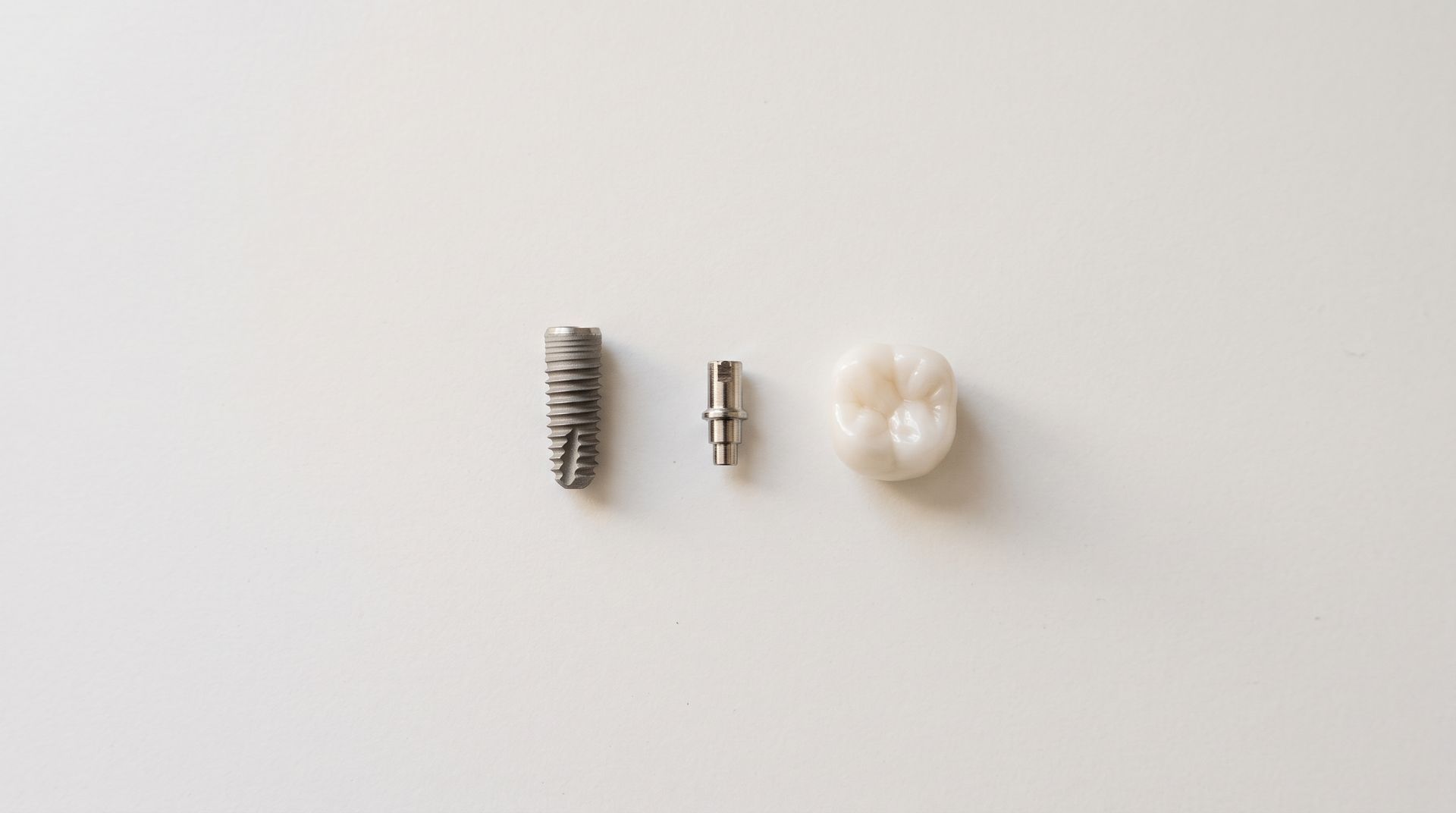
The Three Parts of a Dental Implant
The Implant Post
Also called the implant body or fixture, this is the screw-shaped part placed into the jawbone. Over several months, bone grows tightly against its surface in a process called osseointegration. It replaces the root of the missing tooth.
The Abutment
The abutment attaches to the top of the implant post, usually with a small screw, and rises just above the gumline. It supports the crown and shapes how the gum tissue heals around the new tooth.
The Crown
The crown is the replacement tooth itself. It is attached to the abutment with cement or a screw and is designed to match the shape and color of your natural teeth.
Why Each Part Uses Different Materials
The post needs to bond with bone and handle chewing forces. The abutment needs to be strong and healthy for the gum tissue around it. The crown needs to look natural and withstand biting. That is why one implant can combine titanium, zirconia, and ceramic.
Implant Materials at a Glance
| Part | Most Common Materials | What Each Offers |
|---|---|---|
| Implant post | Titanium, titanium alloy, zirconia | Titanium has decades of research; zirconia is metal-free and tooth-colored |
| Abutment | Titanium, zirconia, sometimes gold alloy | Titanium is strong and versatile; zirconia helps with appearance at the gumline |
| Crown | Zirconia, lithium disilicate and other ceramics, porcelain fused to metal, gold | Zirconia is very strong; ceramics look most natural; gold is extremely durable |
| Abutment screw | Titanium alloy or gold alloy | Holds the abutment securely to the implant |
Titanium Implants
Why Titanium Became the Standard
Titanium has been used for dental implants for decades. It is strong, lightweight, resistant to corrosion, and biocompatible, meaning the body tolerates it well. Most importantly, bone grows directly against it, which is what gives an implant its stability.
Pure Titanium and Titanium Alloys
Implants are made from commercially pure titanium or from titanium alloys, which blend titanium with small amounts of other metals for added strength. Both have long clinical track records.
Surface Treatments
Modern titanium implants have specially treated surfaces with microscopic texture. That roughness gives bone more surface area to grip and can help the implant integrate.
The Research Behind It
Because titanium implants have been studied for so long, there is a large body of long-term data on their success. That track record is one reason titanium is still the most common choice for most patients. Our guide on
how long dental implants last covers what that means for longevity.
Zirconia Implants
What Zirconia Is
Zirconia, or zirconium dioxide, is a very strong, white ceramic. It is the same family of material used for many modern crowns.
Who Considers Zirconia
Zirconia implants appeal to patients who want a metal-free mouth, have a confirmed sensitivity to metals, or have thin gum tissue in a visible area, where a white implant avoids any gray shadow showing through the gum.
Trade-Offs to Understand
Many zirconia implants are one-piece designs, with the post and abutment as a single unit. That limits how much the angle can be adjusted. Zirconia implants also have less long-term research than titanium, though studies continue to grow. These factors are part of the conversation when choosing between them.
Abutment Materials
Titanium Abutments
Titanium abutments are the most widely used. They are strong, precise, and work well for most teeth, especially back teeth where appearance at the gumline matters less.
Zirconia Abutments
Zirconia abutments are tooth-colored, which helps prevent a gray tint at the gumline in front teeth or where gum tissue is thin. They are often used under all-ceramic crowns.
Stock vs. Custom
Abutments can be prefabricated or custom-designed for your specific tooth position and gum shape. Custom abutments are often used when the implant angle or gumline requires a more precise fit.
Crown Materials
Zirconia
Zirconia crowns are extremely strong and resist chipping, which makes them a common choice for implant crowns on back teeth and for patients who grind.
Lithium Disilicate and Other Ceramics
These glass-ceramic crowns offer the most lifelike translucency and are often used for front teeth where appearance matters most.
Porcelain Fused to Metal
A metal substructure covered with tooth-colored porcelain. It has a long track record, though the porcelain can chip and a darker line can sometimes show at the gum.
Gold
Gold crowns are extremely durable and gentle on opposing teeth, but their color usually limits them to back teeth.
Our guide on
how long dental crowns last explains how crown material affects longevity, and our article on
porcelain vs. zirconia crowns compares those two options in more detail.
Full-Arch Implant Materials
All-on-4 and Fixed Bridges
Full-arch restorations, such as All-on-4 implants, replace an entire arch of teeth on four or more implants. The teeth are commonly made of acrylic or composite over a titanium framework, or of solid zirconia. Acrylic is lighter and easier to repair, while zirconia is more resistant to wear and staining.
Implant-Supported Dentures
Removable
implant-supported dentures usually have acrylic teeth and bases, similar to traditional dentures, with attachments that snap onto the implants. Our guide on
what dentures are made of explains denture materials in more detail.
Metal Allergies and Sensitivities
Titanium Allergy Is Uncommon
True allergy to titanium is rare. Most people tolerate titanium implants without any reaction.
When to Speak Up
If you have a known metal allergy or sensitivity, tell your dentist during your consultation. Allergy testing may be recommended, and zirconia implants and abutments can be considered as metal-free alternatives.
Health History Matters Too
Implant success depends on more than materials. Conditions such as diabetes, smoking, and bone density all affect healing. Our articles on
whether dental implants are safe and
bone grafts before dental implants explain how those factors are evaluated.
Implants, MRIs, and Airport Scanners
Imaging
The FDA advises telling health care providers and imaging technicians that you have dental implants before any MRI or X-ray, because implants can distort or interfere with the images. The FDA notes it is not aware of any adverse events reported for MRI or X-ray procedures with dental implants.
Airport Security
Dental implants are small and rarely set off airport metal detectors. If you have extensive implant work and are concerned, you can mention it to security staff.

Choosing the Right Implant Materials
During implant planning, we weigh:
- Which tooth is being replaced, since front and back teeth have different appearance and strength needs.
- Your bone and gum tissue, including gum thickness at the implant site.
- Your bite and grinding habits, which affect crown and abutment choices.
- Any metal sensitivities or a preference for metal-free materials.
- Long-term research and track record for each option.
- Whether you are replacing one tooth or a full arch.
We will explain the options that fit your case and why we recommend them.
How Implant Materials Affect Cost
The Post
Titanium implants are the most common and widely available. Zirconia implants are often more expensive and are offered by fewer practices, partly because of how they are manufactured and placed.
The Abutment
Stock abutments cost less than custom-designed ones. Custom titanium or zirconia abutments add cost but can improve fit and appearance in tricky positions or in the smile zone.
The Crown
Crown material affects price as well. Zirconia and high-end ceramics generally cost more than older options, and gold pricing follows the metal market.
Full-Arch Work
For full-arch treatment, acrylic teeth on a titanium framework typically cost less upfront than a solid zirconia arch, though zirconia may need fewer repairs over time. Our guide on
dental implant costs in Tucson
explains how these choices fit into the overall budget.
Questions to Ask About Your Implant Materials
Bring these questions to your consultation so you understand exactly what you are getting:
- What is the implant post made of, and which manufacturer makes it?
- Will the abutment be stock or custom, and what material will it be?
- What material will the crown be, and why is it the right choice for this tooth?
- Is a zirconia option available if I prefer metal-free, and what are the trade-offs?
- How long is the track record for the system you recommend?
- Can replacement parts be sourced easily if I need a repair years from now?
Using an established implant system matters for that last question, because parts and tools need to be available for maintenance and repairs over the life of the implant.
Dental Implants in Tucson
If you are considering implants and want to understand your material options, we can walk you through every part of the process. Learn more about our dental implant services and dental crowns.
To talk through implant options with our team, call Casas Adobes Dentistry at (520) 365-0559. You will find us at 7520 N Oracle Rd, Suite 200, in Tucson.

Frequently Asked Questions
What metal are dental implants made of?
Most dental implants are made of titanium or a titanium alloy. Titanium is strong, corrosion-resistant, and bonds well with bone.
Are there metal-free dental implants?
Yes. Zirconia implants are made of a tooth-colored ceramic and are the main metal-free alternative to titanium.
Is titanium or zirconia better for implants?
Titanium has the longest research track record and more design flexibility. Zirconia is metal-free and can look better where gum tissue is thin. The right choice depends on your case.
Can you be allergic to titanium dental implants?
It is rare. If you have a known metal allergy, discuss it with your dentist, who may recommend testing or a zirconia option.
Do dental implants set off metal detectors?
They rarely do because the amount of metal is small. Let your health care providers know about your implants before an MRI or X-ray.
Share this Post
Casas Adobes Dentistry Blog