Are Dental Implants Safe? Risks, Success Factors, and Who May Need Extra Planning

Yes. Dental implants are a well-established, safe way to replace missing teeth for most healthy adults, with long-term success rates commonly reported above 90 percent when they are well planned and cared for. Like any surgery, implant placement carries some risks, including infection, nerve irritation in the lower jaw, sinus issues in the upper jaw, and implants that fail to bond with the bone. Most of these risks are uncommon and can be reduced with careful imaging, planning, and aftercare. People who smoke, have uncontrolled diabetes, take certain bone medications, have had head and neck radiation, or have active gum disease may still be candidates, but they often need extra evaluation and a tailored plan.
Casas Adobes Dentistry is a family, cosmetic, and implant dental practice on North Oracle Road in Tucson, led by Dr. Christopher Chin, a Fellow of the Academy of General Dentistry with advanced training in surgical dentistry. We plan and restore implants for patients across Tucson, Oro Valley, Marana, and the Catalina Foothills, and we offer nitrous oxide and oral sedation for patients who feel nervous about treatment. This guide explains what makes implants safe, what the real risks are, and when extra planning matters.
In This Guide
- How Safe Are Dental Implants?: The big picture.
- Possible Risks and Complications: What can go wrong.
- What Makes Implants Succeed: The factors that matter most.
- Who May Need Extra Planning: Health and lifestyle factors.
- How Dentists Make Implant Treatment Safer: Planning and technique.
- Are Implant Materials Safe?: Titanium, zirconia, and allergies.
- Is Sedation Safe for Implant Surgery?: Comfort and monitoring.
- How Implants Compare With Other Options: Trade-offs.
- Questions to Ask About Implant Safety: At your consultation.
- Warning Signs After Implant Surgery: When to call.
- Frequently Asked Questions: Quick answers.

How Safe Are Dental Implants?
Dental implants have been used for decades, and they are among the most studied treatments in dentistry.
A Proven Treatment
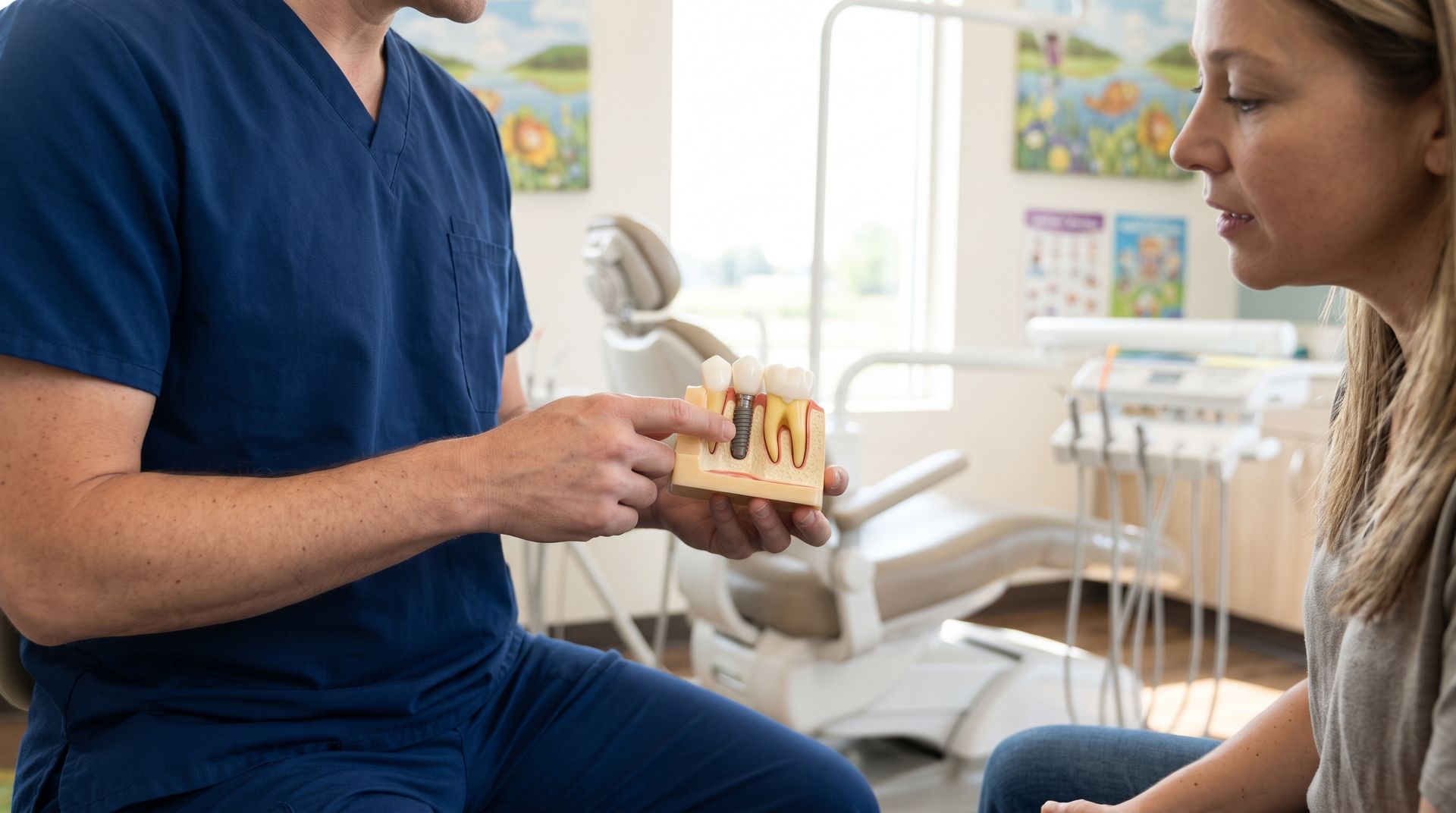
An implant is a small post, usually titanium, placed in the jawbone to act like a tooth root. Over a few months, the bone bonds to the implant in a process called osseointegration. The implant then supports a crown, bridge, or denture. Because it replaces the tooth root, it does not rely on neighboring teeth for support.
Success Rates
Studies commonly report long-term implant success rates above 90 percent, often higher in healthy non-smokers with good oral hygiene. Success is usually measured by whether the implant is still stable and functioning years after placement. That does not mean every implant is guaranteed, but it does mean problems are the exception rather than the rule.
Safety Depends on Planning
Most implant complications are linked to planning, health factors, or aftercare rather than the implant itself. A thorough evaluation before surgery is the most important step in keeping treatment safe. Learn more on our
dental implants page.
Possible Risks and Complications
Knowing the risks helps you make an informed choice. Possible complications include:
- Infection at the implant site, usually treatable when caught early.
- Failure to integrate, where the bone does not bond with the implant, most often in the first few months.
- Nerve irritation or injury in the lower jaw, which can cause tingling or numbness in the lip, chin, or tongue.
- Sinus problems when implants are placed in the upper back jaw close to the sinus.
- Damage to nearby teeth or structures if planning or placement is inaccurate.
- Peri-implantitis, a gum and bone infection around an implant that can develop years later.
- Mechanical issues, such as a loose screw or a chipped crown.
Putting Risk in Perspective
Serious complications are uncommon, and many issues, such as a loose screw or early gum inflammation, are simple to fix. The key is careful planning before surgery and regular follow-up afterward. Our article on
how long dental implants last covers signs of problems over time.
What Makes Implants Succeed
Several factors work together to make implants last.
| Success Factor | Why It Matters | What Helps |
|---|---|---|
| Healthy bone | The implant needs solid bone to bond with | 3D imaging and bone grafting when needed |
| Healthy gums | Gum disease raises infection and bone-loss risk | Treating gum disease before surgery |
| Overall health | Conditions like uncontrolled diabetes slow healing | Good medical management before treatment |
| Not smoking | Smoking reduces blood flow and raises failure risk | Quitting or reducing before and after surgery |
| Careful planning | Accurate placement avoids nerves, sinuses, and roots | Detailed exams, imaging, and treatment planning |
| Good bite forces | Heavy grinding can overload implants | Bite adjustments and night guards |
| Home care and checkups | Plaque around implants can cause peri-implantitis | Daily cleaning and regular professional visits |
Who May Need Extra Planning
Many people with health conditions can still get implants safely. They may simply need more evaluation or a different approach.
People With Diabetes
Well-controlled diabetes is usually compatible with implants. Poorly controlled blood sugar slows healing and raises infection risk. Our guide on whether diabetics can get dental implants explains more.
Smokers and Nicotine Users
Smoking is one of the strongest risk factors for implant failure and peri-implantitis. Quitting, even temporarily around surgery, can improve outcomes. See our guide on whether smokers can get dental implants.
People Taking Bone Medications
Some medications for osteoporosis or cancer, such as bisphosphonates and denosumab, can affect how the jawbone heals. The risk depends on the medication, dose, and how long it has been taken. Your dentist may coordinate with your physician before surgery.
People Who Have Had Head and Neck Radiation
Radiation to the jaw area can reduce blood supply to the bone and affect healing. Implants may still be possible with special planning.
People With Gum Disease or Bone Loss
Active gum disease should be treated first. Bone loss may require grafting. Our guide on whether you need a bone graft before an implant covers when grafting is recommended.
People Who Grind Their Teeth
Heavy grinding or clenching can stress implants and crowns. A night guard and careful bite design help protect them. Because implants do not have the natural cushioning that teeth do, grinding forces travel directly to the implant and bone.
Blood Thinners and Other Medications
Some blood thinners and medical conditions require coordination with your doctor. Do not stop any medication without medical guidance.
Teens and Young Adults
Implants are usually delayed until jaw growth is complete, often in the late teens or early twenties. Placing an implant too early can leave it out of line as the jaw continues to develop.
Pregnancy
Elective surgery, including implant placement, is generally postponed until after pregnancy.
How Dentists Make Implant Treatment Safer
A safe implant starts long before surgery day.
1. Thorough Medical and Dental History
Your dentist reviews your health conditions, medications, smoking status, and dental history to identify risks.
2. Imaging and Planning
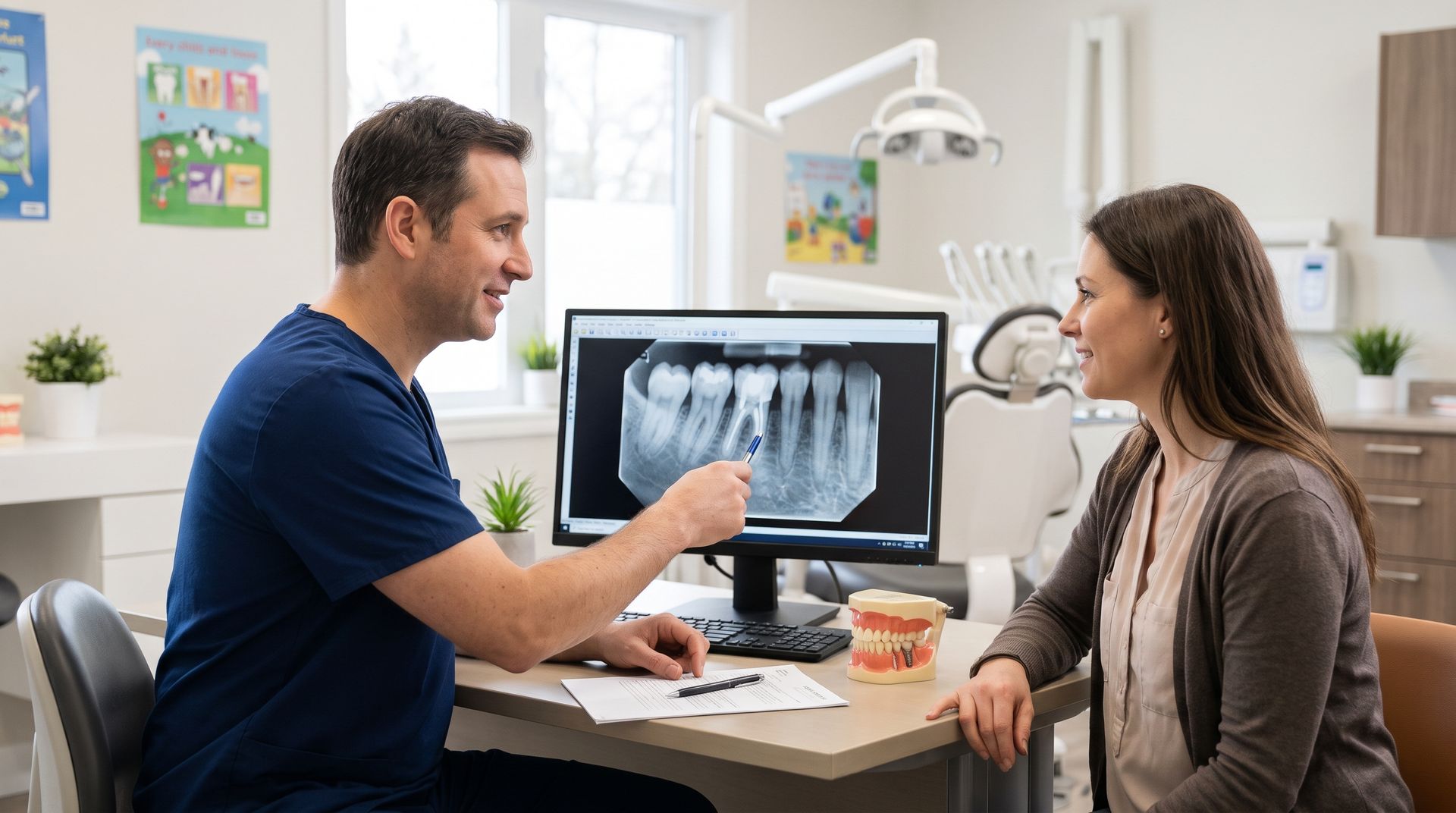
X-rays and, when needed, 3D imaging show bone height, width, and the location of nerves and sinuses. This lets the dentist plan the implant's size, angle, and position.
3. Preparing the Mouth
Cavities, gum disease, and infections are treated first. Bone grafting or sinus procedures are performed if needed.
4. Careful Technique
Sterile surgical technique, gentle handling of tissue, and precise placement reduce the risk of infection and injury.
5. Clear Aftercare
Written instructions, follow-up visits, and easy access to the office during healing help catch problems early. Our guide on
whether dental implants hurt explains what recovery usually feels like.
Are Implant Materials Safe?
Titanium
Most implants are made of titanium or titanium alloys, which have a long track record of safety in medicine and dentistry. Titanium is biocompatible, meaning the body tolerates it well.
Zirconia
Zirconia implants are a metal-free ceramic option. They may be considered for patients who prefer to avoid metal.
Allergies
True titanium allergy is rare. If you have known metal sensitivities, mention them during your consultation.
MRI and Airport Scanners
Dental implants generally do not interfere with MRI scans or airport security, though you should always tell your medical team about any implants.
Is Sedation Safe for Implant Surgery?
Many implant procedures are done with local anesthesia alone. For anxious patients, sedation can make treatment more comfortable.
Options
Nitrous oxide provides light, fast-acting relaxation. Oral sedation offers deeper calm. Learn more about our sedation dentistry options.
Safety Measures
Sedation is matched to your health and anxiety level after a review of your medical history and medications. Patients receiving oral sedation need someone to drive them home.
Mini Implants and Other Variations
Not every implant approach carries the same trade-offs. Mini implants are smaller and less invasive but are not suitable for every situation, as we explain in our guide to the
disadvantages of mini dental implants. Full-arch treatments like All-on-4 involve more surgery but replace a full set of teeth on a few implants. Your dentist will recommend the approach that best balances safety, function, and your goals.

How Implants Compare With Other Options
Every tooth replacement option has trade-offs, and safety is only one part of the picture.
Bridges
A traditional bridge avoids surgery, but it requires reshaping the healthy teeth on either side of the gap to hold crowns. Those supporting teeth carry extra load and can develop decay at the margins over time.
Dentures
Dentures are non-surgical and less expensive upfront, but they do not stimulate the jawbone, which tends to shrink over time. That can change the fit and facial support.
Implants
Implants require surgery and a healing period, but they do not depend on neighboring teeth and they help preserve the bone where they are placed. For many patients, that long-term benefit outweighs the short-term surgical risk.
Our comparison of
dental bridges vs. implants covers these options in more detail.
Questions to Ask About Implant Safety
About Your Health
Ask how your medical conditions and medications affect your candidacy, whether your dentist will coordinate with your physician, and whether any changes are recommended before surgery.
About the Plan
Ask what imaging will be used, how the implant position will be planned around nerves and sinuses, whether you need a bone graft, and what happens if the implant does not integrate.
About Aftercare
Ask what follow-up visits are included, how to reach the office during healing, and how often you should have the implant checked once it is restored. Clear answers to these questions are a good sign of a careful, safety-focused practice.
Warning Signs After Implant Surgery
Some swelling and soreness are normal for a few days. Call the office if you notice:
- Pain that gets worse after the first few days instead of better.
- Swelling that increases or returns after improving.
- Fever or a general feeling of being unwell.
- Pus, a bad taste, or persistent bleeding.
- Numbness or tingling that does not fade after the anesthetic wears off.
- An implant or healing cap that feels loose.
Prompt attention usually makes these problems easier to resolve.
Talk to a Tucson Dentist About Implant Safety
If you are considering dental implants but are worried about the risks, a consultation is the best way to get answers based on your health and your mouth. Our team will review your history, examine your teeth and bone, and explain whether implants are a safe option for you and what planning may be needed. If cost is part of your decision, see our guide to dental implant cost in Tucson.
Call Casas Adobes Dentistry at (520) 365-0559 to schedule a consultation. We are located at 7520 N. Oracle Road, Suite 200, in Tucson.

Frequently Asked Questions
Are dental implants safe long term?
Yes. When well planned and maintained, dental implants commonly last for many years and have high long-term success rates. Good oral hygiene, regular checkups, and not smoking help protect them.
What is the most common risk with dental implants?
Infection and inflammation around the implant are among the most common issues. Early infections are usually treatable, and long-term gum and bone problems are largely preventable with good home care and regular cleanings.
Can dental implants be rejected by the body?
True rejection like an organ transplant does not happen with titanium implants. An implant can fail to bond with the bone, usually because of infection, poor bone quality, smoking, or excess force during healing.
Who should not get dental implants?
People with uncontrolled diabetes, active gum disease, certain high-dose bone medications, or recent head and neck radiation may need extra planning or a different option. Children and teens whose jaws are still growing usually wait.
Are dental implants safe for older adults?
Yes. Age alone is rarely a barrier. Healthy older adults are often excellent candidates, and implants can improve chewing, comfort, and quality of life.
Share this Post
Casas Adobes Dentistry Blog