Implant-Supported Dentures in Tucson: A More Secure Alternative to Traditional Plates

If you're researching implant-supported denture options in Tucson, you probably want one thing: dentures that don't slide around. This guide is written and clinically reviewed by the dental team at Casas Adobes Dentistry in Tucson. We evaluate denture fit, bone health, and implant options every day, and we see the same frustrations again and again, loose "plates," sore spots, and the constant need for adhesive. Below is a clear, practical breakdown of how implant-supported dentures work, what choices you have, and what to expect.
The Problem With Traditional Dentures ("Plates")
Traditional dentures can look good, but the fit often changes over time.
Why dentures slip, rub, or feel loose over time
As months and years pass, the jawbone under a denture can shrink. This happens because tooth roots are gone, and the bone no longer gets the same stimulation from chewing. When the bone changes shape, the denture base no longer matches it as well. That's when you start noticing:
- Movement when you talk or eat
- A "floating" feeling on the upper plate
- The lower plate lifting during meals
- More pressure on certain spots (leading to pain)
Even a denture that fit well at first can become loose later. If you've been wondering whether dentures ever feel normal, you're not alone, and the answer often depends on how well they fit.
Real-life downsides: adhesives, sore spots, eating limitations, speech concerns
Straight answer: Loose dentures can affect comfort, confidence, and daily life.
Common day-to-day issues include:
- Adhesives that taste bad, feel messy, or still don't hold well
- Sore spots from rubbing, especially when the denture shifts
- Eating limits (avoiding steak, apples, nuts, or crusty bread)
- Speech concerns like clicking, slipping, or struggling with certain words
- Worry in social settings (laughing, smiling big, or eating in public)
These problems aren't "your fault." They're often a fit and stability problem. Learn more about tips for living well with dentures while you explore your options.
What Are Implant-Supported Dentures?
Implant-supported dentures are dentures that attach to implants for a stronger hold.
The simple explanation: dentures anchored to dental implants
Straight answer: Implants act like anchors so the denture doesn't slide.
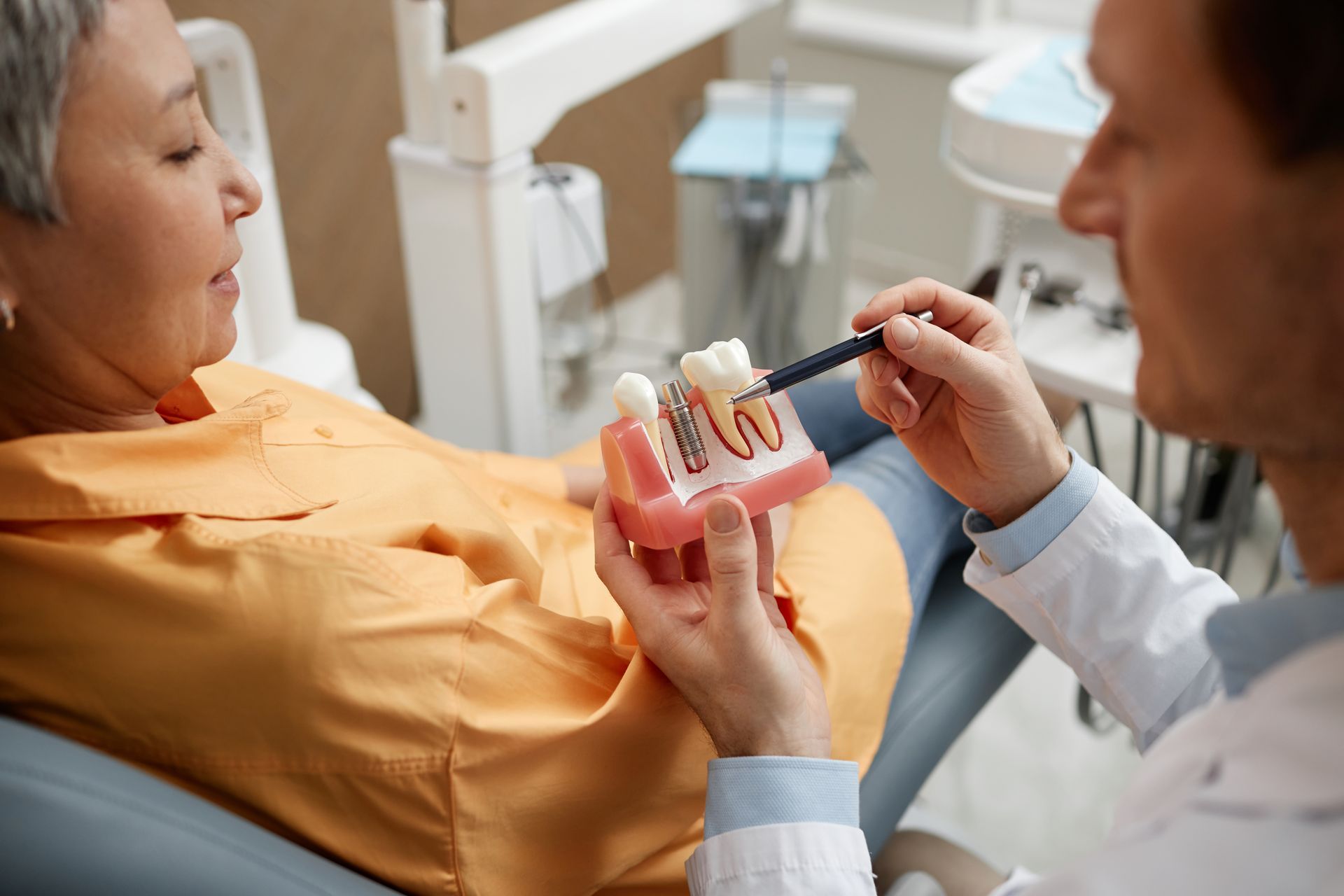
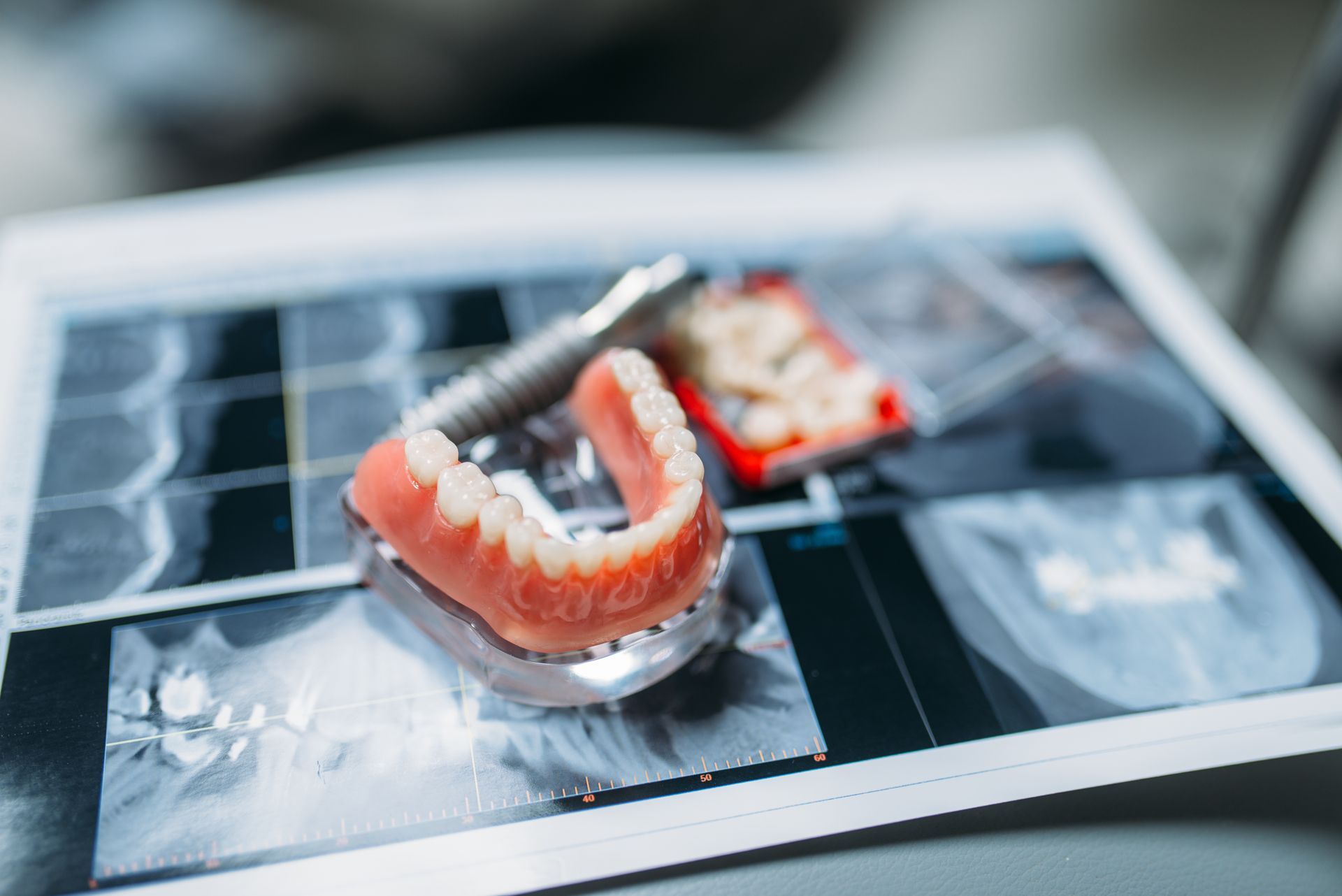
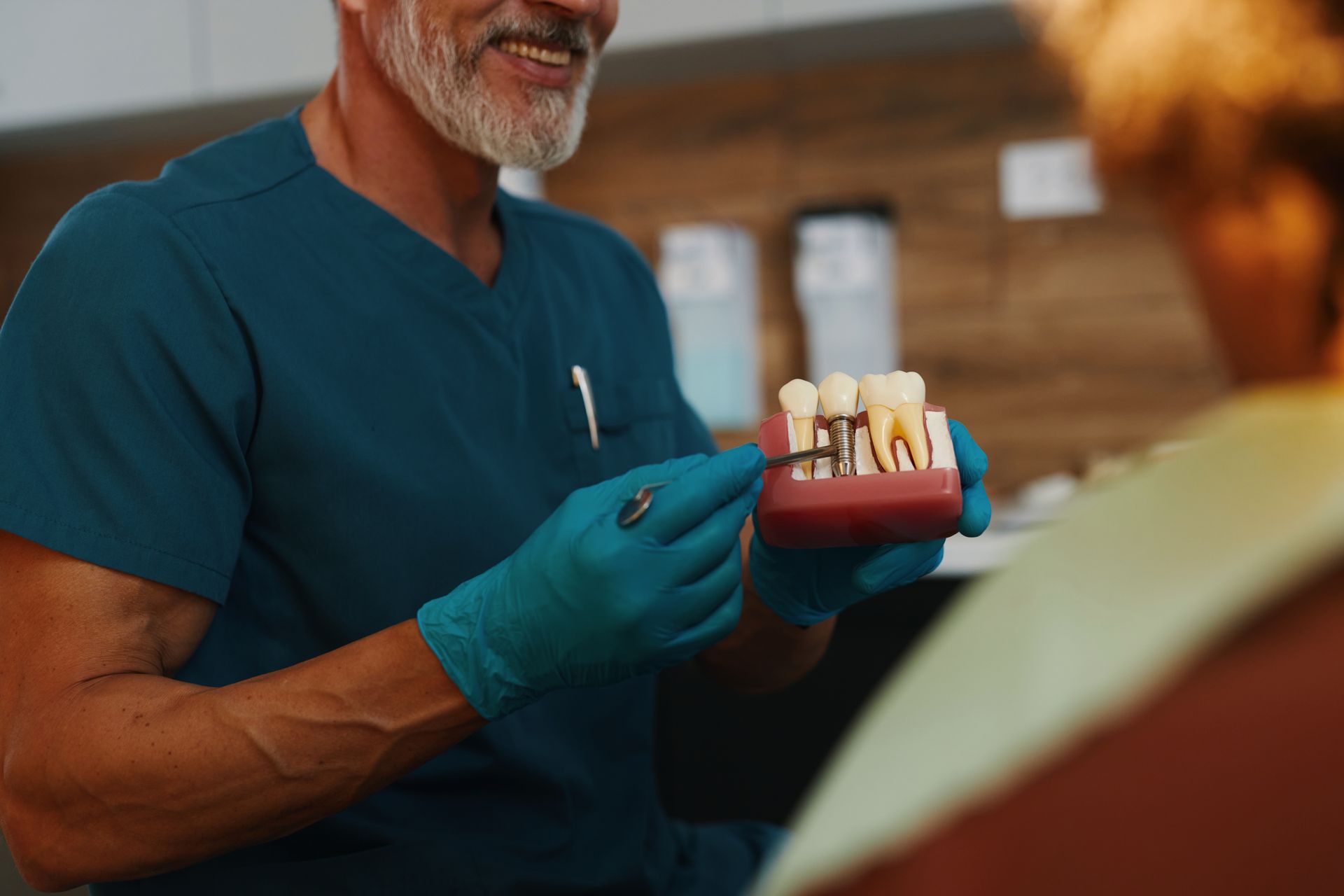
Dental implants are small posts (often titanium) placed in the jawbone. Once healed, the denture connects to those implants using special attachments. This creates retention and stability that traditional plates can't match. People often describe this as "no-slip dentures," because the denture is held in place instead of relying only on suction or adhesive.
Implant integration (osseointegration) and why it matters for stability
Straight answer: The implant becomes secure because it fuses with the bone.
After an implant is placed, the bone heals around it in a process called osseointegration. When it's complete, the implant is stable enough to support chewing forces and hold a denture in place. That stability is what helps many patients speak and eat more comfortably. You can read more about how dental implants work on our main implants page.
How Implant-Supported Dentures Work
The process is step-by-step, with planning, placement, healing, and attachment.
Consultation + planning (exam, imaging, goals)
Straight answer: You need an exam and imaging to choose the right option.
A good consultation looks at your current denture fit (if you have one), gum health and bite, bone shape and bone volume, and your goals (removable vs. fixed, comfort, budget, timeline). Many offices use imaging to plan implant location safely and accurately.
Implant placement and healing phase
Straight answer: Implants are placed first, then the body heals.
Implant placement is a minor surgical procedure. Healing time varies by person and by the plan, but the goal is the same: allow the implants to stabilize in the bone. During this phase, you may use a temporary denture or adjusted denture so you're not without teeth. Learn how long dental implant surgery typically takes so you can plan accordingly.
Attaching your denture to implants (removable or fixed)
Straight answer: Your denture can either "snap" on and off, or stay fixed in place.
There are two main paths: a removable implant-retained overdenture (often called snap-in dentures) or a fixed implant denture (sometimes called screw-in teeth or a fixed bridge). We'll break these down next.
Possibility of retrofitting an existing denture (when appropriate)
Straight answer: Sometimes your current denture can be modified, but not always.
If your denture is in good shape, fits your bite well, and has enough material for attachments, it may be possible to convert it to connect to implants. If it's worn down, cracked, poorly fitting, or the bite is off, a new denture may be the better long-term solution.
Implant Denture Options Available in Tucson
There isn't one "best" option, there's the best option for your mouth and your life.
Removable implant-retained overdentures ("snap-in" dentures)
A removable overdenture can feel far more secure than a standard plate because it locks into place. Many people like that it's still removable, which can make home cleaning simpler.
Common attachment types (Locator, ball, bar/clip)
Common systems include the Locator attachment system (very common; uses small retention inserts), ball attachments (a "stud" style connector), and a bar-retained overdenture with clips (a bar connects implants, and the denture clips on). Each has pros and cons based on space, bite, implant position, and maintenance needs.
Who this option tends to fit best (cleaning preferences, budget, comfort)
Straight answer: Good for people who want strong hold but prefer removable teeth.
This option may be a good match if you want better stability than a plate but still want to remove it, prefer easier cleaning access, want a solution that can be more budget-friendly than a fixed full-arch bridge, or have had trouble with lower dentures that won't stay put. See how implant-anchored dentures compare to traditional dentures in detail.
Fixed implant-supported dentures (screw-in / fixed bridge)
Straight answer: This option stays in place and is only removed by the dental team.
A fixed prosthesis can feel closer to natural teeth because it doesn't come out daily. It's supported by implants and designed to handle strong bite forces.
All-on-4 / All-on-X style full-arch solutions
Straight answer: Full arches can sometimes be supported with fewer implants placed strategically.
Many full-arch cases use a design commonly known as All-on-4, or All-on-X when more implants are used. The concept is a fixed full-arch solution that replaces a full row of teeth with an implant-supported prosthetic. Not everyone is a fit for every approach, but these systems are popular because they can provide strong support and stability. Our All-on-4 page for Tucson patients goes deeper on this option.
What daily cleaning looks like with a fixed option
Straight answer: You clean it like teeth, but with special tools.
Daily care often includes brushing the prosthesis and gumline, using floss threaders, water flossers, or special brushes for under the bridge, and attending regular professional cleanings to protect the implants and tissues.
Choosing removable vs. fixed: lifestyle, anatomy, and long-term goals
Straight answer: The right choice depends on what you value most.
Here are common decision drivers: cleaning preference (remove to clean vs. clean in place), feel (removable can feel very stable; fixed can feel more "permanent"), budget (fixed full-arch restorations often cost more), bone and bite (anatomy can limit or support certain designs), and maintenance (both require care; attachments may wear over time). Read our full comparison of dentures vs. dental implants in Tucson to help frame your decision.
Traditional Dentures vs. Implant-Supported Dentures
Implants change how dentures behave in your mouth.
Retention and confidence while eating/speaking
Implant-supported dentures are designed for stronger hold, which often means fewer "oops" moments, less slipping, less clicking, and less worry during meals.
Comfort and gum irritation
When dentures move, they rub. When they're secured to implants, that movement often drops significantly. Many patients report improved comfort, especially on the lower arch.
Bone health and facial support over time
Because implants transfer some chewing force into the bone, they can help maintain bone levels compared to a denture that rests only on gum tissue. This can help support facial structure and may reduce the "sunken" look that can happen with long-term tooth loss. If bone loss is already a concern, learn about bone grafting for dental implants as a preparatory step.
Maintenance expectations and longevity
The implants themselves are built to last, but certain components can wear, especially in snap-in systems. Regular checkups help catch issues early.
The Parts of an Implant-Supported Denture
Knowing the parts makes the plan easier to understand.
Implants (the "anchors")
Most implants are titanium and are designed to integrate with bone. They act as the foundation for your denture.
Abutments and attachment mechanisms
Abutments and attachments vary by system. They are chosen based on your anatomy, denture type, and bite forces.
The prosthesis (materials, framework, teeth)
A denture may be acrylic, or it may include stronger frameworks and materials depending on the design. The goal is comfort, strength, and natural appearance. See how modern dentures have advanced in materials and design over the years.
Wear items that may need periodic replacement (inserts/clips/screws)
Examples include Locator inserts (retention "grips"), clips for a bar system, and screws in fixed restorations (checked and tightened as needed). This is normal maintenance, not a failure.
Key Benefits: Why Patients Upgrade From Plates
Most people switch for stability, comfort, and confidence.
More secure fit with less worry about movement
That usually means less slipping when you laugh, talk, or eat.
Better chewing efficiency and more natural function
Many patients find it easier to chew and feel more comfortable biting down. If you've been limiting your diet, this is one of the most meaningful quality-of-life improvements patients describe.
Reduced reliance on adhesives
When the denture locks to implants, adhesives are often no longer the main "holding system."
Helps preserve jawbone and facial structure
This can help maintain the shape of your jaw and support the lower face.
Quality-of-life improvements (comfort, confidence, social ease)
The mental load of "Will this slip?" can drop a lot when dentures are secure. Read about the top benefits of implant-supported dentures from a patient perspective.
Are You a Candidate for Implant-Supported Dentures?
Many denture wearers qualify, but a proper exam matters.
Common candidate profiles (missing most/all teeth, current denture wearers)
Common profiles include people missing most or all teeth, people who already wear dentures, people tired of loose lower dentures, and people with broken-down teeth who need a full-arch plan. If you're still weighing your options for replacing missing teeth, that page lays out the full landscape.
Implant count ranges for full-arch support and what influences it
A snap-in overdenture may use fewer implants than a fixed full-arch restoration. The ideal number depends on bone volume and density, bite forces and grinding habits, upper vs. lower jaw needs, and the type of prosthesis being used.
Bone considerations and when additional procedures may be recommended
If bone is thin or soft, a clinician may discuss options like bone grafting. Not everyone needs grafting, but it can improve stability in the right case. We also have detailed information on whether you can get dental implants if you have no teeth, a common question from full-arch candidates.
What to Expect During Your Tucson Consultation
A good consultation is clear, specific, and based on your mouth, not averages.
What gets evaluated (fit, bite, bone, goals, timeline)
Expect discussion of your denture fit and sore spots, your bite and jaw movement, bone levels and implant placement zones, removable vs. fixed preferences, and timeline and comfort options. If dental anxiety is a factor, we also offer sedation dentistry for dental implant procedures.
Treatment roadmap: steps, timeline, and comfort considerations
A clear roadmap usually covers any needed extractions or prep, implant placement timing, healing phase expectations, when attachments or final teeth are placed, and how follow-ups and adjustments work.
How to decide which solution matches your priorities
If you value removing your denture to clean, a removable overdenture may fit. If you want teeth that stay in place, a fixed option may be better. Your anatomy and bite will help guide what's realistic.
Next Steps: Getting a More Secure Smile in Tucson
Better denture stability starts with a real evaluation.
Scheduling your implant denture evaluation
Bring your current dentures (if you have them), a list of your biggest problems (slipping, pain, eating limits), and your goals (removable vs. fixed). That helps your provider give you direct guidance. Contact our Tucson office to schedule your consultation.

Frequently Asked Questions
How many implants do I need to support a full denture?
It depends on whether you choose a removable or fixed option, and on how much bone you have. A snap-in overdenture on the lower arch can sometimes work with as few as two implants, though four is more common for better stability. A fixed full-arch restoration like All-on-4 typically uses four to six strategically placed implants per arch. Your bone volume and density play a big role in what's possible, which is why imaging during your consultation matters so much.
Can I get implant-supported dentures if I've been wearing traditional dentures for years?
In most cases, yes, but long-term denture wear often means some degree of bone loss has already occurred. That doesn't automatically disqualify you, but it does affect planning. Some patients need a bone graft first to create a stable foundation. Others have enough bone to proceed directly. The only way to know for certain is an exam with current imaging. The sooner you act, the more bone you're likely to have to work with.
Will I be without teeth at any point during the process?
No. Your dental team will make sure you have teeth throughout treatment. During the healing phase after implant placement, you'll typically wear a temporary or adjusted denture while osseointegration takes place. It may fit differently than your final restoration, but you won't be going out in public without teeth.
How long do implant-supported dentures last?
The implants themselves are designed to last decades, many last a lifetime with proper care. The prosthesis (the denture portion) and the attachment components are a different story. The denture itself may need replacement after 10–15 years depending on wear, and the retention inserts or clips in a snap-in system typically need replacing every one to three years as part of normal maintenance. Think of it like replacing the brake pads on a car, expected upkeep, not a sign something went wrong.
Are implant-supported dentures covered by insurance?
Partially, in some cases. Many dental insurance plans cover a portion of the prosthetic (denture) component but offer limited or no coverage for the implant surgery itself. Some medical insurance plans may cover implants if tooth loss was related to injury or certain medical conditions. Financing options are widely available and worth asking about during your consultation. It's always best to get a written treatment plan and check directly with your insurer about what's covered under your specific policy.
Share this Post
Casas Adobes Dentistry Blog