How Long Do Dental Crowns Last? Lifespan, Warning Signs, and Care

Casas Adobes Dentistry places, repairs, and replaces dental crowns for patients across Tucson. Our practice is led by Dr. Christopher Chin, MPH, DMD, a Fellow of the Academy of General Dentistry, an honor held by a small share of general dentists, and a Fellow of the International Congress of Oral Implantologists. We see crowns at every stage, from brand-new to decades old, so we know what helps them last and what wears them out. This guide explains how long crowns typically last, how material and habits affect that, and the signs a crown needs attention.
Quick Answer: The Cleveland Clinic puts the typical lifespan of a dental crown at five to 15 years with proper care, and many well-maintained crowns last 20 years or longer. Gold and other metal crowns tend to last the longest, while porcelain-fused-to-metal, zirconia, and all-ceramic crowns commonly reach 10 to 15 years or more. Most crowns that fail do so because of decay at the edge of the crown, gum disease, grinding, or problems with the tooth underneath, not because the crown material itself wears out.
In This Guide
- Crown Lifespan by Material: Gold, PFM, zirconia, and ceramic.
- Front Teeth vs. Back Teeth: Location matters.
- What Shortens a Crown's Life: Common culprits.
- Warning Signs a Crown Needs Attention: What to watch for.
- How Dentists Check a Crown: Exam steps.
- How to Make Your Crown Last: Daily and long-term care.
- Crowns on Implants vs. Natural Teeth: A key difference.
- Temporary vs. Permanent Crowns: How long each lasts.
- Repairing or Replacing a Crown: What to expect.
- Dental Crowns in Tucson: Schedule an exam.
- Frequently Asked Questions: Quick answers.

Crown Lifespan by Material
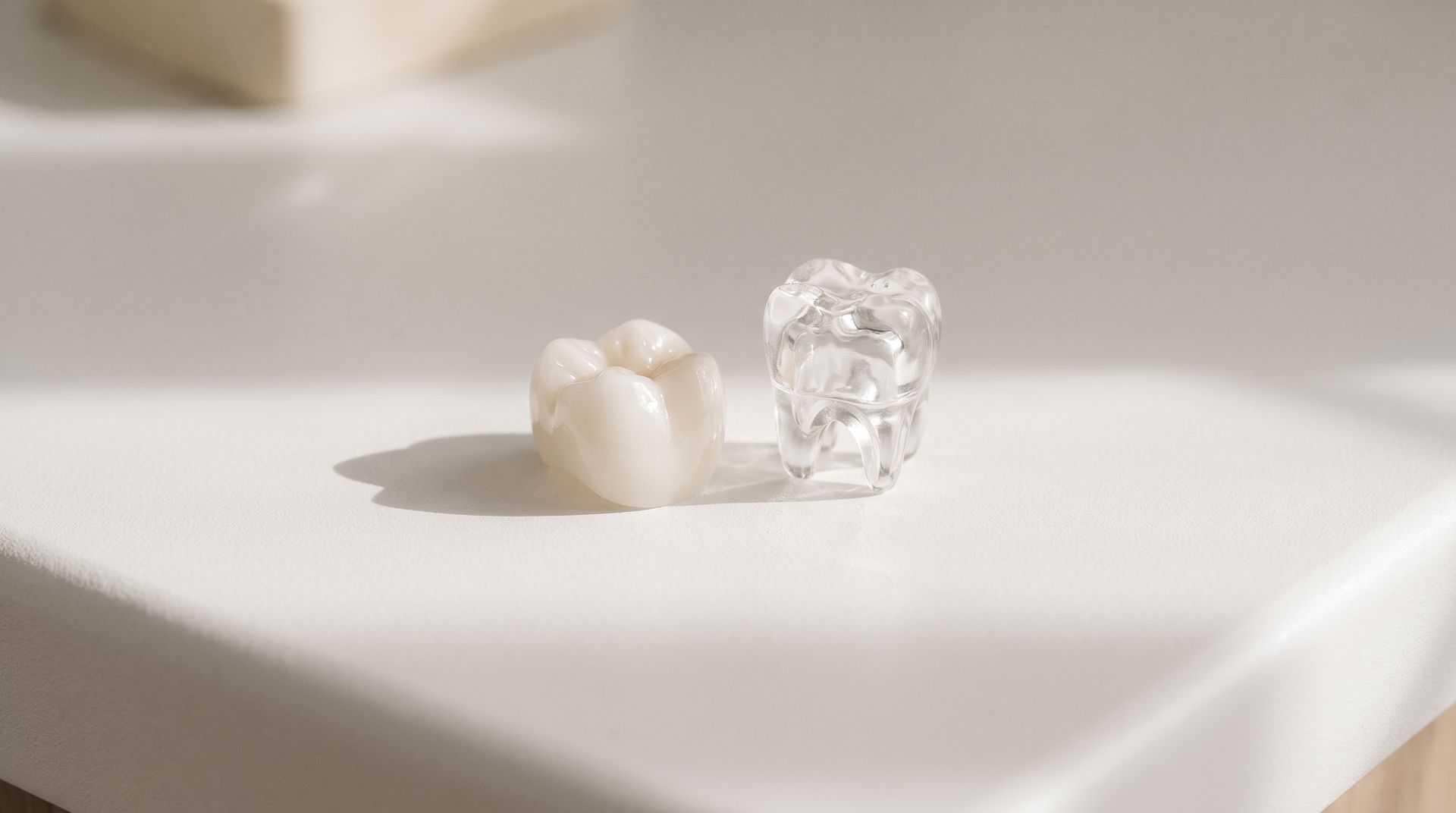
| Crown Material | Typical Lifespan With Good Care | Strengths | Trade-Offs |
|---|---|---|---|
| Gold and other metal alloys | Often 15 to 30 years or more | Very durable, rarely chips, gentle on opposing teeth | Metal color, usually reserved for back teeth |
| Porcelain-fused-to-metal (PFM) | Commonly 10 to 15 years or more | Long track record, strong metal core | Porcelain can chip; a dark line can show at the gum |
| Zirconia | Commonly 10 to 15 years or more | Very strong, good for molars, tooth-colored | Newer long-term data than metal or PFM |
| All-ceramic or lithium disilicate | Commonly 10 to 15 years | The most natural look for front teeth | Less strength than zirconia under heavy biting |
| Resin (usually temporary) | About 3 to 5 years | Low cost, quick to make | Wears and breaks more easily |
These ranges assume good oral hygiene and regular dental visits. Our guide on porcelain vs. zirconia crowns compares the two most common tooth-colored options in more detail.
Material Is Only Part of the Answer
The same crown material can last five years in one mouth and 25 in another. Where the crown sits, how hard you bite, how well the edges are cleaned, and the health of the tooth underneath often matter more than the material itself.
Front Teeth vs. Back Teeth
Back Teeth Take the Most Force
Molars handle the heaviest chewing forces in the mouth. Crowns there are more likely to chip or wear, which is why strong materials such as zirconia and gold are popular for back teeth.
Front Teeth Are Replaced for Appearance
Crowns on front teeth take less biting force, but they are visible every time you smile. They are often replaced because of a gray line at the gum, a color mismatch after the surrounding teeth change, or gum recession, rather than because the crown has failed.
What Shortens a Crown's Life
Decay at the Crown Edge
The crown itself cannot decay, but the natural tooth underneath can. The margin, where the crown meets the tooth near the gumline, is where plaque collects most easily. Decay there is one of the most common reasons crowns need to be replaced.
Gum Disease and Recession
When gums pull back from a crowned tooth, the margin becomes exposed. That leaves more tooth surface open to decay and can make the crown look shorter or show a dark line on older PFM crowns.
Grinding and Clenching
Grinding puts heavy, repeated force on crowns, which can chip porcelain, crack ceramics, and loosen cement. Many people grind at night without knowing it. A custom night guard can protect both crowns and natural teeth.
Chewing Hard Objects
Ice, hard candy, popcorn kernels, pens, and using teeth to open packages can crack or dislodge a crown.
Problems With the Tooth Underneath
A crowned tooth can still develop nerve problems or infection. Teeth that have had root canal treatment are protected by the crown, but if the tooth itself fractures or becomes reinfected, the crown may need to come off. Our page on root canal treatment explains how those teeth are cared for.
Fit and Bite
A crown that does not fit precisely, or that hits too hard when you bite, wears faster and can stress the tooth. A well-fitted crown with a balanced bite lasts longer.
Warning Signs a Crown Needs Attention
- Pain or sensitivity when biting, or to hot and cold, around a crowned tooth.
- A crown that feels loose or moves slightly when you chew.
- Chips, cracks, or rough spots on the crown surface.
- A dark line or gap at the gumline that was not there before.
- Swelling or tenderness in the gum around the crown.
- A bad taste or odor near the crown, which can point to decay or a leaking margin.
- Floss that catches or shreds between a crown and the next tooth.
- A change in your bite, or the crown feeling higher than your other teeth.
If a Crown Falls Off
Keep the crown, avoid chewing on that side, and call the office. In many cases, a crown that comes off in one piece can be cleaned and recemented if the tooth underneath is healthy. Do not use household glue to reattach it.
How Your Dentist Checks an Older Crown
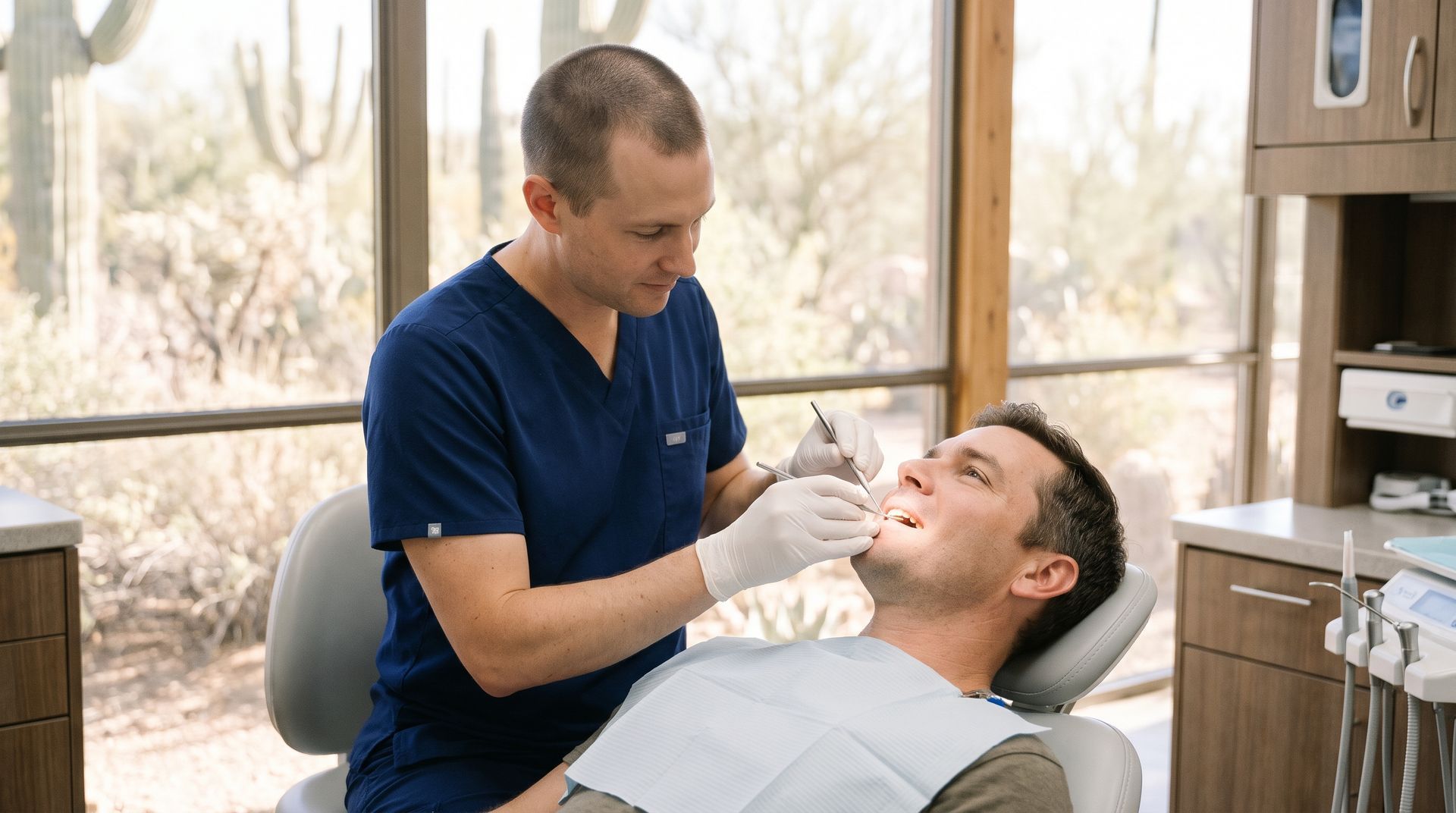
At regular exams, an older crown gets a closer look. A thorough check typically includes:
- Examining the margins where the crown meets the tooth for gaps, staining, or rough edges.
- Bitewing X-rays to look for decay under the edges of the crown that cannot be seen directly.
- Checking the bite to make sure the crown is not hitting harder than the surrounding teeth.
- Measuring the gums around the crown for inflammation or recession.
- Looking for chips, cracks, and wear on the crown surface.
- Testing the tooth if there is sensitivity, to check the health of the nerve underneath.
Catching a small problem at the margin early can sometimes extend the life of a crown that would otherwise need replacing.
How to Make Your Crown Last
Clean the Margins Carefully
Brush twice a day with a soft brush, angling the bristles toward the gumline where the crown meets the tooth. Floss once a day, sliding the floss gently along the side of the crown. Water flossers and interdental brushes can help around crowns and bridges.
Keep Up With Checkups and Cleanings
Regular exams let your dentist check the crown margins, take X-rays to look for decay under the crown, and spot small problems before they become big ones.
Protect Against Grinding
If you grind or clench, a night guard is one of the best investments you can make in your crowns. Some patients with severe clenching also benefit from treatment for jaw muscle tension.
Watch What You Bite
Avoid chewing ice and hard objects, and do not use your teeth as tools. Sticky candies can also pull at crowns.
Limit Staining Habits
Porcelain and ceramic crowns resist stains well, but the natural teeth around them can darken over time. Our article on
whether dental crowns can be whitened explains why whitening does not change crown color.
Crowns on Implants vs. Natural Teeth
Same Crown, Different Foundation
A crown on a dental implant sits on an abutment attached to the implant rather than on a natural tooth. The crown cannot decay, and neither can the implant, but the gum and bone around the implant still need careful cleaning.
Why Implant Crowns Get Replaced
Implant crowns are replaced for many of the same reasons as crowns on natural teeth, such as chips, wear, and changes in appearance. The implant itself, if healthy, usually stays in place. Our guide on
how long dental implants last explains the lifespan of each part of an implant, and our article on
what dental implants are made of covers the materials.

Temporary vs. Permanent Crowns
Temporary Crowns
A temporary crown protects the tooth while the permanent crown is made in a dental lab, which typically takes about two to three weeks. Temporary crowns are usually made of resin or acrylic and are held with weaker cement so they can be removed easily. They are not designed to last long.
Caring for a Temporary Crown
Avoid sticky and very hard foods, chew on the other side when possible, and slide floss out to the side rather than pulling it up, which can lift the temporary off.
Permanent Crowns
The permanent crown is bonded or cemented in place once it is ready. Its lifespan depends on the factors covered above.
Repairing or Replacing a Crown
When a Repair May Work
A small chip in porcelain can sometimes be smoothed or repaired with tooth-colored bonding, especially if the chip is in a spot that does not take much biting force.
When Replacement Is Needed
A crown usually needs replacing when there is decay underneath, a crack through the crown, a loose fit that cannot be fixed by recementing, or wear that changes your bite. The old crown is removed, the tooth is cleaned and reshaped if needed, and a new crown is made.
Cost and Planning
Many dental insurance plans have time limits on how often a crown on the same tooth can be replaced. Our guide on
how much a dental crown costs explains pricing factors, and our article on the
signs you may need a dental crown covers when a crown is recommended in the first place.
Dental Crowns in Tucson
Whether you have an older crown that is causing problems or you want a crown checked during your next visit, our team can evaluate the crown, the tooth underneath, and your bite. Learn more about our dental crowns and dental implants.
Call Casas Adobes Dentistry at (520) 365-0559 to schedule an exam. Our office is at 7520 N Oracle Rd, Suite 200, in Tucson.

Frequently Asked Questions
How long do dental crowns last on average?
The Cleveland Clinic puts the typical lifespan at five to 15 years with proper care. Many crowns last 20 years or longer when the tooth and gums stay healthy.
Which type of crown lasts the longest?
Gold and other metal crowns have the longest track record and rarely chip. Zirconia and porcelain-fused-to-metal crowns also last many years and are tooth-colored.
Can a crown last a lifetime?
Some crowns last for decades, but most people should expect to replace a crown at some point. Good hygiene, regular checkups, and protecting against grinding give a crown the best chance of a long life.
Can a tooth under a crown get a cavity?
Yes. The crown itself cannot decay, but the natural tooth underneath can, especially at the edge where the crown meets the tooth near the gumline.
What should I do if my crown falls off?
Keep the crown, avoid chewing on that side, and call your dentist. A crown that comes off in one piece can often be recemented if the tooth underneath is healthy.
Share this Post
Casas Adobes Dentistry Blog