How Much Do Veneers Cost? Price Factors and What Affects the Total

In the United States, porcelain veneers commonly cost about $925 to $2,500 per tooth, while composite resin veneers often cost about $250 to $1,500 per tooth. Your total depends mostly on how many teeth you are treating, the material, how much planning and lab work the case needs, and whether you need other treatment first, such as gum care, whitening of nearby teeth, or repairs. Because most smile makeovers include several veneers, the full investment is usually the per-tooth cost multiplied by six to ten teeth. Dental insurance rarely covers veneers placed for cosmetic reasons, but financing can spread the cost over time.
Casas Adobes Dentistry is a cosmetic, family, and restorative dental practice on North Oracle Road in Tucson, led by Dr. Christopher Chin, a Fellow of the Academy of General Dentistry. We design and place custom porcelain veneers made in a dental lab to match each patient's shape, size, and shade, and we also offer bonding, whitening, and full smile makeovers. This guide explains what goes into veneer pricing so you can plan with realistic expectations.
In This Guide
- Veneer Cost at a Glance: Typical ranges by type.
- What You Are Paying For: Behind the per-tooth price.
- Factors That Change Your Total: Why quotes vary.
- How Many Veneers Do You Need?: The biggest cost driver.
- Porcelain vs. Composite: Cost Over Time: Long-term value.
- Why Very Cheap Veneers Can Cost More Later: Avoiding shortcuts.
- Ongoing Costs After Veneers: What to plan for.
- Are You a Good Candidate?: Candidacy and cost.
- Does Insurance Cover Veneers?: What to expect.
- Ways to Make Veneers More Affordable: Financing and planning.
- Lower-Cost Alternatives to Veneers: Other options.
- Frequently Asked Questions: Quick answers.

Veneer Cost at a Glance
These are typical national ranges per tooth. Your exact cost depends on your case and is confirmed after an exam.
| Veneer Type | Typical Cost per Tooth | Typical Lifespan With Good Care |
|---|---|---|
| Composite resin veneers | About $250 to $1,500 | Often about 5 to 7 years |
| Traditional porcelain veneers | About $925 to $2,500 | Often 10 to 15 years or more |
| Minimal-prep or no-prep porcelain veneers | About $800 to $2,000 | Varies with case and material |
These ranges usually include the veneer and its placement. Exams, imaging, temporary veneers, and any preparatory treatment may be priced separately, so ask what an estimate includes.
What You Are Paying For
A veneer is a small piece of ceramic or resin, but most of its cost comes from the skill and planning behind it.
Planning and Smile Design
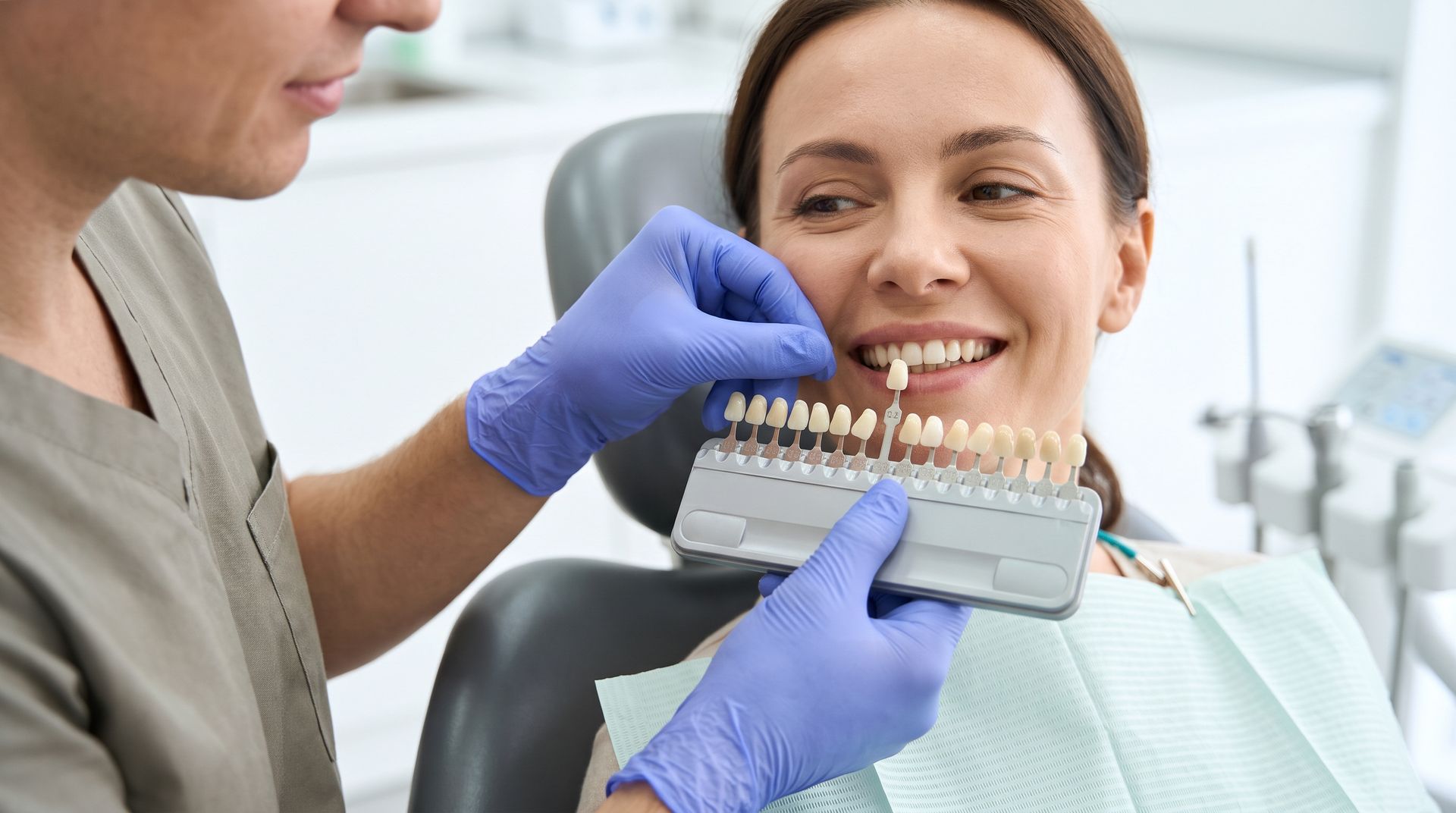
Before any tooth is prepared, the dentist evaluates your bite, gum line, tooth proportions, and facial features. Photos, impressions or scans, and sometimes a preview mock-up help plan the final shape and shade.
Tooth Preparation
For traditional porcelain veneers, a thin layer of enamel is removed so the veneer sits flush with the surrounding teeth and gums. This step requires precision, since it is permanent.
Lab Fabrication
Porcelain veneers are made by a dental lab, where ceramists hand-craft each veneer to match the planned shape, translucency, and color. Lab quality is one of the biggest differences between a natural-looking result and an artificial one. Lab work typically takes a week or more. That waiting period is one reason veneers are usually completed over two or three appointments.
Temporary Veneers
While the lab makes your final veneers, temporary veneers protect the prepared teeth and let you preview the new shape.
Bonding and Adjustments
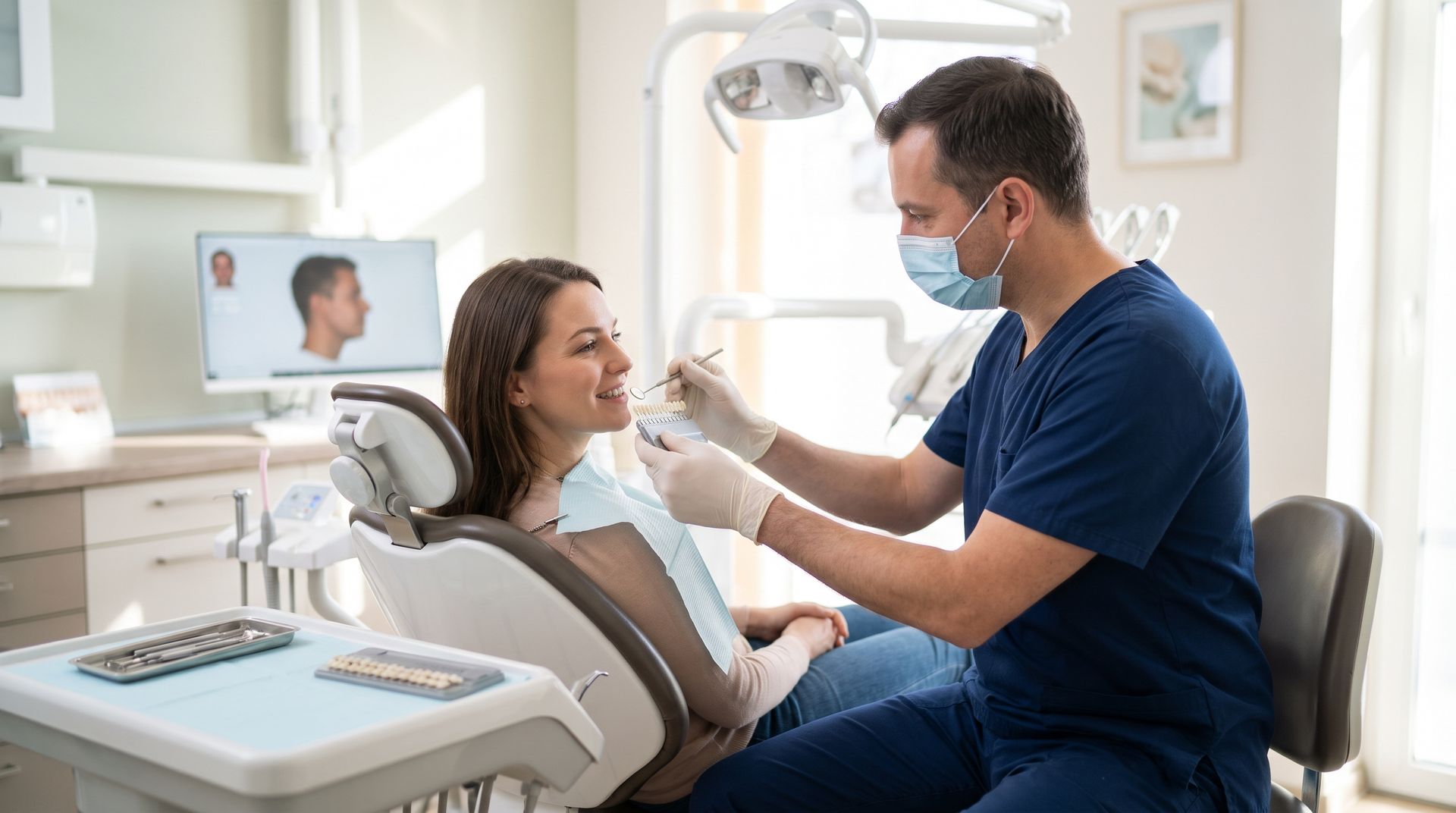
The final veneers are bonded in place, and the bite is checked and adjusted. A follow-up visit confirms comfort and fit.
You can read more about the process on our
dental veneers page.
Factors That Change Your Total
Two veneer quotes can look very different because they describe different cases. Understanding the factors below makes it easier to compare them. These are the factors that move the price:
- Number of teeth. One veneer to fix a chipped tooth costs far less than a full smile makeover.
- Material. Porcelain typically costs more than composite but lasts longer and resists stains better.
- Lab and ceramist quality. Highly customized, layered porcelain made by an experienced ceramist costs more.
- Case complexity. Teeth that are crooked, heavily discolored, or worn may need more planning and preparation.
- Preparatory treatment. Gum disease, cavities, or old fillings must be treated before veneers are placed.
- Gum contouring. Reshaping an uneven gum line can improve results but adds cost.
- Whitening nearby teeth. If you are not veneering every visible tooth, whitening the others first helps everything match.
- Mock-ups and previews. Trial smiles help you see the result before committing.
- Night guard. Patients who grind their teeth often need a custom guard to protect their veneers at night.
How Many Veneers Do You Need?
The number of veneers is often the single biggest factor in total cost.
One or Two Veneers
A single veneer can repair a chipped, discolored, or misshapen front tooth. Matching one veneer to natural neighbors is one of the most challenging cases, because shade and translucency must blend perfectly.
Four to Six Veneers
Treating the front teeth that show most when you talk can create a noticeable improvement while keeping cost lower than a full makeover. This is a common choice when the side teeth are already in good shape and only need whitening.
Eight to Ten Veneers
People with wide smiles often show more teeth, including premolars. Veneering eight to ten upper teeth creates a fuller, more uniform smile. Some patients also treat lower teeth.
Seeing Your Smile Line
During a consultation, the dentist looks at how many teeth show when you smile naturally. That helps decide how many veneers make sense for your goals. Learn more about our
smile makeover options.
Porcelain vs. Composite: Cost Over Time
Upfront price tells only part of the story.
Composite Veneers
Composite resin is applied and sculpted directly on the tooth, often in a single visit. It costs less upfront and can be repaired easily, but it is more prone to staining and chipping and usually needs to be replaced sooner.
Porcelain Veneers
Porcelain costs more upfront but resists stains, holds its shine, and often lasts much longer. Over 15 years, a set of porcelain veneers may cost about the same or less than replacing composite veneers more than once.
Which Is Better Value?
It depends on your budget, goals, and how long you want results to last. Some patients start with composite to try a new look and move to porcelain later. Our
cosmetic dentistry
team can walk you through both options.
Why Very Cheap Veneers Can Cost More Later
Low advertised prices can be tempting, especially for a full set. It helps to understand where savings usually come from.
Common Shortcuts
Very low prices may reflect less planning, a lower-quality lab, fewer follow-up visits, or more aggressive tooth preparation done quickly. Some offers advertised as "veneers" are actually crowns, which require removing much more tooth structure.
What Can Go Wrong
Poorly fitted veneers can trap plaque at the gum line, irritate gums, chip, or look bulky and artificial. Because traditional veneers are permanent, fixing them often means replacing them, sometimes at a higher cost than doing them well the first time.
Protect the Long Term
Ask how much tooth structure will be removed, which lab will make the veneers, and how problems are handled after placement. A careful plan protects both your smile and your budget.

Ongoing Costs After Veneers
Veneers are a long-term investment, and a few ongoing costs are worth planning for.
Checkups and Cleanings
Regular cleanings and exams help keep the gums healthy around the veneers and catch small issues early.
Night Guards
If you grind or clench your teeth, a custom night guard protects veneers from chipping.
Repairs and Replacement
Composite veneers can often be repaired or refreshed. Porcelain veneers that chip or wear out after many years may need replacement. Planning for that possibility helps you compare the true lifetime cost of each material.
Are You a Good Candidate?
Candidacy affects both your results and your cost. Veneers work best for people with healthy gums, enough enamel to bond to, and teeth that are structurally sound. Untreated gum disease, active decay, heavy grinding, or teeth with very large fillings may need to be addressed first, or a different treatment may be a better fit. A thorough exam answers these questions before you invest.
Does Insurance Cover Veneers?
Cosmetic Veneers
Most dental insurance plans do not cover veneers when they are placed to improve appearance.
When Coverage May Apply
If a veneer or other restoration is needed to repair a broken or damaged tooth, some plans may cover part of the cost of a restorative alternative, such as a crown. Coverage varies by plan, so a pre-treatment estimate from your insurer is helpful.
Using HSA or FSA Funds
Health savings and flexible spending accounts generally cannot be used for purely cosmetic procedures. If treatment is medically necessary, some costs may qualify. Check your plan's rules.
Ways to Make Veneers More Affordable
Financing
Payment plans and third-party dental financing let you spread the cost over months. Ask about options during your consultation.
Phasing Treatment
Some patients start with the most visible teeth and add more veneers later. Planning both phases together helps the shade and shape match.
Combining Treatments
Whitening the teeth that will not be veneered, or bonding a single chipped tooth, can reduce the number of veneers you need.
Protecting Your Investment
Wearing a night guard if you grind, avoiding biting hard objects, and keeping up with cleanings help veneers last, which lowers the long-term cost.
Lower-Cost Alternatives to Veneers
Veneers are not the only way to improve a smile. Depending on your goals, these may help:
Teeth Whitening
For healthy teeth that are simply stained or yellowed, professional whitening is far less expensive. Learn more about teeth whitening.
Dental Bonding
Bonding uses tooth-colored resin to repair small chips, gaps, or uneven edges in a single visit. It costs less than veneers and removes little or no enamel, though it stains and wears faster.
Clear Aligners
If crooked or crowded teeth are the main concern, straightening them may be a better long-term choice. Learn about ClearCorrect.
Removable Smile Options
For a temporary or reversible improvement, options like a Snap-On Smile may be worth considering.
Crowns
Teeth with large fillings, cracks, or significant damage may need a crown rather than a veneer. Our comparison of
porcelain vs. zirconia crowns explains crown materials.
Questions to Ask During a Veneer Consultation
To compare quotes fairly, ask what material and lab will be used, whether the estimate includes temporaries, mock-ups, and follow-up adjustments, how many teeth are being treated and why, whether any preparatory treatment is needed, and what happens if a veneer chips or comes loose. Seeing before-and-after photos of the dentist's own cases also helps you judge quality. Our guide to
whether dental veneers can be removed covers another question many patients ask.
Schedule a Veneer Consultation in Tucson
The only way to know what veneers will cost for your smile is a personalized exam. Our team will discuss your goals, evaluate your teeth and gums, show you what is possible, and give you a clear written estimate before treatment begins.
Call Casas Adobes Dentistry at (520) 365-0559 to schedule your consultation. We are located at 7520 N. Oracle Road, Suite 200, in Tucson, serving patients from Casas Adobes, Oro Valley, Marana, and the Catalina Foothills.

Frequently Asked Questions
How much do porcelain veneers cost per tooth?
Porcelain veneers commonly cost about $925 to $2,500 per tooth in the United States. The final price depends on the lab, the complexity of the case, and the number of teeth treated.
Are composite veneers cheaper than porcelain?
Yes. Composite veneers often cost about $250 to $1,500 per tooth, but they usually need to be replaced sooner and are more prone to staining and chipping than porcelain.
Does insurance pay for veneers?
Most dental insurance plans do not cover veneers placed for cosmetic reasons. Some plans may help with the cost when a tooth needs restoration because of damage. Check your benefits before treatment.
How many veneers do most people get?
Many patients get six to eight veneers on their upper front teeth, depending on how many teeth show when they smile. Others need only one or two to fix specific teeth.
Are veneers worth the cost?
For many people, yes. Porcelain veneers can last many years and dramatically improve the appearance of a smile. The best value comes from good planning, a high-quality lab, and protecting the veneers with good habits.
Share this Post
Casas Adobes Dentistry Blog