When Should Kids Start Going to the Dentist?

Children should have their first dental visit by their first birthday, or within six months after their first baby tooth comes in, whichever happens first. That is the recommendation from both the American Dental Association and the American Academy of Pediatric Dentistry. The first visit is short and gentle, usually a quick look at the teeth and gums, a check for early signs of decay, and guidance for parents on brushing, fluoride, feeding habits, and teething. After that, most children should see the dentist about every six months. In Tucson, early visits matter even more, because city water does not have added fluoride.
Casas Adobes Dentistry is a family dental practice on North Oracle Road in Tucson, led by Dr. Christopher Chin, a Fellow of the Academy of General Dentistry. Our team sees patients of every age, from toddlers coming in for their very first checkup to grandparents, and Dr. Chin volunteers with Give Kids A Smile, a program that provides dental care to children in need. This guide explains when to start, what happens at early visits, and how to make them easy for your child.
In This Guide
- Why the First Visit Happens So Early: Baby teeth matter.
- What Happens at a Child's First Dental Visit: A step-by-step look.
- A Dental Timeline From Baby to Teen: Milestones by age.
- Fluoride and Tucson Water: A local consideration.
- How to Prepare Your Child: Making visits easy.
- Caring for Baby Teeth at Home: Brushing and habits.
- Signs Your Child Should See a Dentist Sooner: Don't wait.
- Prevention as Kids Grow: Sealants, sports, and orthodontics.
- Pediatric Dentist or Family Dentist?: Choosing a provider.
- Frequently Asked Questions: Quick answers.
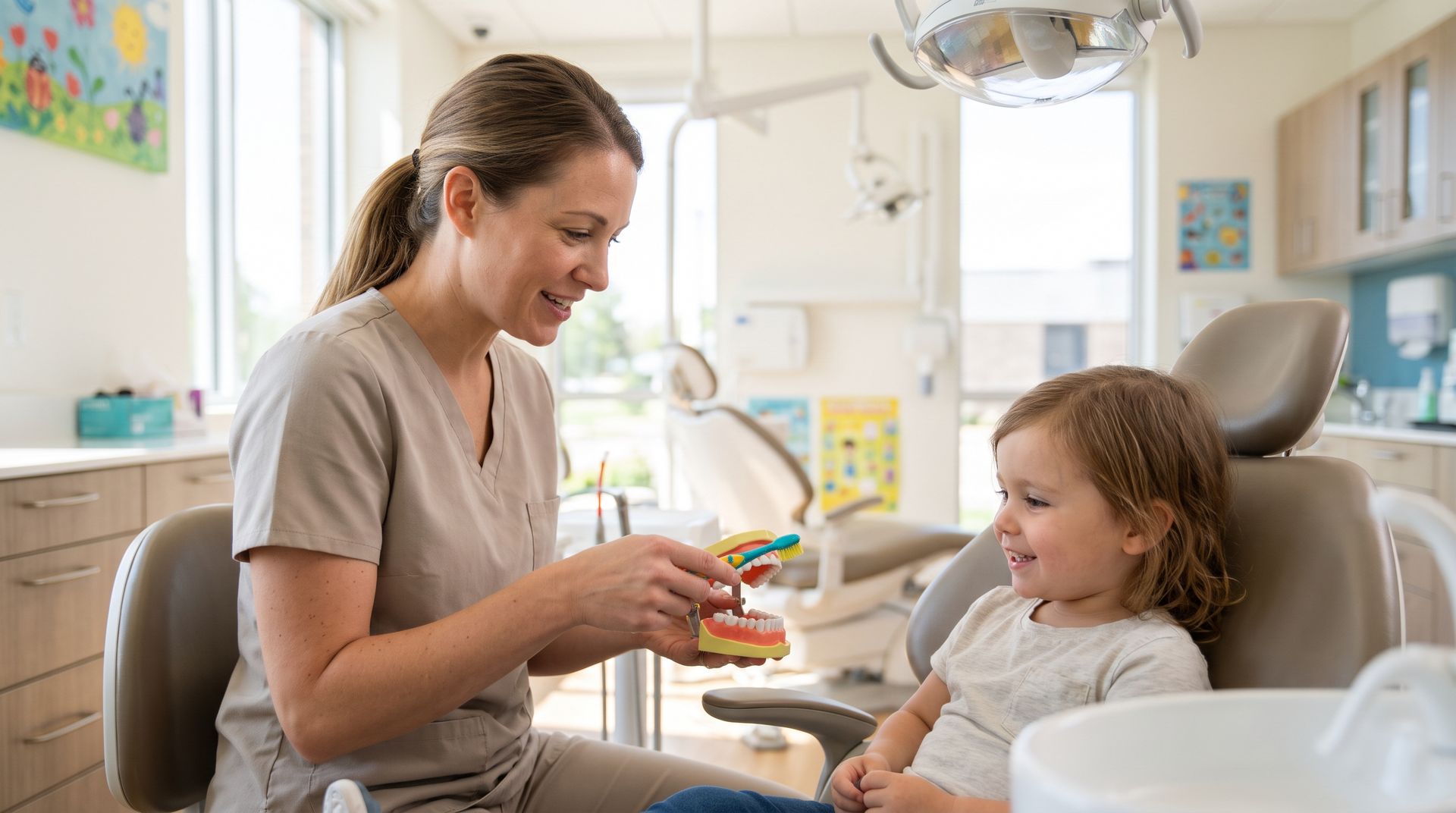
Why the First Visit Happens So Early
Many parents are surprised that dentists want to see babies before they have more than a few teeth. There are good reasons.
Cavities Can Start Early
Tooth decay is one of the most common chronic conditions in childhood. Baby teeth have thinner enamel than adult teeth, and cavities can develop soon after teeth come in, especially when a child falls asleep with a bottle of milk or juice.
Baby Teeth Do Important Jobs
Baby teeth help children chew, speak clearly, and hold space for the adult teeth that come in later. Losing a baby tooth early to decay can lead to crowding and bite problems.
Early Visits Build Comfort
A child who visits the dentist for friendly, painless checkups learns that the dental office is a safe place. That early comfort often carries into the school years and beyond, making future cleanings and any needed treatment much easier. Children whose first visit is for a toothache often associate the dentist with pain.
Parents Get Guidance
Much of a first visit is about helping parents. We cover how to clean tiny teeth, how much toothpaste to use, how to manage teething, and which habits raise the risk of cavities.
What Happens at a Child's First Dental Visit
A first visit is short, often about 15 to 30 minutes, and designed to be relaxed.
A Typical First Visit
- Getting acquainted. We take time to meet your child and let them see the room.
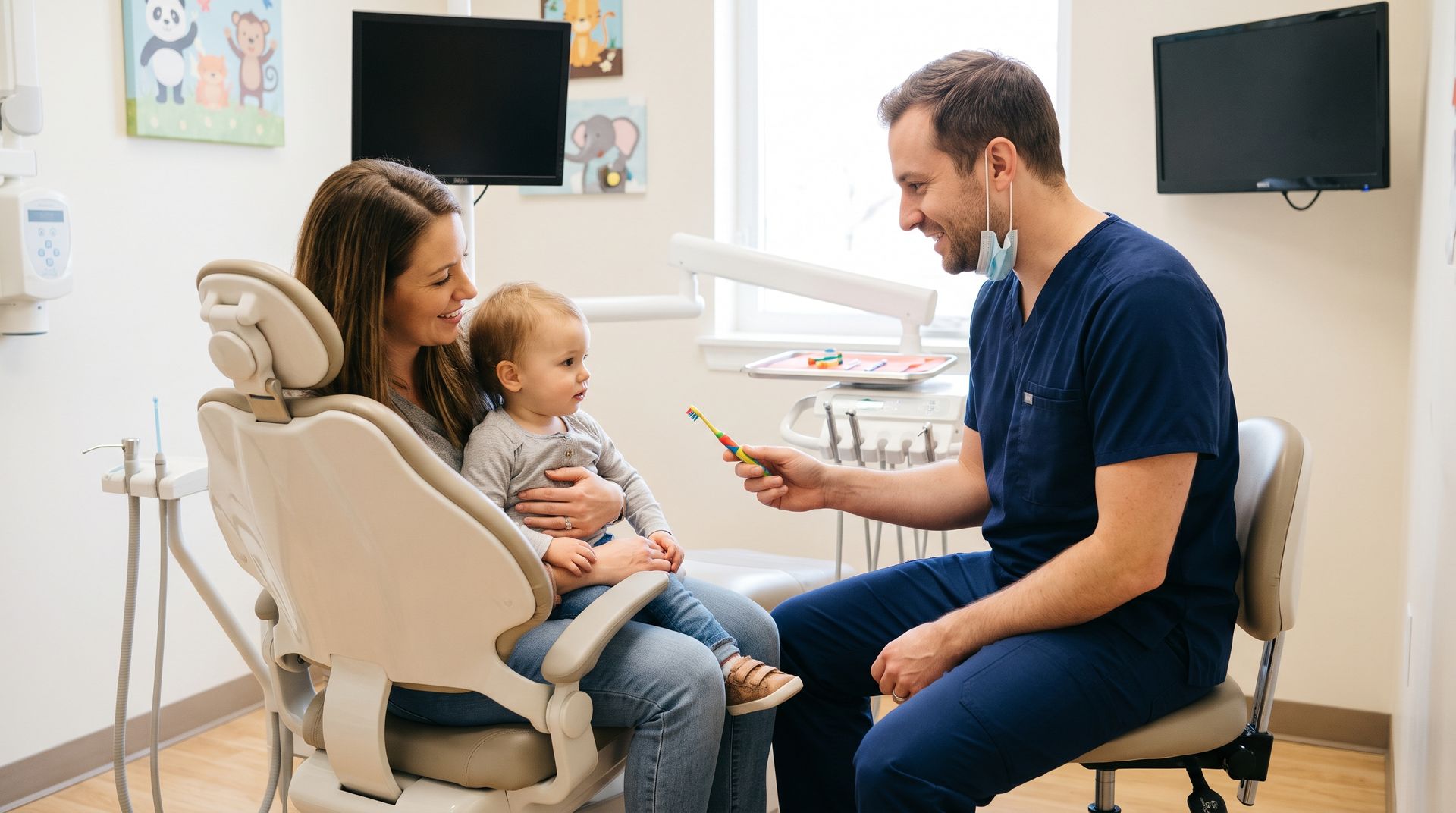
- Lap exam. For babies and toddlers, many dentists use a knee-to-knee position, with your child lying back on your lap.
- Checking teeth and gums. The dentist looks for early signs of decay, checks how teeth are coming in, and examines the gums, tongue, and bite.
- Gentle cleaning. If needed, teeth are gently cleaned to remove plaque.
- Fluoride varnish. A quick, painted-on fluoride coating may be applied to help strengthen enamel.
- Parent guidance. We talk about brushing, diet, thumb-sucking or pacifier use, and what to expect next.
X-rays are usually not needed at the first visit unless there is a specific concern.
Questions Parents Often Ask
Bring any questions you have, such as how to handle teething, whether a pacifier is a problem, or when to switch from a bottle to a cup. There are no silly questions at a first visit.
A Dental Timeline From Baby to Teen
Every child is different, but this timeline shows common milestones.
| Age | What Usually Happens | What Parents Can Do |
|---|---|---|
| Around 6 months | First baby teeth begin to appear | Wipe gums and brush new teeth with a smear of fluoride toothpaste |
| By age 1 | First dental visit | Schedule the visit and bring questions |
| Ages 1 to 3 | Most baby teeth come in | Brush twice daily and limit sugary drinks and snacks |
| Age 3 | Toothpaste amount increases | Use a pea-sized amount and supervise brushing |
| Around age 6 | First adult molars and front teeth arrive | Ask about sealants for new molars |
| Ages 6 to 12 | Baby teeth fall out and adult teeth replace them | Keep up checkups and consider an orthodontic evaluation around age 7 |
| Around age 12 | Second adult molars come in | Ask about sealants for the new molars |
| Teen years | Wisdom teeth and orthodontic needs often evaluated | Encourage independent brushing and mouthguards for sports |
Fluoride and Tucson Water
This is one area where Tucson families have a specific reason to stay on top of dental visits.
Tucson Does Not Add Fluoride
Many U.S. cities add fluoride to drinking water to help prevent cavities. Tucson Water does not add fluoride. The city's water contains some naturally occurring fluoride, but at levels below what is recommended for preventing tooth decay. Families on private wells in the Tucson area may have very different fluoride levels, which can be higher or lower.
What That Means for Your Child
Because children in Tucson may get less fluoride from tap water, professional fluoride varnish at checkups and fluoride toothpaste at home become more important. In some cases, your dentist or pediatrician may discuss whether additional fluoride is appropriate for your child, based on age, cavity risk, and water source.
Do Not Guess on Supplements
Too much fluoride in young children can cause fluorosis, white spots or streaks on adult teeth. Fluoride supplements should only be used when a dentist or doctor recommends them.
How to Prepare Your Child
A little preparation makes the first visit smoother for everyone.
Choose a Good Time
Schedule the appointment at a time when your child is usually rested and fed, often in the morning and not during nap time.
Talk About It Positively
Read a picture book about going to the dentist, play pretend dentist with a toothbrush and a stuffed animal, and keep your language simple and upbeat. Avoid words like "hurt," "shot," or "pain," even to reassure.
Stay Calm Yourself
Children pick up on their parents' feelings, so a relaxed, matter-of-fact tone goes a long way. If you have dental anxiety yourself, try to keep it out of the conversation. Our team is used to helping nervous patients of all ages, as we explain on our dental anxiety page.
Bring Comfort Items
A favorite toy or blanket can help a young child feel secure. Some parents also find it helps to schedule an older sibling's checkup first, so the younger child can watch.
Caring for Baby Teeth at Home
What happens at home between visits matters most.
Brushing
Start cleaning your baby's mouth even before teeth appear by wiping the gums with a soft, damp cloth. Once teeth come in, brush twice a day with a soft infant toothbrush and a smear of fluoride toothpaste about the size of a grain of rice. From about age 3, use a pea-sized amount. Help your child brush until they have the coordination to do it well, often around age 7 or 8.
Flossing
Once two teeth touch each other, start flossing between them daily.
Feeding Habits
Avoid putting a baby to bed with a bottle of milk, formula, or juice. Limit sugary drinks and sticky snacks, and offer water between meals. Frequent snacking keeps teeth exposed to sugar throughout the day.
Pacifiers and Thumb-Sucking
These are normal in young children. Most children stop on their own by the time their adult front teeth begin to come in. If the habit continues as adult teeth come in, talk with your dentist about whether it is affecting the bite.
Signs Your Child Should See a Dentist Sooner
Do not wait for a routine checkup if you notice any of these:
- White, brown, or dark spots on the teeth, which can be early decay.
- Tooth pain or a child who avoids chewing on one side.
- Swelling in the gums or face.
- A chipped, broken, or knocked-out tooth after a fall.
- Bleeding gums that do not improve with gentle brushing.
- Bad breath that does not go away.
- Teeth that come in very late or out of the expected order.
For a knocked-out baby tooth, do not try to put it back in, since that can damage the adult tooth developing underneath. Call the office for guidance. For urgent concerns, see our
emergency dentist page.
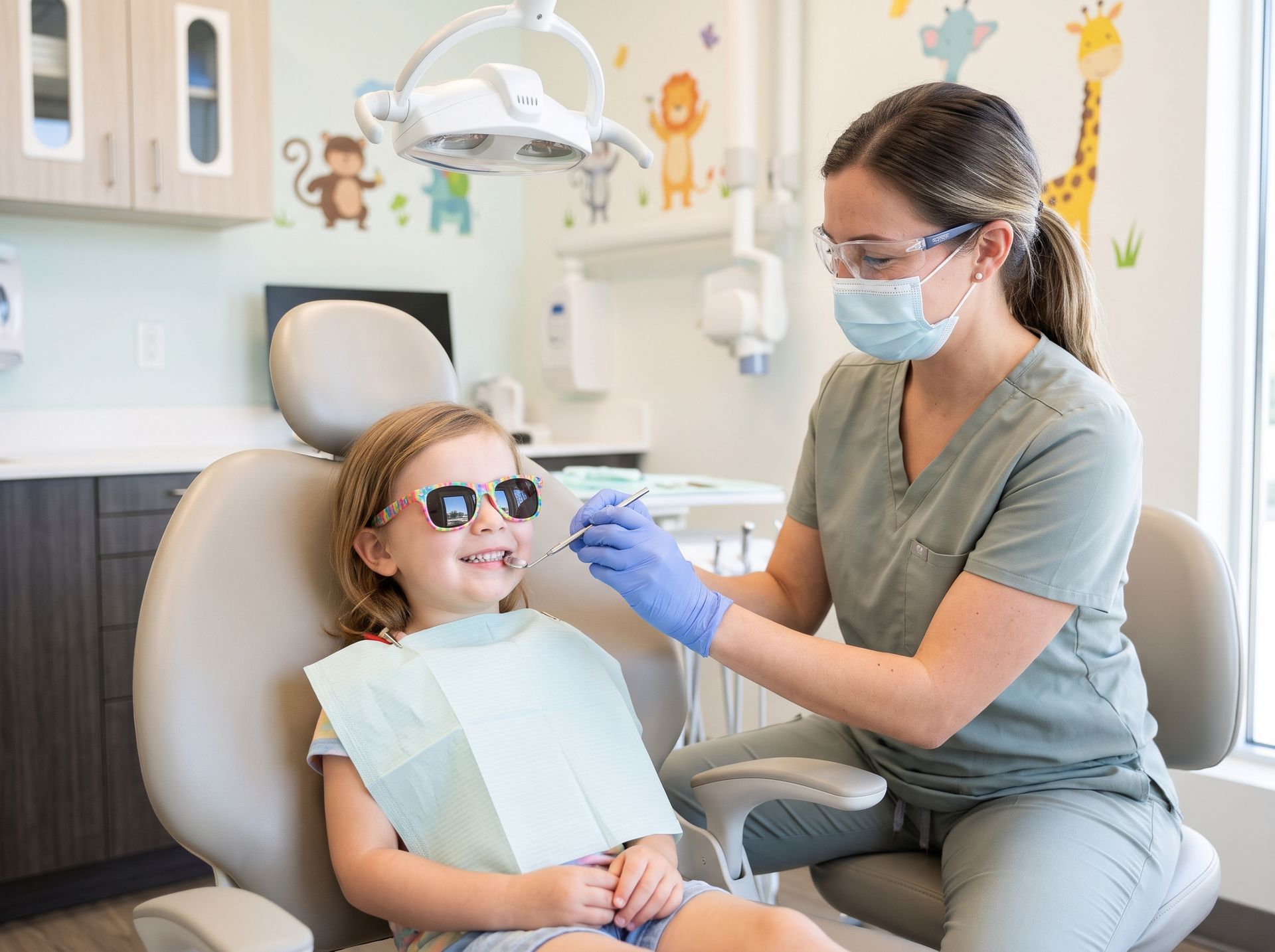
Prevention as Kids Grow: Sealants, Sports, and Orthodontics
Dental care changes as children get older.
Sealants
Sealants are thin, protective coatings painted onto the chewing surfaces of back teeth, where most childhood cavities start. They are commonly placed when the first adult molars come in around age 6 and again when the second molars arrive around age 12. Placement is quick and painless.
Mouthguards for Sports
Children who play contact sports, ride bikes, or skateboard benefit from a mouthguard. A custom mouthguard fits better and is more comfortable than a store-bought one. If a tooth is chipped during play, our guide on what to do if you chip a tooth explains next steps.
Orthodontic Evaluation
An orthodontic check around age 7 can catch crowding or bite problems early, when some issues are easier to guide. Not every child needs early treatment, but an evaluation helps you plan.
Pediatric Dentist or Family Dentist?
Pediatric Dentists
Pediatric dentists complete additional training focused on children, including children with special health care needs. They are a great choice for very young children with complex needs or significant anxiety.
Family Dentists
Family dentists treat patients of all ages, so siblings and parents can be seen at the same practice. Many families like the convenience of one dental home where children can grow up with the same team. Learn more about our kid-friendly dentist services.
What Matters Most
Whichever you choose, look for a friendly, patient team, clear communication with parents, and a focus on prevention.
Insurance and Cost Considerations
New Paragraph
Schedule Your Child's First Dental Visit in Tucson
If your child has their first tooth or is approaching their first birthday, now is a great time to schedule a visit. Our team will make the appointment relaxed and fun and give you the tools to keep your child's smile healthy at home. Learn more about our family dental services or read our oral hygiene basics.
Call Casas Adobes Dentistry at (520) 365-0559 to book an appointment. We are located at 7520 N. Oracle Road, Suite 200, in Tucson, serving families from Casas Adobes, Oro Valley, Marana, and the Catalina Foothills.

Frequently Asked Questions
What age should a child first see the dentist?
By their first birthday, or within six months after the first baby tooth appears, whichever comes first. This is the recommendation of the American Dental Association and the American Academy of Pediatric Dentistry.
What happens at a baby's first dental visit?
The dentist checks the teeth and gums, looks for early signs of decay, may apply fluoride varnish, and talks with parents about brushing, feeding, and habits. The visit is short and gentle, and babies often sit on a parent's lap.
How often should kids go to the dentist?
Most children should have a checkup about every six months. Children at higher risk for cavities may need more frequent visits.
Does my child need fluoride if we live in Tucson?
Tucson Water does not add fluoride to its drinking water, and natural levels are below the recommended amount. Fluoride toothpaste and professional fluoride varnish are important for Tucson children. Ask your dentist whether anything more is appropriate for your child.
Are baby teeth really that important if they fall out?
Yes. Baby teeth help children chew, speak, and hold space for adult teeth. Untreated decay in baby teeth can cause pain, infection, and problems with the adult teeth underneath.
Share this Post
Casas Adobes Dentistry Blog