
How Long Does a Root Canal Take? Visit-by-Visit Timeline

Most root canal appointments take about 60 to 90 minutes. Front teeth, which usually have a single canal, are often on the shorter end, while molars, which have three or four canals, can take 90 minutes or longer. Many root canals are completed in one visit, but a tooth with a severe infection, complex canal anatomy, or a previous root canal may need two visits. Most back teeth also need a crown afterward, which typically adds one or two more appointments over the following weeks. From the first exam to the final crown, the whole process often spans about two to four weeks.
Casas Adobes Dentistry is a family and restorative dental practice on North Oracle Road in Tucson, led by Dr. Christopher Chin, a Fellow of the Academy of General Dentistry. We perform root canal therapy for patients across Tucson, Oro Valley, Marana, and the Catalina Foothills using digital imaging and comfort options such as nitrous oxide and oral sedation. This guide breaks down how long each step takes so you can plan your schedule.
In This Guide
- Root Canal Timeline at a Glance: Every step and its length.
- How Long the Appointment Takes by Tooth: Front teeth vs. molars.
- One Visit or Two?: When treatment is split.
- What Happens During the Appointment: Step by step.
- The Crown: The Final Step: Why it matters and how long it takes.
- What Can Make a Root Canal Take Longer: Factors that add time.
- Will You Be Uncomfortable for That Long?: Comfort during treatment.
- Root Canal Retreatment Timeline: Redoing an old root canal.
- Same-Day Root Canals for Tooth Pain: Getting relief fast.
- Recovery Time After a Root Canal: Getting back to normal.
- Planning Around Work and School: Practical tips.
- Frequently Asked Questions: Quick answers.
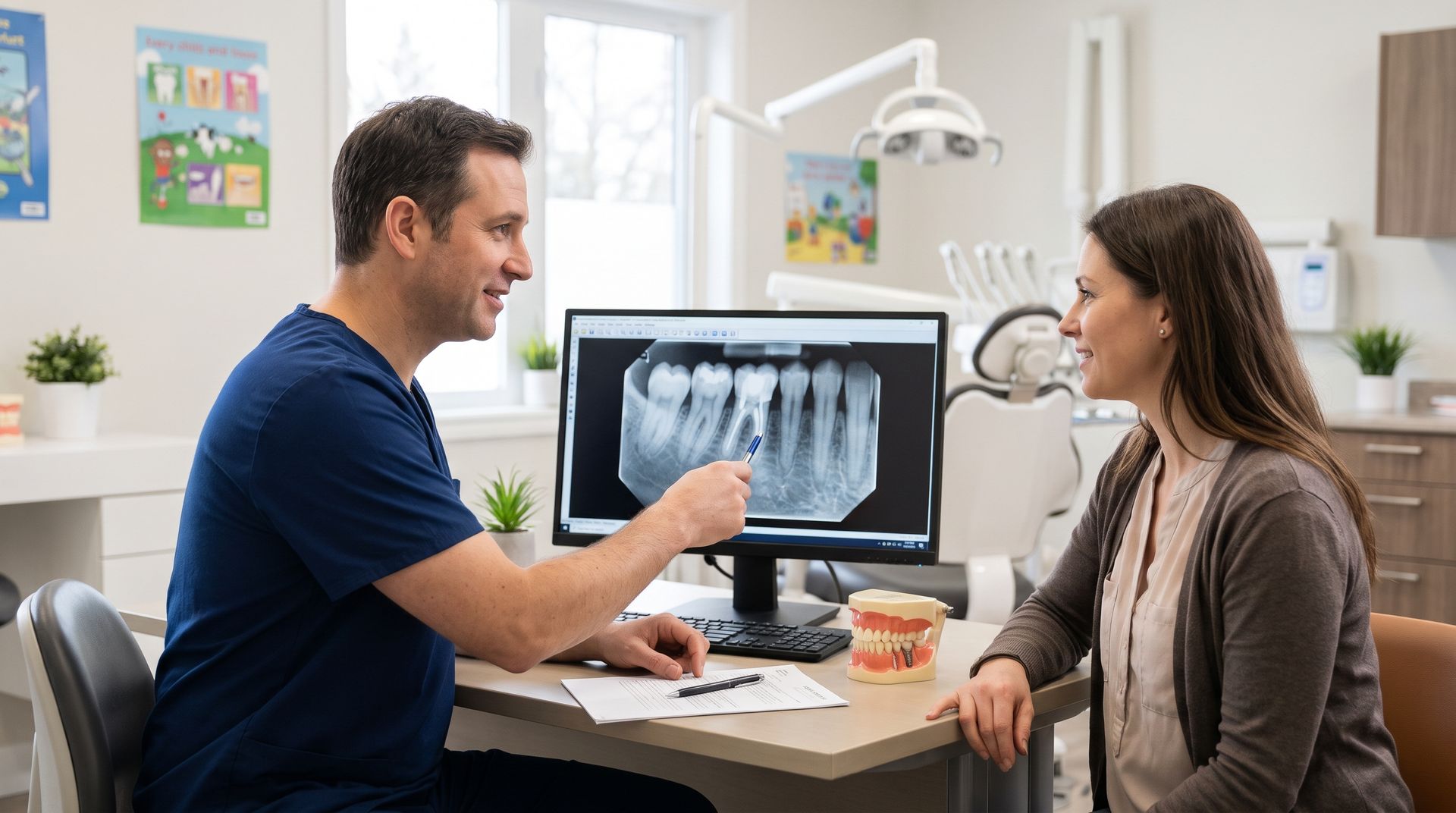

Root Canal Timeline at a Glance
Here is how a typical root canal unfolds from diagnosis to final restoration.
| Step | What Happens | Typical Time |
|---|---|---|
| Exam and diagnosis | X-rays, testing, and treatment planning | About 30 to 60 minutes, sometimes the same day as treatment |
| Root canal appointment | Infected pulp removed, canals cleaned, shaped, and sealed | About 60 to 90 minutes, longer for molars |
| Second visit, if needed | Completing cleaning or sealing after medication | About 45 to 90 minutes |
| Crown preparation | Tooth shaped and impression or scan taken | About 60 to 90 minutes |
| Final crown placement | Permanent crown fitted and cemented | About 30 to 60 minutes |
These are typical ranges. Your dentist will give you a specific estimate after examining the tooth.
How Long the Appointment Takes by Tooth
The main factor in appointment length is how many canals the tooth has and how easy they are to reach.
Front Teeth
Incisors and canines usually have one straight canal. A root canal on a front tooth is often finished in about an hour. Front teeth are also easier to reach, which keeps the appointment shorter.
Premolars
Premolars, the teeth just behind the canines, may have one or two canals. Treatment commonly takes about 60 to 90 minutes.
Molars
Molars have three or four canals, and they sit far back in the mouth, which makes access more challenging. Molar root canals often take 90 minutes or more, and some are split into two visits.
Teeth With Unusual Anatomy
Some teeth have curved, narrow, or extra canals. These take longer to locate and clean, and they are one of the reasons treatment times vary even for the same type of tooth.
One Visit or Two?
Many root canals are completed in a single appointment. Two visits may be recommended in certain situations.
When One Visit Is Usually Enough
A tooth with inflamed or damaged pulp but no major infection, straightforward canal anatomy, and no previous treatment can often be finished in one visit.
When Two Visits Make Sense
- Severe infection or abscess. Placing an antibacterial medication inside the tooth for a short period can help resolve infection before the canals are sealed.
- Complex anatomy. Molars with curved or extra canals may take more time than one appointment allows.
- Retreatment. Teeth that had a root canal before and became reinfected take longer, since old filling material must be removed.
- Patient comfort. Long appointments can be split so patients do not have to keep their mouth open for too long.
Between Visits
If treatment is split, a temporary filling seals the tooth until the next appointment, often one to two weeks later. Avoid chewing hard foods on that side until the tooth is finished. Temporary fillings are not as strong as permanent ones and can crack or wear down.
What Happens During the Appointment
Knowing the steps can make the time feel shorter.
Numbing and Comfort
The area is numbed with local anesthetic. For anxious patients, nitrous oxide or oral sedation is available. Our page on sedation dentistry explains these options.
Isolating the Tooth
A small protective sheet called a rubber dam is placed around the tooth to keep it clean and dry.
Accessing the Pulp
A small opening is made in the top of the tooth to reach the pulp chamber.
Cleaning and Shaping
Infected or inflamed pulp tissue is removed, and the canals are cleaned, shaped, and disinfected.
Sealing
The canals are filled with a biocompatible material, and the opening is sealed with a temporary or permanent filling.
Most patients say the procedure feels similar to getting a large filling. You can learn more about the steps on our
root canal treatment page.
The Crown: The Final Step
The root canal saves the tooth, but the crown protects it.
Why Most Back Teeth Need a Crown
Teeth that need root canals are often already weakened by decay, cracks, or large fillings. After treatment, they can become more brittle. A crown covers the tooth and helps prevent it from cracking. Front teeth sometimes only need a filling if enough structure remains.
How Long the Crown Process Takes
Crown preparation is usually scheduled within a few weeks after the root canal. Traditional lab-made crowns typically require two visits about one to two weeks apart, with a temporary crown in between. Our guide to getting a dental crown after root canal therapy explains the process, and our dental crowns page covers material options.
Do Not Delay the Crown
A root canal tooth left without a crown for too long is more likely to crack or become recontaminated. If that happens, the tooth may not be saveable. Our article on
what happens if a root canal tooth falls out covers what can go wrong.
What Can Make a Root Canal Take Longer
Several factors can add time to treatment:
- Number of canals, with molars taking the longest.
- Curved, narrow, or calcified canals that are harder to clean.
- Severity of infection, which may require medication between visits.
- A cracked tooth, which may need extra evaluation.
- Previous root canal treatment that has to be redone.
- Difficulty getting numb, which can happen with a very inflamed tooth.
- Limited mouth opening or a strong gag reflex.
Your dentist should explain whether any of these apply before treatment begins so you know what to expect.
Will You Be Uncomfortable for That Long?
An hour or more in the chair can sound daunting, but the time usually passes more easily than patients expect.
Numbness Comes First
Once the tooth is numb, most patients feel pressure and vibration rather than pain. If anything feels sharp, tell your dentist, and more anesthetic can be added.
Breaks Are Normal
You can ask for a short break at any point to rest your jaw. A small bite block can also help keep your mouth comfortably open without strain.
Sedation Makes Time Pass Faster
With nitrous oxide or oral sedation, many patients feel relaxed and lose track of time. For patients who dread long appointments, this can make a big difference.
Root Canal Retreatment Timeline
Sometimes a tooth that had a root canal years ago becomes reinfected.
Why Retreatment Takes Longer
The old filling material inside the canals must be removed before the canals can be cleaned again. If the tooth has a crown or post, those may need to be removed or worked around. Retreatment often takes longer than the original root canal and is more likely to require two visits.
Is It Worth It?
Retreatment can often save a tooth that would otherwise need extraction. Your dentist will review X-rays and discuss the outlook before recommending it, and in complex cases may refer you to an endodontist.
Same-Day Root Canals for Tooth Pain
If you are in significant pain, it is often possible to start treatment the same day. In some cases, the dentist will remove the inflamed pulp to relieve pain right away and finish the root canal at a second visit. This approach, sometimes called emergency pulpal therapy, gets you out of pain quickly while leaving enough time to complete treatment properly. If a crack is part of the problem, our guide on
whether a cracked tooth can be saved explains how cracks change the plan. You can also read
do I need a root canal? for common warning signs.
Recovery Time After a Root Canal
The Same Day
Numbness usually wears off within a few hours. Avoid chewing on the treated side until the numbness is gone.
The First Few Days
Mild soreness or tenderness when biting is common for a few days. Over-the-counter pain relievers usually manage it well. Our guide to root canal recovery tips offers practical advice.
Returning to Normal
Most people return to work or school the next day, and many go back the same day. Chew carefully on the treated tooth until the final crown is in place.
When to Call
Call the office if you have severe pain that worsens after a few days, swelling that returns, fever, or if the temporary filling falls out.


Planning Around Work and School
Scheduling Tips
Morning appointments let you rest afterward if needed and leave time to call the office with any questions the same day. If you are having sedation, plan for someone to drive you home.
Combining Appointments
Sometimes the exam and root canal can happen on the same day, especially for patients in pain. Ask about scheduling the crown preparation at the same time you book your root canal.
Do Not Wait Too Long
A tooth that needs a root canal rarely gets better on its own. Pain that suddenly goes away can mean the nerve has died, not that the problem is solved. Our guide to the
signs you need a root canal explains the symptoms to watch for.
Root Canal or Extraction: Does Time Change the Choice?
An extraction is usually faster on the day of treatment than a root canal, but replacing the missing tooth with an implant or bridge adds months of treatment and more appointments. Saving your natural tooth with a root canal and crown is often the faster path to a fully restored bite overall. Our guide on
dental implants vs. bridges covers replacement options if a tooth cannot be saved.
Get a Root Canal Evaluation in Tucson
If you have tooth pain, sensitivity that lingers, or swelling near a tooth, our team can examine it, explain whether a root canal is needed, and give you a clear timeline and estimate before treatment begins. Learn more about our emergency dental care if you are in pain now.
Call Casas Adobes Dentistry at (520) 365-0559 to schedule an appointment. We are located at 7520 N. Oracle Road, Suite 200, in Tucson.

Frequently Asked Questions
How long does a root canal take on a molar?
A molar root canal often takes about 90 minutes or more because molars have three or four canals. Some molar root canals are completed in two visits.
Can a root canal be done in one visit?
Yes. Many root canals are completed in a single appointment. A severe infection, complex canals, or retreatment may require two visits.
How long after a root canal do you get a crown?
Crown preparation is usually scheduled within a few weeks. A lab-made crown typically takes two visits about one to two weeks apart, with a temporary crown in between.
Can I go to work after a root canal?
Most people return to work or school the same day or the next day. If you had sedation, plan to rest for the remainder of the day and have someone drive you home.
How long does pain last after a root canal?
Mild soreness typically lasts a few days and is usually managed with over-the-counter pain relievers. Pain that worsens after a few days should be checked by your dentist.
Share this Post
Casas Adobes Dentistry Blog