Dental Bridge vs. Implant: Which Replacement Option Makes More Sense?

For most patients with healthy gums and enough jawbone, a dental implant is the longer-lasting choice, while a dental bridge is often a faster, lower-cost option that still looks and functions well. After years of helping patients weigh these two options, our team has seen how the right choice depends on bone health, budget, timeline, and long-term goals. We've guided patients through both procedures and watched how each option performs over the years, so we understand the real trade-offs beyond what a price tag shows. This guide walks you through the key differences so you can make a confident decision.
Understanding the Difference Between a Dental Bridge and a Dental Implant
Both options replace missing teeth, but they work in very different ways. Knowing how each one is built helps explain the rest of the comparison.
What a Traditional Dental Bridge Is
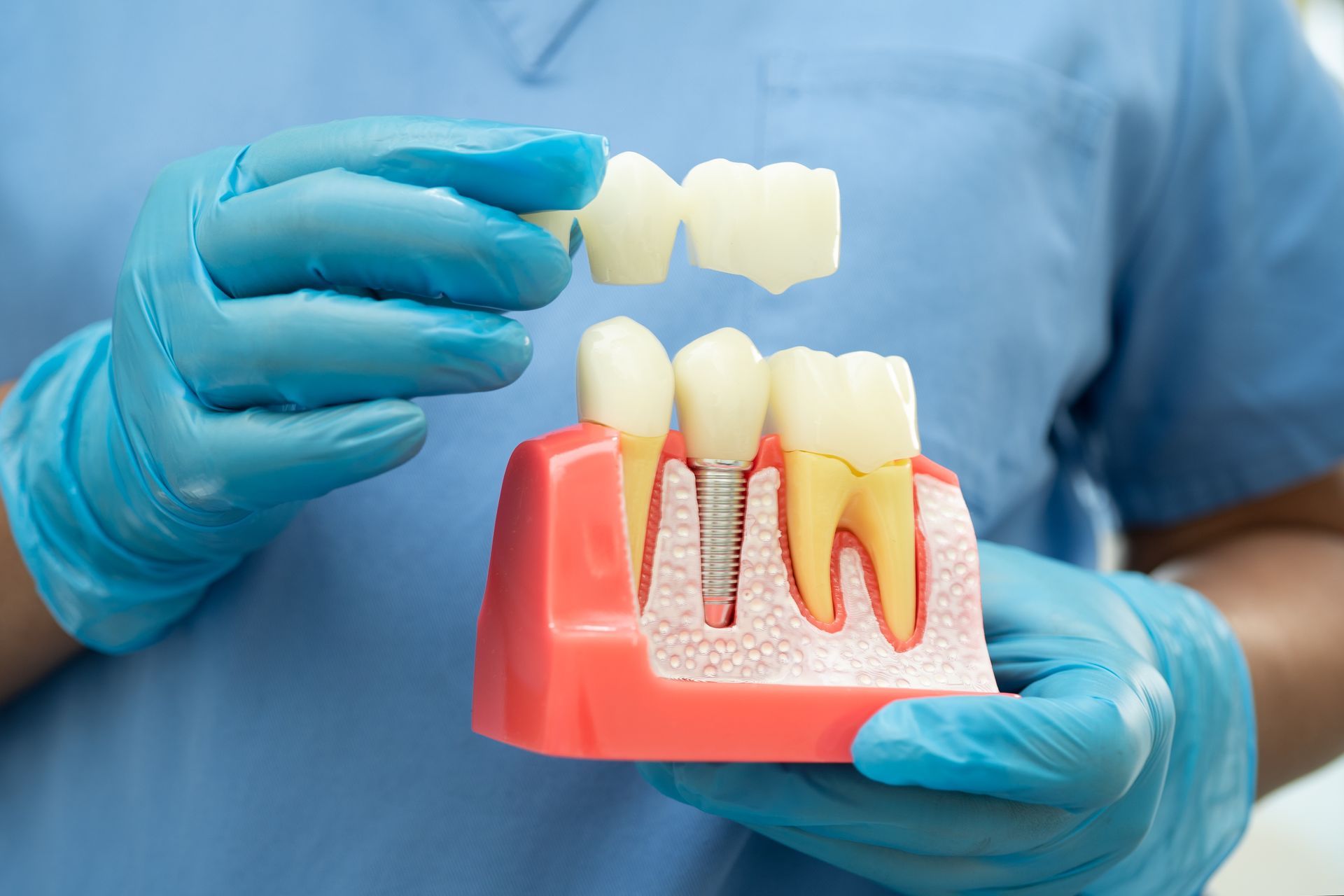
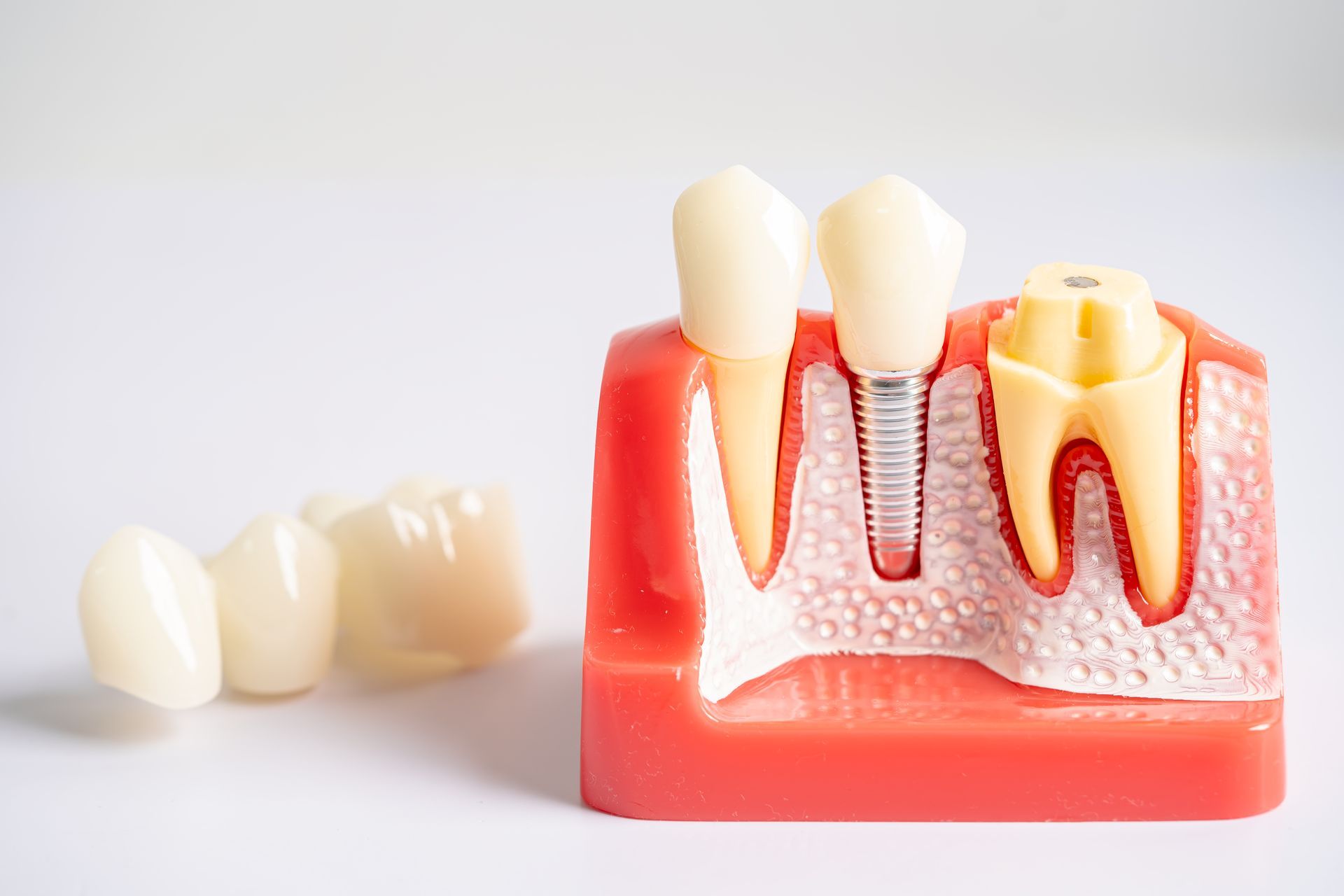
A dental bridge is a fixed restoration that fills the gap left by a missing tooth. It uses the two teeth next to the gap as anchors, with a false tooth, called a pontic, suspended between them. The anchor teeth are shaped down and capped with crowns to hold the bridge in place.
How a Dental Implant Replaces a Missing Tooth
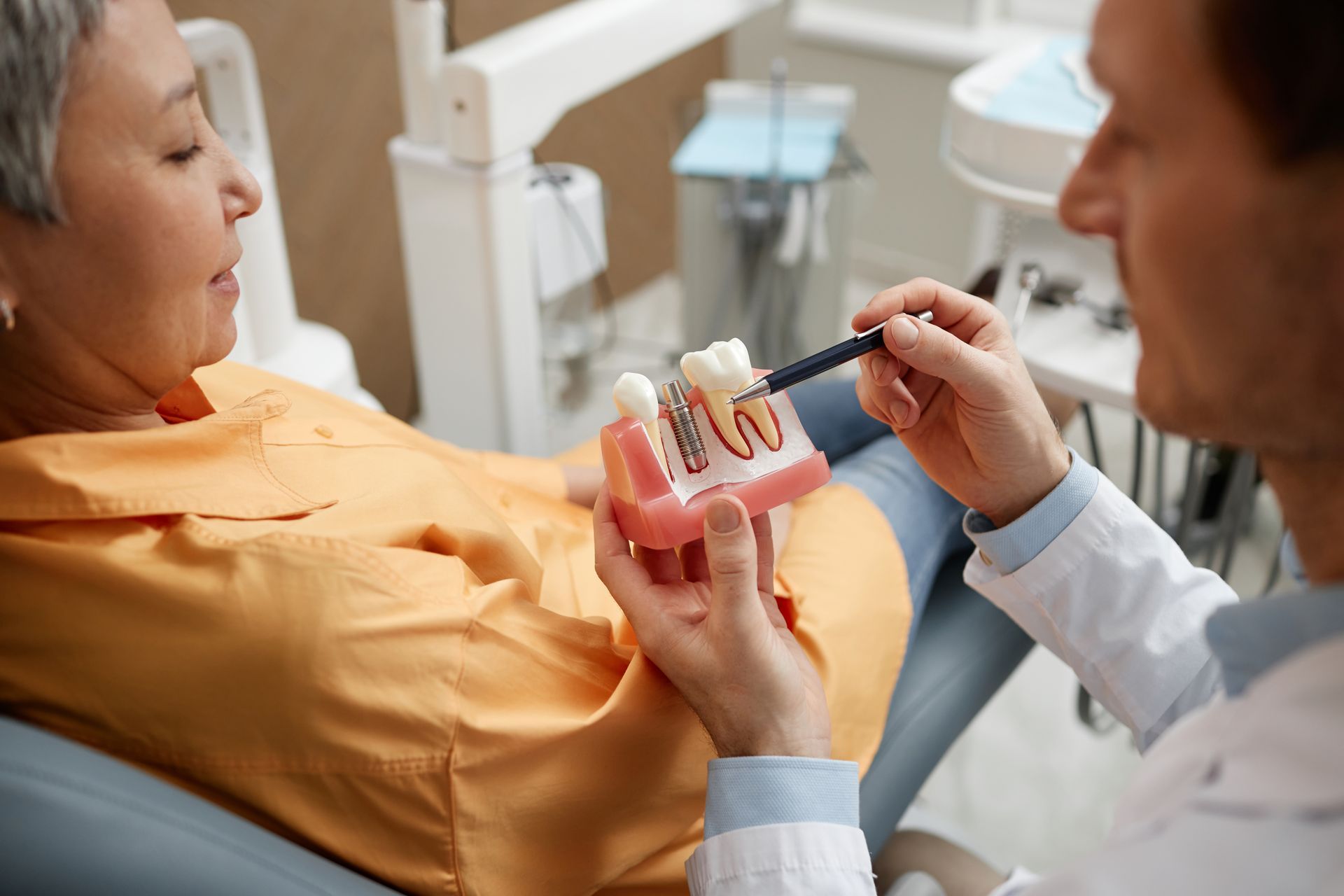
A dental implant is a small titanium post placed into the jawbone, where it acts as an artificial tooth root. After it fuses with the bone, an abutment and a custom crown are attached on top. The result is a standalone replacement tooth that doesn't rely on neighboring teeth.
Why These Two Treatments Are Often Compared
Bridges and implants are the two most common fixed solutions for replacing missing teeth. Both restore chewing, fill the gap, and improve appearance, but they differ in cost, timeline, and long-term oral health impact.
When Dentists Recommend a Dental Bridge
A bridge can be the right answer in several situations, especially when speed or jawbone health is a factor.
Replacing One or Multiple Missing Teeth
Bridges work well for replacing one missing tooth or a few teeth in a row, as long as the surrounding teeth are strong enough to support the restoration.
Patients Looking for a Faster Treatment Timeline
A bridge can usually be completed in just two or three visits over a few weeks. For patients who want a quicker fix, this shorter timeline is a major advantage over implants.
Situations Where Bone Loss Limits Implant Placement
If a patient has significant bone loss and isn't a candidate for a bone graft, a bridge may be a more practical option since it doesn't need to be anchored in the jawbone.
When Dental Implants May Be the Better Choice
For many patients, implants offer benefits that a bridge simply can't match.
Long-Term Stability and Durability
Implants are designed to last decades, often a lifetime. They don't depend on other teeth for support, which makes them very stable over time.
Preserving Jawbone Health After Tooth Loss
When a tooth is lost, the jawbone in that area starts to shrink. An implant stimulates the bone the way a natural tooth root does, helping prevent further bone loss.
Replacing Missing Teeth Without Affecting Neighboring Teeth
Unlike a bridge, an implant doesn't require shaping down healthy teeth on either side of the gap. The surrounding teeth stay untouched.
Comparing the Procedure Process
The treatment timeline is one of the biggest differences between bridges and implants.
What to Expect During a Dental Bridge Procedure
A bridge usually takes two visits. The dentist prepares the anchor teeth, takes impressions, and places a temporary bridge. At a follow-up visit, the final bridge is bonded into place.
What to Expect During Dental Implant Surgery
An implant procedure starts with placing the titanium post into the jawbone. After several months of healing, the abutment and crown are added. In some cases, a bone graft is needed before the implant can be placed.
Healing and Recovery Differences Between Both Options
Implant healing timelines
Implants need three to six months to bond with the jawbone before the final crown is placed. Bridges have no bonding process, so healing time is much shorter.
Temporary restorations during treatment
Both procedures often involve temporary restorations. Bridge patients wear a temporary crown or bridge for a few weeks, while implant patients may wear a temporary tooth during the healing phase.
Follow-up visits and adjustments
Bridges typically require fewer follow-ups. Implants involve more appointments to track healing and make adjustments along the way.
Cost Differences Between Bridges and Implants
Cost is one of the most common questions patients ask, and the answer depends on more than just the upfront price.
Upfront Costs vs. Long-Term Value
A bridge costs less at the start, but it usually needs to be replaced every 10 to 15 years. An implant costs more upfront but can last decades, which often makes it a better long-term value.
Why Dental Implants Often Cost More Initially
Implants involve surgery, multiple visits, and custom components. They also often require advanced imaging and planning, which adds to the price.
Replacement and Maintenance Costs Over Time
A patient who chooses a bridge may pay for one or two replacements over their lifetime. Implants rarely need replacement, though the crown on top may need to be redone after 10 to 15 years.
Insurance Coverage Considerations
Many insurance plans cover part of a bridge but offer less coverage for implants. Coverage varies, so it's best to check directly with your plan.
Longevity and Durability Comparison
How long each option lasts is one of the most important factors in choosing the right one.
How Long Dental Bridges Typically Last
A well-cared-for bridge lasts about 10 to 15 years. The lifespan depends on the health of the anchor teeth and daily oral hygiene.
Expected Lifespan of Dental Implants
The implant post often lasts a lifetime when cared for properly. The crown on top usually lasts 10 to 15 years before needing replacement.
Factors That Affect Long-Term Success
Oral hygiene habits
Daily brushing, flossing, and regular dental visits make a big difference for both options.
Smoking and lifestyle factors
Smoking can shorten the lifespan of both bridges and implants by affecting gum and bone health.
Bite pressure and teeth grinding
Heavy grinding can wear down a bridge or crown faster. A night guard can help protect either restoration.
How Each Option Affects Oral Health
Beyond cost and timeline, the long-term impact on your mouth is worth weighing carefully.
Bone Loss and Jaw Structure Changes
A bridge sits above the gumline and doesn't stop bone loss in the area of the missing tooth. An implant replaces the tooth root and helps keep the jawbone strong.
Impact on Surrounding Teeth
A bridge depends on the neighboring teeth, which must be reshaped to support the restoration. An implant stands alone and protects the health of nearby teeth.
Cleaning and Maintenance Requirements
Bridges need special floss threaders or water flossers to clean under the pontic. Implants can be brushed and flossed much like natural teeth, with attention to the gumline. Strong oral hygiene habits protect both options.
Appearance and Everyday Comfort
For most patients, a tooth replacement needs to look natural and feel comfortable from day one.
Natural Look and Feel Comparison
Both bridges and implants can look very natural. Implants tend to feel more like a real tooth because they're anchored in the jaw, while bridges can feel slightly bulkier near the gumline.
Eating and Speaking With Confidence
Both options restore the ability to chew, speak, and smile normally. Most patients adjust quickly to either restoration.
Stability While Chewing and Biting
Implants are extremely stable because they're fused to the bone. Bridges are also stable but rely on the strength of the anchor teeth.
Pros and Cons of Dental Bridges
Bridges are a proven option, but they come with trade-offs worth knowing.
Advantages of Choosing a Bridge
- Faster treatment, often completed in two to three visits
- Lower upfront cost than implants
- No surgery required
- A good option when bone loss limits implant placement
- Often covered, at least partially, by dental insurance
Limitations and Potential Drawbacks
- Requires reshaping the two neighboring teeth
- Doesn't prevent bone loss in the area of the missing tooth
- Usually needs replacement every 10 to 15 years
- Cleaning under the bridge takes extra effort
- Anchor teeth may develop issues over time
Pros and Cons of Dental Implants
Implants offer some of the most durable, natural-feeling results, but they aren't right for everyone.
Benefits of Implant-Based Tooth Replacement
- Can last a lifetime with proper care
- Preserves the jawbone and facial structure
- Doesn't affect neighboring teeth
- Looks, feels, and functions like a natural tooth
- Cleaned and cared for like a real tooth
Potential Challenges or Limitations
- Higher upfront cost
- Treatment timeline of several months
- Requires surgery and healing time
- May need a bone graft if jawbone is thin
- Not ideal for patients with certain health conditions
Which Tooth Replacement Option Makes the Most Sense for You?
The right choice depends on more than what a chart or article can show. It comes down to your unique situation.
Factors That Influence the Right Choice
Several details guide this decision, including:
- The condition of your jawbone
- The health of nearby teeth
- Your overall health and any medical conditions
- Your budget and insurance coverage
- How quickly you want treatment finished
- Your long-term goals for oral health
Budget, Timeline, and Oral Health Goals
A patient focused on the lowest upfront cost may lean toward a bridge. A patient who wants the most durable, long-term option often chooses an implant. Both choices can work well when matched to the right person.
Why a Personalized Dental Evaluation Matters
A consultation with your dentist gives you the clearest answer. Imaging, an exam, and a conversation about your goals help shape a plan that fits your needs.
Bridge vs. Implant at a Glance
| Feature | Dental Bridge | Dental Implant |
|---|---|---|
| Average Lifespan | 10 to 15 years | 25+ years to a lifetime |
| Treatment Timeline | 2 to 4 weeks | 3 to 6 months |
| Surgery Required | No | Yes |
| Affects Neighboring Teeth | Yes, reshaping needed | No |
| Prevents Bone Loss | No | Yes |
| Upfront Cost | Lower | Higher |
| Long-Term Cost | Higher with replacements | Often lower over time |
| Insurance Coverage | More commonly covered | Often partial coverage |
Choosing the Right Dentist for Tooth Replacement Treatment
The skill and experience of your dental team has a major impact on your results.
Experience With Restorative Dentistry
Look for a dentist who regularly performs both bridges and implants. Their experience helps them recommend the best option for your case.
Technology and Treatment Planning
Modern imaging, digital impressions, and careful planning lead to better outcomes. Ask about the tools and process the practice uses.
Long-Term Follow-Up and Patient Support
Tooth replacement isn't just about the procedure. Long-term care, follow-up visits, and clear communication all matter for lasting success.
Final Thoughts on Dental Bridges vs. Implants
Both bridges and implants are reliable, well-tested ways to replace missing teeth. The right choice depends on your health, your goals, and your budget.
Balancing Cost, Longevity, and Oral Health
A bridge offers speed and lower upfront cost. An implant offers longer-lasting results and better protection for your jawbone. Each has a place depending on what matters most to you.
Finding a Solution That Fits Your Lifestyle and Goals
The best decision is one made with a trusted dental team who understands your full picture. A clear, honest conversation leads to the smartest path forward.
Ready to Talk Through Your Tooth Replacement Options?
Choosing between a dental bridge and a dental implant is easier when you have an honest, expert opinion based on your specific situation. Our team is here to walk you through the choice, answer your questions, and help you understand what will work best for your smile and your long-term oral health.
Contact our office
today to schedule a consultation.

Frequently Asked Questions
Can I switch from a dental bridge to an implant later?
Yes, in many cases. If a bridge fails or you decide you want an implant down the road, your dentist can remove the bridge and place an implant. A bone graft may be needed first if bone loss has occurred under the bridge.
Is a dental implant more painful than getting a bridge?
Most patients are surprised by how comfortable both procedures are. Implants involve minor surgery with local anesthesia, and discomfort is usually mild and short-lived. Bridge placement is non-surgical, so recovery feels lighter, but neither option is considered painful with modern techniques.
What happens if I do nothing about a missing tooth?
Leaving a gap can lead to several problems. Nearby teeth may shift, the opposite tooth can drift out of position, and the jawbone in that area begins to shrink. Over time, this can affect your bite, your appearance, and your ability to chew normally.
Can a bridge or implant fail?
Both can fail, though success rates are high. Bridges may fail if the anchor teeth develop decay or weaken. Implants may fail if the bone doesn't fuse properly or if gum disease develops around the implant. Good oral hygiene lowers the risk for both.
Do bridges or implants feel more natural when eating?
Most patients say implants feel closest to a natural tooth because they're anchored in the bone. Bridges feel stable too, but the sensation of biting and chewing can feel slightly different since the pontic sits on the gums rather than in them.
Share this Post
Casas Adobes Dentistry Blog