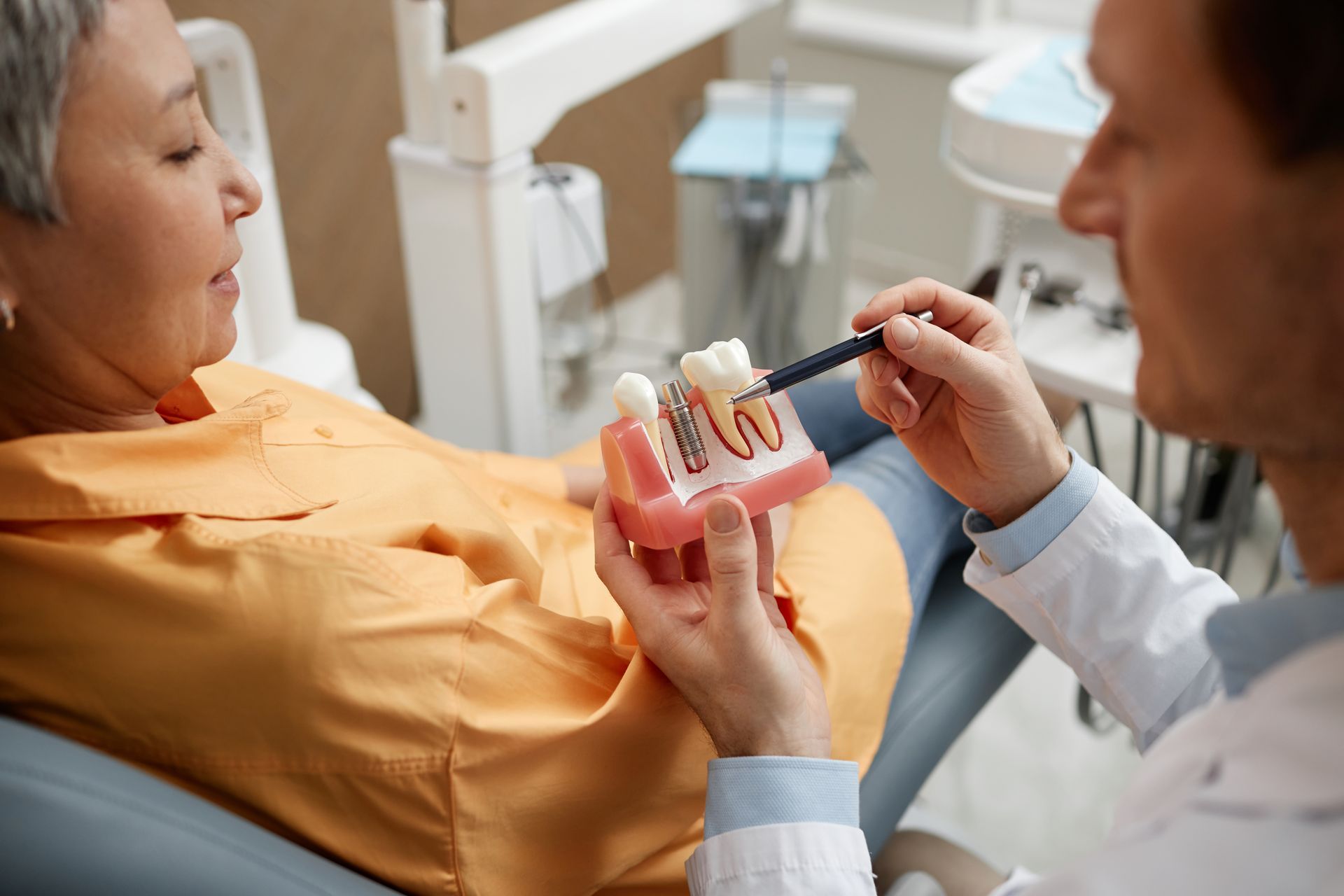
Getting a Dental Crown After Root Canal Therapy

Root canal treatment is a process that the dentist uses to remove damaged or infected tissue from inside a tooth when an extensive infection occurs. The restoration process may require removing some of the original tooth structure. After a root canal at the dentist's office, a dental crown may be placed on the tooth to protect it from further infection. The artificial crown will look and feel much like a real tooth. Dental crowns can improve the oral health and aesthetics of patients' teeth.
Why is a Dental Crown Necessary?
The dentist will need to drill through the tooth using a specialized device to reach the diseased pulp. They may apply a local anesthetic to numb the tooth. Some patients may need sedation to feel at ease throughout the procedure. The dental professional will remove diseased tissue and then rebuild the tooth's structure. As the last step in root canal treatment, the dentist may propose a dental crown to cover the tooth's exposed crown and protect the tooth from further damage. The prosthetic crown may be made of metal, porcelain, or a mix of the two.
A dental crown is generally necessary to properly repair and preserve a tooth after treatment. However, an inlay or onlay may be adequate for some patients. For molars, an onlay covers the chewing surface and the edge of one or more of the tooth's sides, whereas an inlay is placed into the tooth's top surface. Dental crowns are more reliable than other prosthetic options because they cover the entire tooth. After the restoration treatment, the dentist will evaluate the options for restoring the patient's smile and safeguarding the tooth from any harm.
The Crown Procedure
Sometimes, patients can get permanent crowns in the same root canal session. In other cases, a temporary crown will be placed before they leave the dentist's office. Making a high-quality dental crown in a lab might take a few weeks. As patients wait for the permanent crown to arrive, the dentist may use a dental filling or a temporary crown to cover the tooth and prevent damage.
For a dental crown to fit properly, some of the tooth's enamel must be filed down. This process, known as "prepping," will happen after the root canal procedure.
Placing The Crown And Postoperative Care
Patients will make a second visit to the dentist's office after the permanent crown is ready. The dentist will examine the crown's fit, color, and shine to ensure that it complements the other teeth. The dental professional will use a strong cement to secure the crown after they are pleased with its fit. Dental crowns may survive for 10 years or more with proper care and regular dental checkups.
Final Note
Do not hesitate to contact the dental office if you suddenly start feeling any discomfort or sensitivity in your teeth. A root canal infection is a dental emergency. After restoring your tooth, you can have a dental crown that looks and feels just like your original tooth.
Request an appointment here: https://www.casasadobesdentistry.com or call Casas Adobes Dentistry at (520) 365-0559 for an appointment in our Tucson office.
Check out what others are saying about our dental services on Google: Root Canal Treatment in Tucson, AZ.
Share this Post
Casas Adobes Dentistry Blog