Dentures vs. Implant-Supported Dentures: What's the Better Long-Term Option?

For most Tucson patients replacing multiple teeth or a full arch, implant-supported dentures are the better long-term option. They cost more upfront but stay firmly in place, let you eat normally, protect the jawbone from shrinking, and last decades longer than traditional dentures. Traditional dentures still make sense for patients who are not implant candidates, who need an immediate solution while healing, or who prefer the lower upfront cost.
Casas Adobes Dentistry has restored full smiles for patients across Tucson, Oro Valley, Marana, and the Catalina Foothills using both removable dentures and implant-supported options. The right choice depends on bone health, budget, lifestyle, and how long you plan to live with the result. This guide walks through every angle so you can decide with full information instead of marketing language.
In This Guide
- The Quick Answer
- What Each Option Actually Is
- Fit and Comfort in Daily Life
- Eating: What You Can and Cannot Do
- Stability and Slippage
- Long-Term Bone Health
- Cost Comparison
- Maintenance and Daily Care
- When Traditional Dentures Are the Right Choice
- When Implant-Supported Dentures Make More Sense
- Side-by-Side Comparison
- How to Decide for Your Smile
- FAQ
The Quick Answer
Both options replace missing teeth, but they work differently and produce different long-term outcomes.
Pick Traditional Dentures If
Traditional dentures make sense if budget is the deciding factor, if you are not a candidate for implants due to medical conditions or insufficient bone, if you need an immediate solution while healing for future implants, or if you prefer a removable option you can take out at night.
Pick Implant-Supported Dentures If
Implant-supported dentures make sense if you plan to live with the result for 10 or more years, if eating comfortably matters to you, if you have noticed your jaw shrinking from years of denture wear, or if traditional dentures have stopped fitting well no matter how many adjustments you have had.
For patients somewhere in between,
All-on-4 implants often provide a middle path: the stability of implants without the cost of replacing every tooth individually.
What Each Option Actually Is
The two options share the same goal but use very different technology.
Traditional Dentures
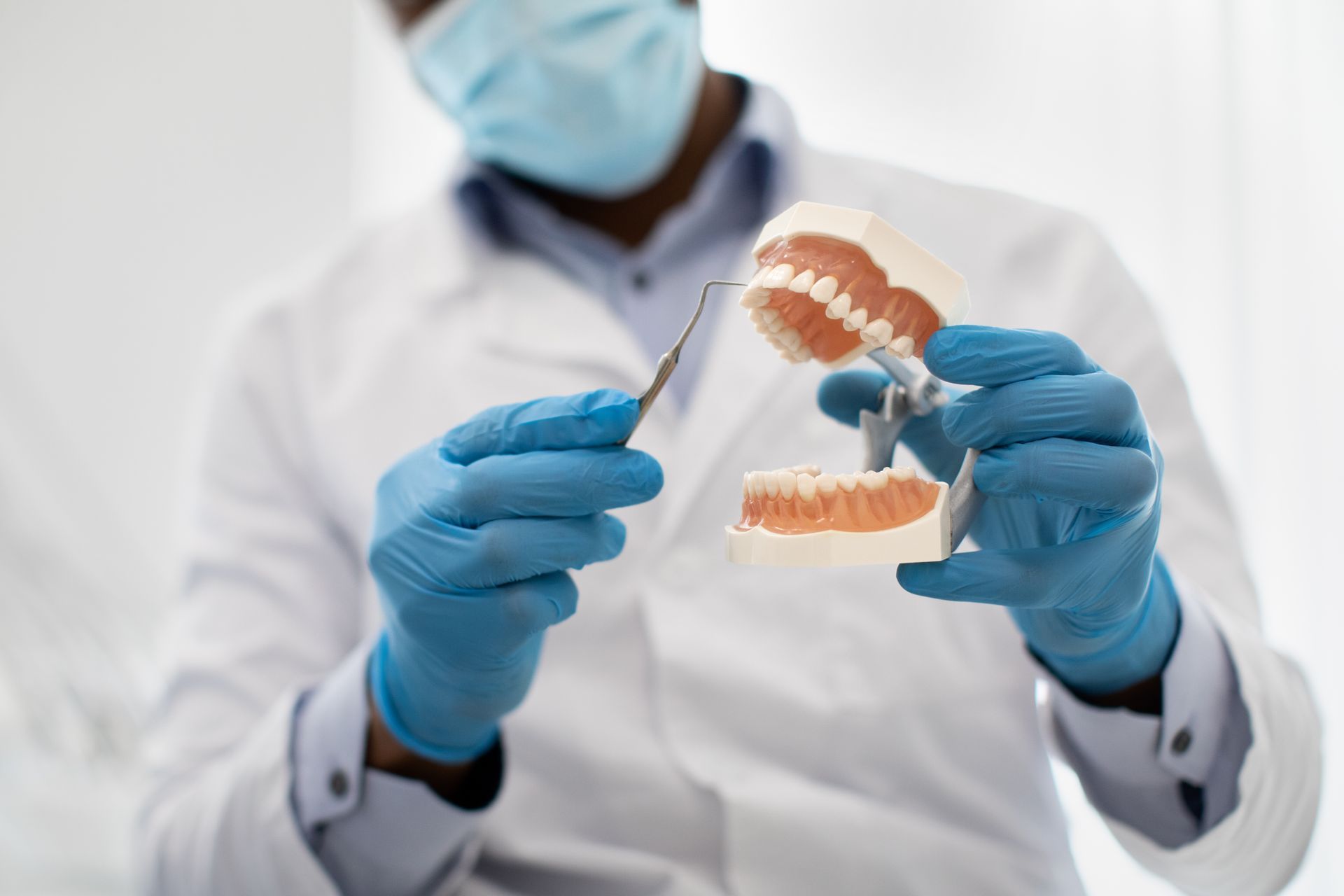
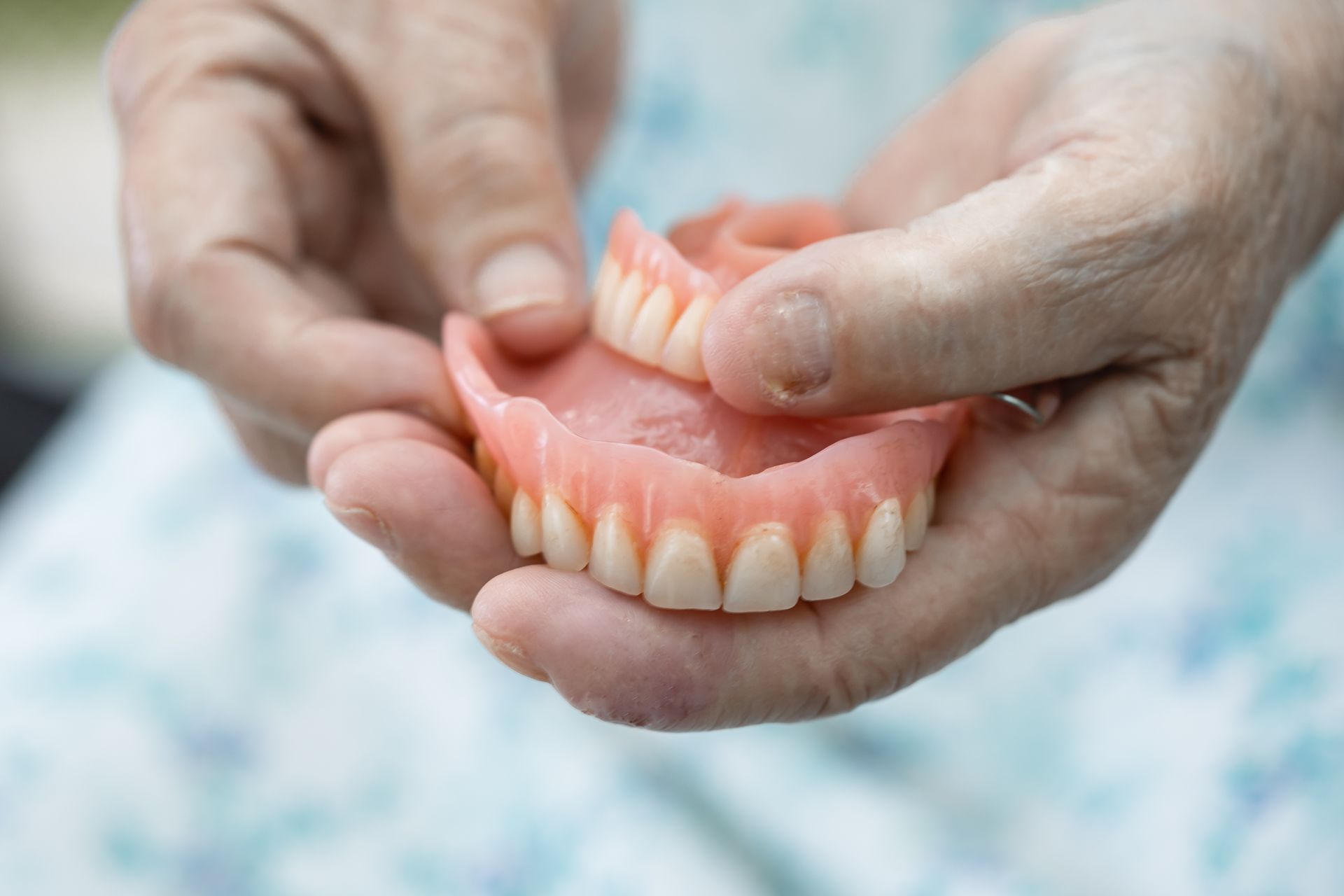
A traditional denture is a removable appliance that rests on the gums. The upper denture uses suction against the roof of the mouth to stay in place. The lower denture relies on the shape of the jaw ridge and is generally less stable. Many patients add adhesive cream or paste to improve hold.
Traditional dentures are made from acrylic with porcelain or composite teeth set into the base. They are removed for cleaning, removed at night, and replaced every 5 to 8 years as the underlying jaw shape changes. Our dentures and partial dentures service page covers traditional options in more depth.
Implant-Supported Dentures
Implant-supported dentures snap onto or screw into dental implants placed in the jawbone. Anywhere from two to six implants per arch hold the denture securely. The denture either snaps on and off for cleaning (overdenture) or stays in place permanently and is only removed by your dentist (fixed denture).
The implants themselves are titanium posts that fuse with the jawbone, providing a stable foundation that does not shift. Our
implant-supported dentures guide walks through how this works in real Tucson cases.
Fit and Comfort in Daily Life
This is where most patients notice the biggest difference in daily life.
Traditional dentures, especially lower ones, can shift when you eat, talk, or laugh. The fit changes over time as the jawbone underneath continues to shrink, requiring relines, refits, or replacement every few years. Many patients describe a "covered" feeling because the upper denture sits across the roof of the mouth, which can also affect taste.
Implant-supported dentures stay in place. They do not shift when you speak or chew. The upper version can often skip the palate coverage, restoring full taste and a more natural feeling in the mouth. Patients consistently describe the difference as feeling like having their own teeth back, not like wearing an appliance.
For patients who have worn traditional dentures for years and then switched to implant-supported versions, the change in comfort is usually the first thing they mention.
Eating: What You Can and Cannot Do
What you can eat depends heavily on which option you choose.
Traditional Denture Limits
Traditional dentures restrict what you can eat comfortably. Foods that tend to be problematic include:
- Hard foods: Whole apples, raw carrots, nuts, and hard candies.
- Sticky foods: Caramels, taffy, and dense bread that pulls at the denture.
- Tough meats: Steak and chewy cuts that require strong, sustained biting.
- Foods that get under the denture: Seeds, popcorn, and small pieces of vegetables.
Many denture wearers adapt their diet over years, sometimes losing access to foods they enjoy.
Eating With Implant-Supported Dentures
Implant-supported dentures restore something close to natural chewing ability. Most patients can eat anything they want, including steak, raw vegetables, and whole fruits. Bite force returns to 70 to 90 percent of natural teeth, compared to about 10 to 20 percent with traditional dentures.
The combination of stable hold and full chewing function is why patients who switch usually say the change improved their quality of life more than they expected.
Stability and Slippage
Slippage is one of the most common complaints with traditional dentures. The lower denture is particularly prone to lifting when chewing certain foods, speaking, or laughing. Many patients use adhesive multiple times per day to manage this, and even with adhesive the hold is not always reliable.
Why Lower Dentures Slip More
The lower jaw has less surface area for the denture to grip, and the tongue and muscle movement during chewing actively pushes the denture. Many patients adapt their eating habits, their speech patterns, and even their social activities around the unpredictability of a slipping lower denture.
How Implant-Supported Dentures Solve It
Implant-supported dentures do not slip. The implants anchor the appliance securely, whether it snaps on or stays fixed. There is no need for adhesive, no shifting during meals, and no anxiety about the denture coming loose in social situations.
For patients who have spent years managing slippage with traditional dentures, this is often the single biggest reason they switch. The freedom from worrying about whether the denture will hold often improves quality of life more than expected.
Long-Term Bone Health
This is the factor most patients do not think about until it becomes a problem.
How Traditional Dentures Affect Bone
When teeth are missing, the jawbone in those areas starts to shrink because there are no tooth roots stimulating it. Wearing a removable denture does not stop this process and may accelerate it because the constant pressure on the gum tissue compresses the bone underneath. Over 10 to 20 years of denture wear, the change in jaw shape is significant, which is why long-term denture wearers often develop a sunken facial appearance.
How Implants Protect Bone
Dental implants behave like natural tooth roots, stimulating the surrounding bone every time you chew. This prevents the resorption that would otherwise continue. Patients who choose implant-supported dentures keep their facial structure intact over time and avoid the gradual jaw shrinkage that traditional denture wearers experience.
For patients in their 50s or 60s who plan to live with the result for decades, the bone health argument alone often tips the decision toward implants.
Cost Comparison
Cost is where traditional dentures win on the upfront number.
Upfront Investment
Traditional dentures cost a fraction of implant-supported versions. A complete set of upper and lower traditional dentures is typically in a price range accessible to most patients, especially with insurance coverage. Implant-supported dentures cost several times more upfront because of the implants themselves, the surgery, and the specialized restoration work.
Lifetime Cost Math
Over 20 to 30 years, the math changes. Traditional dentures need to be replaced every 5 to 8 years, plus regular relines and refits. The cumulative cost over decades is significant. Implant-supported dentures, once placed, last 20 to 30 years or longer with minimal additional work. The denture portion may need to be replaced periodically, but the implants themselves are typically a one-time investment.
For patients in their 50s or 60s, the long-term cost difference between the two options is much smaller than the upfront difference suggests, especially when bone loss, comfort, and quality of life are factored in.
Insurance and Financing
Dental insurance typically covers a portion of traditional dentures more reliably than implants. Implant coverage varies widely by plan. We verify your specific coverage before treatment and provide a written estimate with the out-of-pocket cost. Financing options are available for patients who want the implant route but need to spread the cost.
Maintenance and Daily Care
Both options need daily care, but the routines differ.
Traditional Denture Care
Traditional dentures need to be removed and cleaned daily. They should be brushed with a denture brush and a non-abrasive cleaner, then soaked overnight in a denture solution. Most dentists recommend leaving them out at night to give the gum tissue time to rest. Regular dental visits monitor fit and check for any sores or irritation under the denture.
Implant-Supported Denture Care
Implant-supported dentures still need daily cleaning, but the routine depends on the type. Snap-on overdentures are removed and cleaned similarly to traditional dentures, with extra attention to the attachment points. Fixed implant dentures stay in the mouth and are cleaned like natural teeth: brushing, special floss or water flossers for under the bridge, and regular professional cleanings.
Both options need professional checkups every six months. For implant-supported versions, the dentist checks the implants and attachments, which last decades with proper care.
When Traditional Dentures Are the Right Choice
Traditional dentures still make sense in specific situations.
When You Are Not an Implant Candidate
Patients with certain medical conditions, uncontrolled diabetes, severe bone loss without willingness to graft, or who take medications that interfere with bone healing may not be candidates for implants. Traditional dentures restore function and appearance without those requirements.
When Budget Is the Deciding Factor
For patients on a fixed income or without the means to invest in implants, traditional dentures provide a workable solution. A well-made denture restores eating and smiling capability at a much lower cost.
As a Temporary Solution
Some patients use traditional dentures temporarily while healing from extractions or while saving for implant-supported versions. An immediate denture placed at the time of extraction lets you function during the healing period before implants are placed.
For more on these situations, see our
options for replacing missing teeth page.
When Implant-Supported Dentures Make More Sense
For patients with the option, implant-supported dentures usually deliver better long-term outcomes.
Long-Term Living With the Result
If you plan to live with the restoration for 10 years or more, the investment in implants pays off in comfort, function, and bone preservation. Patients in their 50s and 60s especially benefit from a solution that ages well over decades rather than needing repeated adjustments and replacements.
Eating and Speaking Confidently
Patients who eat in social settings, who depend on clear speech for work, or who simply want to enjoy their meals find the comfort of implant-supported dentures hard to give up once they experience it. The shift from constantly managing a denture to not thinking about it is significant.
Traditional Dentures Have Stopped Fitting Well
If you have worn traditional dentures and are now dealing with constant slippage, sore spots, or repeated adjustments that no longer hold, the underlying bone has likely shrunk to the point where traditional dentures cannot fit reliably. Implant-supported versions solve this directly because the implants stabilize the appliance regardless of what the gum tissue does.
Facial Structure Preservation
For patients in their 50s or 60s thinking about how they will look in their 70s and 80s, the bone preservation that implants provide protects facial structure and a more natural appearance over decades. Our
3 benefits of implant-supported dentures covers this further.
Side-by-Side Comparison
This is the comparison patients want on one screen.
| Factor | Traditional Dentures | Implant-Supported Dentures |
|---|---|---|
| Upfront cost | Lower | Higher |
| Lifetime cost (20+ years) | Higher (multiple replacements) | Lower (lasts decades) |
| Eating ability | 10-20% of natural | 70-90% of natural |
| Stability | Can slip, may need adhesive | Stays firmly in place |
| Speaking | May affect speech | Natural speech |
| Bone health | Bone continues to shrink | Bone is preserved |
| Cleaning | Remove and soak daily | Brush or remove (depends on type) |
| Lifespan | 5 to 8 years per set | 20 to 30+ years for implants |
| Adhesive needed | Often yes | No |
| Palate coverage (upper) | Yes (covers roof of mouth) | Often no |
| Time to complete | A few weeks | 4 to 9 months |
| Surgery required | No | Yes (implant placement) |
| Bone graft sometimes needed | No | Sometimes |
| Best for | Patients on a budget or not implant candidates | Long-term solution, active lifestyles |
How to Decide for Your Smile
The right choice depends on your specific situation, your priorities, and your long-term outlook.
The first step is always a consultation with imaging. We take a 3D scan, evaluate your bone health, discuss your medical history, and talk through your priorities. Some patients walk in expecting traditional dentures and learn implants are an option they had not considered. Others come in wanting implants and learn that traditional dentures might be a better fit for their specific situation. Both are valid outcomes of a real conversation.
Contact Casas Adobes Dentistry to schedule a tooth replacement consultation. We see patients across Tucson, Oro Valley, Marana, and the Catalina Foothills, and we walk through every option before any treatment is recommended. For broader background on both options, our
dental implants service page and
dentures service page cover the full details.

Frequently Asked Questions
Can I switch from traditional dentures to implant-supported dentures later?
Yes, in most cases. We evaluate the bone underneath the current dentures with a 3D scan. If there is enough bone, implants can be placed. If years of denture wear have caused significant bone loss, a graft may be needed first. The transition is straightforward for most patients.
How many implants do I need for implant-supported dentures?
For a snap-on overdenture, two to four implants per arch are typical. For a fixed implant denture (not removable), four to six implants per arch are standard. The exact number depends on your bone, the type of restoration, and the design we recommend after imaging.
Are implant-supported dentures permanent?
The implants themselves are designed to last decades and often a lifetime. The denture portion attached to the implants may need to be replaced or refurbished every 10 to 20 years. Fixed implant dentures stay in the mouth permanently and are only removed by your dentist.
Do implant-supported dentures look like real teeth?
Yes. Modern implant-supported dentures are designed to closely match natural tooth color, shape, and gum line appearance. Most patients say their result looks more like their natural teeth than traditional dentures ever did.
What if I cannot afford implant-supported dentures right now?
Traditional dentures provide a real solution while you decide on a long-term plan. Some patients use traditional dentures for a few years and transition to implants when the budget allows. Financing options also make implant-supported versions accessible for many patients who initially thought they were out of reach.
Share this Post
Casas Adobes Dentistry Blog