Signs You May Need a Dental Crown

You may need a dental crown if you have a cracked or broken tooth, a large filling that is failing, a tooth worn down or badly decayed, a tooth that has had a root canal, or a tooth that is sensitive and structurally weak. A crown is a custom cap that covers and protects a damaged tooth, restoring its strength, shape, and appearance. The clearest sign is a tooth that is too damaged for a simple filling but still savable, which is exactly what a crown is designed for.
At Casas Adobes Dentistry in Tucson, AZ, our team, led by Dr. Christopher Chin, restores damaged teeth with crowns for patients throughout the Tucson and Casas Adobes area. Below are the most common signs that a tooth may need a crown, what a crown does, and when to see a dentist so a small problem does not become a bigger one.
Start with the signs, then see what a crown does and when to act.
In This Guide
- Common signs you may need a crown: The situations to watch for.
- What a dental crown does: The problem it solves.
- Crown vs filling: which you need: How dentists decide.
- Signs by symptom: Matching what you feel to the cause.
- What happens if you wait: Why timing matters.
- When to see a dentist: Getting it checked.
- Frequently asked questions: Quick answers to common questions.

Common Signs You May Need a Crown
Several situations point toward needing a crown rather than a smaller repair. If one or more of these applies to you, it is worth an exam to confirm what the tooth needs.
Damage to the Tooth Structure
The most common reason for a crown is a tooth that has lost too much structure to be repaired with a filling alone. A crown wraps and protects what remains so the tooth can function again.
- A cracked or fractured tooth that needs to be held together.
- A broken or chipped tooth with significant loss of structure.
- A tooth worn down by grinding or years of use.
- A large old filling that is failing or too big to replace with another filling.
Teeth take a lot of force every day, and once a tooth has lost a meaningful amount of its structure, each bite adds stress to what remains. A crown redistributes that force across a protective cap so the weakened tooth is not doing all the work on its own, which is why it is the go-to fix when a filling can no longer keep up.
Decay and Weakness
Extensive decay or a weakened tooth also often calls for a crown. When a tooth is too compromised for a filling, a crown restores its strength and seals it against further decay.
A tooth that is severely decayed, or one that feels weak and sensitive when you bite, may not have enough healthy structure left to support a filling. A crown covers the whole tooth and lets you use it normally again.
Teeth that have had a root canal fall into this group too. Removing the infected pulp saves the tooth but leaves it more brittle, so a crown is usually placed afterward, especially on back teeth, to protect it from cracking under normal chewing forces.
What a Dental Crown Does
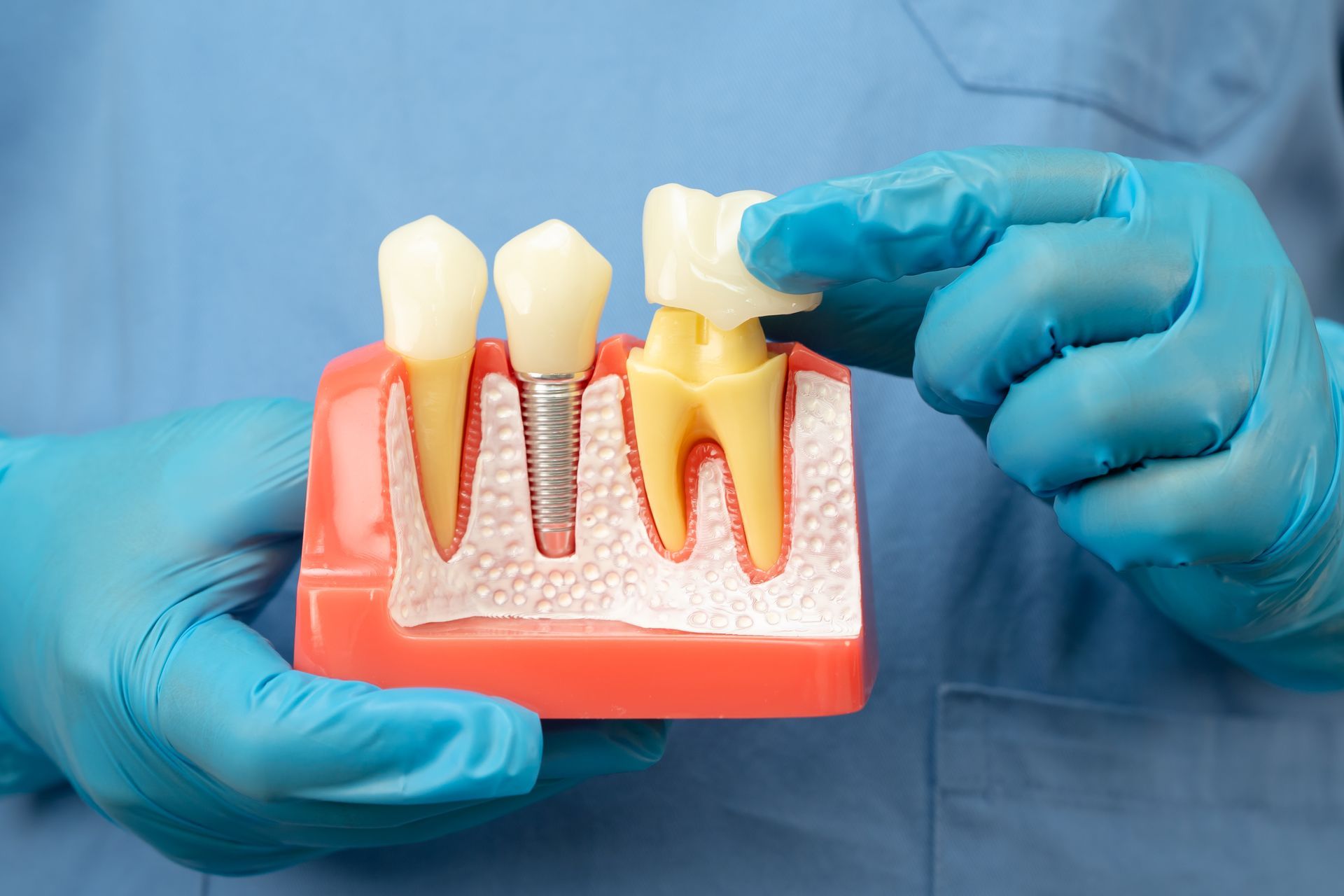
Understanding what a crown does makes the signs easier to recognize. A crown is essentially a protective cap for a damaged tooth, custom-made to fit over what remains.
A Cap That Restores and Protects
A crown fully covers the visible part of a tooth, restoring its shape, size, strength, and appearance. Once cemented in place, it becomes the tooth's new outer surface.
This is why crowns are used when a tooth is too damaged for a filling but still has a healthy root and enough structure to save. The crown does the protecting that the tooth can no longer do on its own.
Crowns are made from several materials, including tooth-colored porcelain and ceramic, metal, and combinations of the two. The right choice depends on which tooth is involved and the balance of strength and appearance you want, which is something a dentist will discuss with you once a crown is recommended.
When a Filling Is Not Enough
Fillings work well for small to moderate cavities and minor damage, filling in the missing part of an otherwise strong tooth. But a filling relies on the surrounding tooth for support.
When too much of the tooth is gone, a filling has nothing solid to hold onto and can fail or even split the tooth. That is the tipping point where a crown becomes the right choice instead.
A useful way to picture it is that a filling patches a hole, while a crown rebuilds and reinforces the whole top of the tooth. Once more than roughly half the tooth structure is compromised, most dentists lean toward a crown, because another large filling would likely just fail again and put the tooth at risk.
Crown vs Filling: Which You Need
One of the most common questions is whether a problem needs a crown or just a filling. The answer comes down to how much healthy tooth is left, and it is not always obvious from the outside.
How Dentists Decide
This table shows the general logic dentists use, though only an exam and often an X-ray can confirm what your specific tooth needs. Treat it as a guide to the thinking, not a diagnosis.
| Situation | Filling | Crown |
|---|---|---|
| Small to moderate cavity | Usually enough | Not needed |
| Large cavity or big old filling | Often not enough | Usually needed |
| Cracked or fractured tooth | Not enough | Needed |
| Tooth after a root canal | Rarely enough | Usually needed |
| Worn or weak tooth | Depends | Often needed |
The dividing line is roughly how much strong, healthy tooth remains. When enough is left, a filling works; when too little is left, a crown protects what remains.
Why It Is Not a DIY Judgment
It is hard to judge from the outside how much healthy structure a tooth has, since much of the damage can be below the surface or between teeth. That is why a professional exam matters.
An X-ray and a close look let a dentist see decay, cracks, and the state of the root that you cannot see or feel. The recommendation is based on saving as much of your natural tooth as safely possible.
This is also why two teeth that look similar to you can need different treatments. One might have decay hidden between the teeth or a crack running below the gumline, while the other is sound underneath, and only an exam can tell them apart with confidence.
Signs by Symptom
Sometimes you notice a symptom before you know the cause. Here is how common symptoms map to the possibility of needing a crown, so you can tell which ones deserve a closer look.
Pain and Sensitivity
Ongoing sensitivity to hot, cold, or pressure can signal a cracked tooth or deep decay that a crown may address. A sharp pain when biting down, in particular, is a classic sign of a cracked tooth.
If the pain is severe, lingering, or comes with swelling, the tooth may also need a root canal before a crown. Our guide on the signs you may need a root canal covers that overlap.
Not all sensitivity means a crown, though. Brief sensitivity that fades quickly can come from many causes, from gum recession to a small cavity. It is the pattern that matters: sensitivity paired with visible damage, or a sharp pain on biting, is the combination that points toward a tooth needing more than a filling.
Visible and Physical Signs
Some signs you can see or feel directly. These often point clearly toward a crown.
- A visible crack or chip in a tooth.
- A tooth that has broken around an old filling.
- A rough or sharp edge where tooth structure has been lost or has broken away.
- A large, dark, or crumbling filling that is breaking down.
What Happens If You Wait
It can be tempting to put off treatment when a tooth is not badly hurting. Understanding the risk helps explain why acting sooner is usually better, and cheaper, than waiting.
Small Problems Grow
A tooth that needs a crown is already compromised, and the damage rarely stays put. A small crack can spread, a weak tooth can break further, and decay can reach the nerve.
What could have been a straightforward crown can turn into a need for a root canal, or in the worst case, extraction if the tooth becomes unsavable. Acting while the tooth is still restorable keeps your options open and simpler.
A cracked tooth is the clearest example. Cracks tend to travel under the pressure of chewing, and once a crack reaches the pulp or splits the tooth vertically, the tooth may no longer be savable at all. A crown placed early can hold a cracked tooth together and stop the crack from spreading in the first place.
Protecting the Tooth You Have
The whole goal of a crown is to save your natural tooth, which is always preferable to losing it and needing a replacement. A tooth caught in time can often be crowned and last for many years.
Keeping your natural tooth also preserves the root and the bone around it, which helps maintain your bite and the neighboring teeth. Replacing a lost tooth later with a bridge or implant is a bigger undertaking than a crown, so protecting the tooth you still have is almost always the simpler and more conservative path.
Waiting narrows that window. The sooner a compromised tooth is evaluated, the more likely a crown alone will be enough to protect it. Our team can assess whether a crown is the right step for your tooth.
When to See a Dentist
Not every twinge means you need a crown, but certain signs are worth a prompt visit. Knowing when to act helps you protect the tooth in time, rather than discovering the problem has grown at your next routine cleaning.
Signs to Book an Exam
Schedule an exam if you notice any of these. Early evaluation gives your tooth the best chance, and even signs that seem minor now are easier and cheaper to address before they progress.
- A cracked, broken, or chipped tooth, even without pain.
- Persistent sensitivity to hot, cold, or pressure.
- Pain when biting on a particular tooth.
- A large filling that feels loose, rough, or is breaking down.
What to Expect at Your Visit
At your visit, we examine the tooth, often take an X-ray, and determine whether a crown, a filling, or another treatment is the right fit. We will explain what we see and walk you through the options.
If a crown is recommended, you may find it helpful to read about the dental crown procedure and what a dental crown costs so you know what to expect. Our team is happy to answer any questions along the way.
We will also talk through any alternatives that make sense for your tooth, since the goal is always to recommend what protects your natural tooth best, not simply the most involved option. If a filling will do the job, we will tell you, and if a crown is the safer long-term choice, we will explain why.
Protecting a Damaged Tooth in Time
The clearest signs you may need a crown are a cracked, broken, worn, or heavily decayed tooth, a large failing filling, or a tooth that has had a root canal, especially when a simple filling is no longer enough. Catching these signs early lets a crown protect and save the tooth before the problem grows into something harder to treat.
At Casas Adobes Dentistry, we help Tucson and Casas Adobes area patients restore damaged teeth with crowns and keep their natural teeth as long as possible. If you recognize any of these signs, reach out to our team for an exam. We will let you know whether a crown is the right way to protect your smile.

Frequently Asked Questions
How do I know if I need a crown or just a filling?
It comes down to how much healthy tooth remains. Small to moderate cavities are usually handled with a filling, while a cracked tooth, a large failing filling, extensive decay, or a tooth after a root canal typically needs a crown. Only an exam, often with an X-ray, can confirm which one your tooth needs.
Do I need a crown if my tooth does not hurt?
Possibly. A cracked, chipped, or worn tooth can need a crown even without pain, because the damage weakens the tooth structurally. Waiting for pain often means the problem has progressed, so it is worth having visible damage evaluated even when it is not hurting.
Does a tooth always need a crown after a root canal?
Often, especially for back teeth. A root canal leaves the tooth more brittle, and a crown protects it from fracturing under chewing forces. Front teeth sometimes do not require one, but your dentist will advise based on the tooth and how much structure remains.
What happens if I wait too long to get a crown?
A compromised tooth tends to worsen. A crack can spread, the tooth can break further, or decay can reach the nerve, potentially turning a simple crown into a root canal or an extraction. Treating it while the tooth is still restorable keeps the fix simpler and protects your natural tooth.
Is getting a crown painful?
The procedure itself is done with local anesthetic, so you should not feel pain during it. Some mild sensitivity afterward is normal and temporary. Most patients find getting a crown comfortable, and it often relieves the discomfort that the damaged tooth was causing.
Share this Post
Casas Adobes Dentistry Blog