How to Keep Your Teeth White After Whitening

To keep your teeth white after whitening, limit staining foods and drinks like coffee, tea, red wine, and dark sauces, rinse or brush after you do have them, keep up a solid daily oral care routine, avoid tobacco, and use occasional touch-ups as recommended by your dentist. Whitening results are not permanent, but with the right habits you can make a bright smile last many months longer before it needs a refresh. The first 48 hours after whitening matter most, since your teeth are more prone to picking up stains right away.
At Casas Adobes Dentistry in Tucson, AZ, our team, led by Dr. Christopher Chin, helps patients get whiter smiles and keep them looking bright. Below are the practical steps that actually protect your results, what to do in the first two days, and when a touch-up makes sense.
Start with the first 48 hours, then build the habits that keep your smile bright.
In This Guide
- The first 48 hours matter most: Why timing counts.
- Foods and drinks to limit: What stains teeth.
- Staining foods at a glance: Risk and tips side by side.
- Daily habits that protect your results: Your routine.
- Lifestyle factors that cause staining: Tobacco and more.
- Touch-ups and maintenance whitening: Keeping it bright over time.
- How long whitening results last: Realistic expectations.
- Frequently asked questions: Quick answers to common questions.
The First 48 Hours Matter Most
The two days right after whitening are the most important for protecting your results. Understanding why helps you make the most of that window, since a little care now goes a long way.
Why Teeth Are Vulnerable Right After
The whitening process temporarily opens up the microscopic pores in your enamel, which is part of how it lifts stains from within the tooth. For a short time afterward, those same open pores make your teeth more likely to absorb new stains.
This is why dentists often recommend a "white diet" for the first day or two. Being careful in this window pays off, because a stain picked up now can undo part of the result you just paid for.
The pores in your enamel gradually close and rehydrate over roughly a day or two, which is when your teeth regain their normal resistance to staining. Thinking of this period as a short investment in your results, rather than a long-term restriction, makes it much easier to stick to.
What to Do in the First Two Days
Stick to light-colored, low-staining foods and drinks right after whitening. Think water, plain yogurt, chicken, rice, and other pale foods while your enamel settles and rehydrates.
- Choose water as your main drink during this short period.
- Avoid dark drinks like coffee, tea, and red wine for now.
- Skip deeply colored foods such as berries, beets, and tomato sauce.
- Hold off on tobacco entirely, which stains quickly and heavily.
It also helps to be mindful of anything strongly colored during this window, including things people forget, like colored mouthwash, red or purple popsicles, and dark condiments. When in doubt, the white-shirt test works here too: if it would stain fabric, give it a day or two.
Foods and Drinks to Limit
Certain foods and drinks are the main culprits behind stained teeth. You do not have to avoid them forever, but limiting them, especially in the first days, protects your results.
The Biggest Staining Offenders
A simple rule helps here: if something could stain a white shirt, it can stain your teeth. The deeper and more pigmented the color, the more staining potential it has.
- Coffee and tea, two of the most common causes of staining.
- Red wine, with its deep pigments and acidity.
- Dark sodas and sports drinks, which stain and erode.
- Deeply colored sauces like tomato, soy, and curry.
- Dark berries such as blueberries and blackberries.
Acidic foods and drinks deserve a mention too, even when they are not deeply colored. Acid temporarily softens enamel and makes it more receptive to staining, so citrus, vinegar, and sodas can indirectly work against your whitening even without adding much color themselves.
How to Enjoy Them Without the Stains
You can still have these in moderation with a few smart habits. The goal is to reduce contact time between the pigments and your teeth.
Timing your treats helps too. Having a staining food or drink with a meal, rather than sipping it slowly over an hour, means less total exposure and more saliva to wash it away. Pairing dark drinks with water and finishing with a plain rinse are small moves that make a real difference over weeks and months.
Drinking staining beverages through a straw keeps much of the liquid away from your front teeth. Rinsing with water afterward, and brushing a little later once any acid has settled, also helps limit how much pigment sticks around.
Staining Foods at a Glance
This table sums up the main offenders and how to enjoy them with less risk.
| Food or Drink | Staining Risk | Smart Tip |
|---|---|---|
| Coffee and tea | High | Use a straw, rinse after |
| Red wine | High | Sip water alongside |
| Dark sodas | High | Limit, rinse with water |
| Tomato and soy sauces | Medium to high | Rinse, brush later |
| Dark berries | Medium | Rinse soon after eating |
None of these are off-limits forever once your teeth have settled. The point is to limit contact time and rinse, so the pigments do not have a chance to set into your enamel.
Daily Habits That Protect Your Results
A consistent daily routine is the foundation of a lasting white smile. Good oral care removes the surface stains and buildup that dull your teeth over time, long before they become noticeable.
Your Core Routine
The basics matter more than any special product. Brushing, flossing, and rinsing keep stains from settling in and your smile looking its brightest.
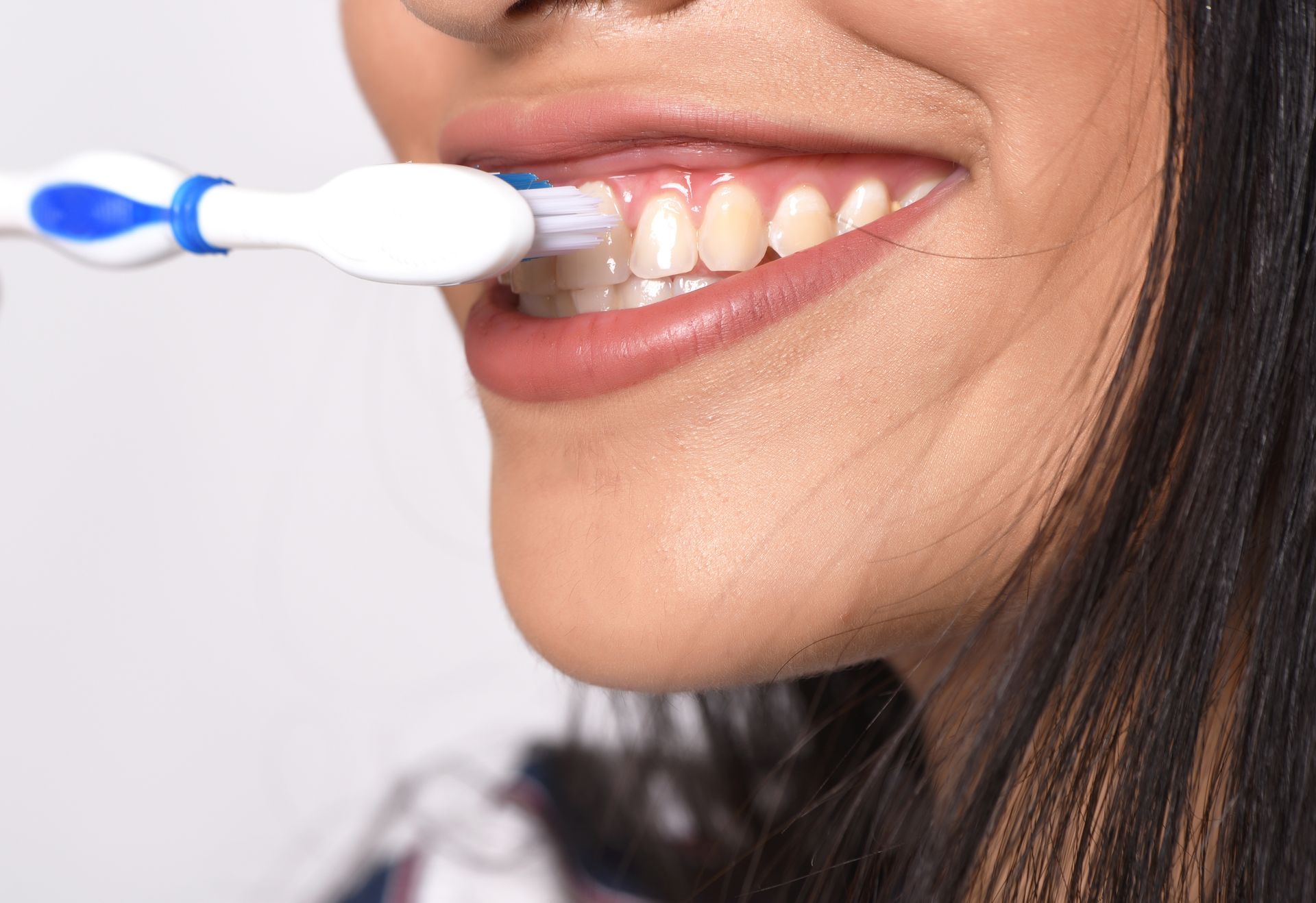
- Brush twice a day with a fluoride toothpaste.
- Floss daily to clean where stains and plaque hide.
- Rinse with water after meals and staining drinks throughout the day.
- Consider a whitening toothpaste a few times a week for gentle upkeep.
Brushing also matters for timing. Right after acidic or staining drinks, your enamel is temporarily softened, so waiting about half an hour before brushing protects it while still clearing away the pigments. Rinsing with water in the meantime bridges that gap without any risk to the enamel.
Use Whitening Products Wisely
A whitening toothpaste or occasional maintenance product can help, but more is not better. Overusing whitening products can cause tooth sensitivity and irritate your gums.
Follow the directions and your dentist's advice rather than whitening constantly. Gentle, consistent care protects both your results and your enamel far better than aggressive overuse.
If you do notice sensitivity, ease off the whitening products and give your teeth a break, since sensitivity is a signal to slow down rather than push through. A sensitivity-formula toothpaste can help in the meantime, and your dentist can suggest a gentler maintenance routine if it keeps happening.
Lifestyle Factors That Cause Staining
Beyond food and drink, a few lifestyle factors have a big effect on how quickly teeth re-stain. Addressing these makes your results last longer, sometimes more than any single dietary change.
Tobacco Is the Biggest One
Tobacco in any form, smoked or chewed, stains teeth quickly and deeply, and it works against everything whitening accomplishes. It is one of the leading causes of stubborn tooth discoloration.
Avoiding or quitting tobacco is the single most effective lifestyle change for keeping teeth white, and it benefits your overall oral and general health at the same time.
The staining from tobacco is also among the hardest to remove, often requiring professional cleaning or repeat whitening rather than everyday brushing. For anyone who has invested in a whiter smile, cutting back on tobacco protects that investment more than almost any other single habit.
Other Everyday Factors
A few other habits quietly affect your results over time. Being aware of them helps you protect your smile.
Frequent sipping of staining drinks throughout the day exposes your teeth to pigments for longer than one quick cup would. Poor hydration and a dry mouth also let stains cling more easily, so drinking water regularly does double duty by rinsing away pigments and keeping your mouth hydrated.
Touch-Ups and Maintenance Whitening
Even with great habits, whitening naturally fades over time. Occasional touch-ups keep your smile bright without starting over from scratch, and they are quicker and gentler than a full treatment.
When to Consider a Touch-Up
Most people benefit from a touch-up somewhere between several months and a couple of years after their initial whitening, depending on their habits. You will notice your teeth gradually looking less bright than they did.
Rather than waiting until the results are fully gone, a small touch-up keeps you in the bright range with less effort. Your dentist can recommend the right timing and method for you.
Take-home trays from your dentist make this especially easy, since you can do a short refresh at home whenever you notice the brightness slipping. Because the trays are custom-fitted and use a professional-strength gel, they give more even, reliable results than most over-the-counter kits.
Professional vs At-Home Maintenance
Maintenance can be done with dentist-provided take-home trays, professional in-office touch-ups, or dentist-recommended products used sparingly. Professional guidance matters here because it protects your enamel and gums while keeping the results even.
We can help you choose a maintenance approach that fits your smile and lifestyle, and make sure it is done safely. Talk with our team about the best way to keep your results looking their best.
The risk with unsupervised, aggressive whitening is that it can lead to sensitivity, gum irritation, or uneven results, all of which are easy to avoid with professional guidance. A dentist can also confirm that any discoloration is surface staining that whitening will help, rather than something that needs a different treatment.
How Long Whitening Results Last
Setting realistic expectations helps you plan your maintenance. Whitening is not permanent, but it lasts a good while with care, and knowing the timeline keeps you from being disappointed when it slowly fades.
A Realistic Timeline
For most people, professional whitening results last somewhere from several months to a few years, and habits are the biggest variable of all. Someone who avoids staining foods and does not use tobacco will keep their results far longer than someone who does not.
The care steps in this guide are what stretch results toward the longer end of that range. Small, consistent habits add up to many extra months of a brighter smile.
The type of whitening matters too. Professional in-office and dentist-supervised take-home whitening generally last longer than over-the-counter strips or kits, both because they are stronger and because they are applied more evenly. That is part of why professional whitening tends to give better value over time despite the higher upfront cost.
Why Results Fade
Teeth re-stain gradually as pigments from food, drink, and tobacco build back up, and as the natural aging of enamel continues. This is normal and expected, not a sign the whitening failed.
Because fading is gradual, many people do not notice it day to day. Comparing to a photo from right after whitening, or your dentist noting it at a checkup, is often what prompts a touch-up.
Age plays a role as well. Over the years, enamel thins slightly and the darker dentin beneath shows through more, which is a separate process from surface staining. This is normal, and it is one reason maintenance whitening remains helpful even for people with excellent daily habits.
Keeping Your Bright Smile Longer
Keeping your teeth white after whitening comes down to protecting the first 48 hours, limiting staining foods and drinks, keeping up a solid daily routine, avoiding tobacco, and using occasional touch-ups. None of it is complicated or time-consuming, and together these habits can add many months to how long your bright smile lasts.
At Casas Adobes Dentistry, we help Tucson and Casas Adobes area patients whiten their smiles and keep them looking their best. If you would like a whitening treatment or advice on maintaining your results, reach out to our team. We will help you keep your smile bright for as long as possible, and recommend the right maintenance plan for your habits.

Frequently Asked Questions
What can I eat right after teeth whitening?
Stick to light-colored, low-staining foods for the first 48 hours, such as water, plain yogurt, chicken, rice, pasta without dark sauce, and pale fruits and vegetables. Avoid coffee, tea, red wine, dark sauces, and berries while your enamel is more prone to staining.
How long do teeth whitening results last?
For most people, professional whitening lasts from several months to a few years, depending heavily on habits. Avoiding staining foods and drinks, not using tobacco, and keeping up good oral care all push results toward the longer end, while frequent coffee or tobacco use shortens them.
Can I drink coffee after whitening my teeth?
Avoid coffee entirely for the first 48 hours, when your teeth stain most easily. After that, you can have it in moderation, ideally through a straw and followed by rinsing with water. Cutting back overall will noticeably extend how long your results last.
Do I need whitening touch-ups?
Most people benefit from occasional touch-ups, often somewhere between several months and a couple of years after the initial treatment, since whitening fades gradually. A small touch-up keeps your smile in the bright range with much less effort than whitening from scratch again.
Does whitening toothpaste keep teeth white?
Whitening toothpaste can help maintain results by removing surface stains, but it works best as gentle, occasional upkeep rather than daily heavy use, which can cause sensitivity. It is a helpful part of a routine, not a replacement for limiting stains and getting professional touch-ups.
Share this Post
Casas Adobes Dentistry Blog