Full-Mouth Dental Implants in Tucson: Who Qualifies and What the Process Looks Like

If you're searching for full-mouth dental implants in Tucson, you likely want a clear answer to two questions: Do I qualify? And what does the process actually look like? This guide is written and clinically reviewed by the dental team at Casas Adobes Dentistry in Tucson. Our dentists evaluate implant options, bone health, bite alignment, and full-arch restorations regularly, and we hear the same concerns over and over, loose dentures, broken teeth, pain, and the fear of starting something that feels "too big." Below, you'll get straight answers first, then the details.
When Full-Mouth Implants Become the Best Next Step
Living with extensive tooth loss or failing teeth
People often consider a full-arch solution when they're dealing with:
- Multiple missing teeth across the upper or lower jaw
- Teeth that keep breaking, shifting, or needing repeated major work
- Severe wear from grinding that has shortened teeth and changed the bite
- Ongoing infection issues or gum problems that make teeth unreliable
- A denture that "works" but feels unstable or uncomfortable
The goal is a stable, long-term tooth replacement plan, especially when patchwork fixes start to feel endless. If you've been weighing your options for replacing missing teeth, a full-arch approach may be the most efficient path forward.
Why traditional dentures can feel limiting (stability, comfort, confidence)
Even a well-made denture can shift while eating or speaking. Many people also dislike using adhesive every day, dealing with sore spots from rubbing, avoiding certain foods, and feeling nervous in public settings. Implants create support that gums alone can't provide.

What "Full-Mouth Dental Implants" Really Means
Full-arch implant solutions (All-on-4 / All-on-X style approaches)
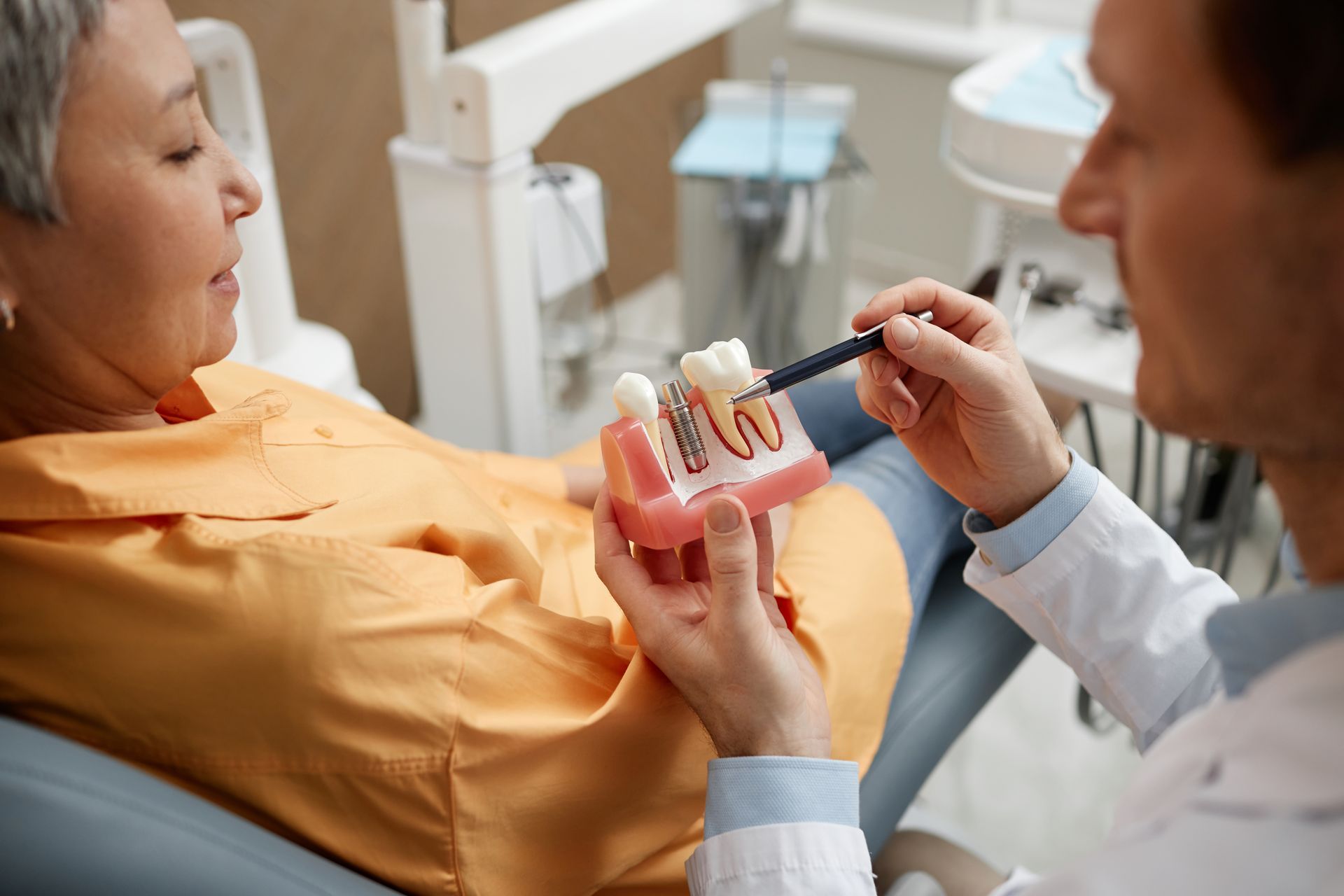
A common approach is All-on-4, which is one type of full-arch plan. "All-on-X" is a broader term meaning the arch is supported by a certain number of implants based on your anatomy and bite needs. Our All-on-4 page for Tucson patients covers this approach in depth.
How a full arch is supported with strategically placed implants
Instead, implants are placed in positions that can support a full set of teeth. In some cases, implants may be angled in the back to improve support and avoid certain anatomical areas. The best design depends on bone volume and density, upper vs. lower jaw differences, bite force and grinding habits, and your smile goals and lip support needs. The plan is built around stability and long-term function, not just "getting teeth in."
Fixed vs. removable full-arch options
A fixed full-arch restoration stays in place and you clean it like teeth using special tools. A removable implant option snaps onto implants and is removed for cleaning. Many people prefer fixed teeth because they feel more like natural teeth. Others prefer removable because cleaning can feel simpler. See a detailed breakdown of permanent dentures vs. implant-supported options to help frame the decision.
Key Benefits vs. Dentures or Many Single Implants
Immediate function and aesthetics with a temporary set of teeth
You may hear terms like "same-day teeth." What that usually means is: implants are placed, and a temporary restoration is delivered soon after when it's safe and appropriate. Not everyone qualifies for immediate loading. Implant stability, bone quality, and bite forces matter a lot.
Strong stability and improved bite confidence
A stable, implant-supported arch can improve chewing confidence, speech comfort, and overall day-to-day ease, with far less slipping or clicking than a traditional plate.
Simplified daily maintenance compared to removable plates
With a fixed restoration, there's no soaking cup or adhesive routine. You'll still need consistent cleaning and professional maintenance, but day-to-day life can feel more natural.
Support for jawbone health and facial structure
When teeth are missing, the jawbone can change over time. Implants help provide stimulation to the bone, which can support facial structure and reduce the "sunken" look some denture wearers notice over the years.
Who Qualifies for Full-Mouth Implants in Tucson
Common candidate profiles (denture wearers, multiple missing teeth, failing teeth)
Common candidates include people missing most or all teeth in an arch, denture wearers who want a more stable option, patients with failing teeth who want a long-term plan, and people who want fixed teeth instead of removable plates. You can treat one arch or both, "full-mouth" often refers to the scope of the problem, but treatment can still be staged.
Bone and gum health considerations
Your dentist will evaluate gum health and inflammation, bone height and width, bone density, and any infection or problem areas. If bone is limited, options might include bone grafting for dental implants, changing implant positions, or using different full-arch strategies. The plan is personalized.
Medical history review and lifestyle factors that can affect candidacy
Your provider will ask about diabetes control, smoking or vaping, medications that affect bone or healing, autoimmune conditions, and teeth grinding (bruxism). This isn't to "disqualify" you, it's to make the plan safer and more predictable. We also have specific information on whether diabetics can get dental implants if that applies to you.
Upper vs. lower arch planning and single-arch flexibility
The upper jaw often has sinus anatomy to consider. The lower jaw often has less suction for dentures, which is why many patients struggle more with lower plates. Some patients start with the lower arch first for stability and comfort, then address the upper later.
Your Consultation and Digital Planning
Comprehensive exam and 3D imaging
A consultation typically includes a full exam of teeth, gums, and bite; a review of your goals and concerns; and imaging (often a CT scan) to evaluate bone and anatomy. This is how the team decides what's possible and what's safest.
Bite alignment and aesthetic analysis
Full-arch planning includes bite height, midline and smile line, tooth shape and size preferences, and lip support and facial profile. This is where natural-looking teeth and comfortable function come together.
Digital treatment design and computer-guided planning
Many practices use digital tools to map implant positions and design the restoration. In some cases, computer-guided placement can improve accuracy and support a smoother surgical plan.
Mapping out timeline, comfort options, and expected outcomes
A good plan includes step-by-step phases, estimated healing windows, comfort options, what your temporary teeth will be like, and what the final restoration will be like. If anxiety is a concern, ask about sedation dentistry for dental implant procedures, it's a common and well-supported option.
What the Full-Mouth Implant Process Looks Like
Pre-treatment needs (extractions and site preparation when indicated)
This might include removing failing teeth, treating infection, planning bone grafting if needed, and making or adjusting a temporary appliance. Not everyone needs the same prep, it depends on the starting point.
Implant surgery day (comfort and anesthesia options)
Your team will review numbing options, sedation if appropriate, post-op instructions and medications, and how swelling and soreness are managed. Most people are surprised that recovery is more manageable than they expected, especially with a clear plan and good aftercare. Learn more about what to expect from dental implant surgery from a patient perspective.
Same-day temporary teeth placement (when appropriate)
Whether same-day loading is possible depends on implant stability at placement, bone quality, bite forces and grinding risk, and the type of temporary restoration. If immediate loading isn't recommended, you may still have a temporary solution during healing.
Healing and implant integration phase
During this phase, you'll have follow-ups for tissue healing checks, bite adjustments, temporary tooth comfort changes, and cleaning guidance. This stage is important, rushing it can reduce long-term success.
Final restoration placement (materials, fit, function, aesthetics)
Final placement focuses on fit and stability, bite balance and force distribution, natural look and speech comfort, and material choice based on your needs. This is when the plan becomes your everyday reality, eating, smiling, and talking with more confidence.
Recovery, Diet, and Aftercare Expectations
Early healing priorities and what you'll do at home
Typical aftercare includes following medication instructions, keeping the area clean as directed, resting and managing swelling, and avoiding heavy chewing early on. Your team will give you clear steps so you don't have to guess.
Soft-food phase and progressing back to normal eating
This protects healing tissues and reduces stress on new implants. Over time, most patients return to a wider diet than they could manage with dentures. Learn more about how long after dental implants you can eat normally.
Follow-up visits and fine-tuning the bite
Even tiny bite changes can affect comfort. Follow-ups help protect implants from overload, improve speech and chewing, and keep both the temporary and final restorations comfortable.
Long-Term Care and Maintenance
Daily home care routine
Most patients use a toothbrush (sometimes electric), a water flosser or floss threaders, and special brushes for under a fixed bridge. Your provider will show you what works best for your restoration type.
Professional cleanings and ongoing maintenance schedule
Routine visits allow the team to check gum health around implants, bite balance, wear patterns, and cleaning effectiveness.
What may need replacement over time
Depending on your system, certain components may need periodic service. This is normal maintenance and helps keep everything functioning well long-term.
What Can Change Your Timeline or Investment
Number of arches treated and complexity of your case
The biggest variables include upper only, lower only, or both arches; the condition of existing teeth and gums; whether extractions are needed; and your bite forces and grinding risk. For a general sense of what to expect financially, see our dental implant cost page for Tucson patients.
Bone grafting or sinus-related considerations
If bone is thin or anatomy is tight, grafting or sinus augmentation may be discussed. Your 3D scan is what guides this decision.
Prosthetic material choices and lab workflow
Your dentist will explain material options and what they mean for long-term wear, strength under bite force, aesthetic goals, and repairability.
Choosing a Full-Mouth Implant Provider in Tucson
Experience with full-arch cases and predictable workflows
Straight answer: Full-arch work is a blend of surgery, bite design, and restoration planning.
Look for a team that can clearly explain why they recommend a certain implant count, how they plan the bite for stability, and what the maintenance plan looks like.
Digital planning, guided placement, and modern imaging
Straight answer: Modern imaging and planning improve safety and predictability.
3D imaging and digital planning help match implant placement to anatomy and restoration goals, especially important in full-arch cases.
Comfort-first approach and clear communication
Straight answer: You should never feel confused about the plan.
The right provider will answer questions without rushing, give clear expectations about healing and timeline, explain options without pressure, and provide written treatment steps.
Next Steps
Schedule a consultation and bring your goals
Straight answer: The fastest way to know if you qualify is a consultation with imaging.
Bring a simple list of priorities, whether you want fixed or removable teeth, foods you want to eat comfortably, timeline needs, and any health concerns or medications. Contact our Tucson office to get started.
Get a personalized plan that matches your anatomy and priorities
Whether you're comparing All-on-4, exploring full-arch implants, or asking about same-day teeth in Tucson, the most important step is a personalized evaluation. That's where you'll get real answers, based on your mouth, not averages.

Frequently Asked Questions
How is a full-mouth implant different from getting individual implants for each tooth?
With individual implants, each missing tooth gets its own post. Full-mouth implants use a smaller number of strategically placed posts to support an entire arch. This makes full-arch treatment more efficient in time, cost, and surgical complexity, while still delivering a fixed, stable result. It's not a shortcut; it's a different engineering approach designed specifically for patients replacing most or all of their teeth.
What if I've already been told I don't have enough bone for implants?
That assessment may still leave room for options. Bone volume varies by location in the jaw, and strategic implant positioning, including angled placement, can often work around areas of low density. In other cases, bone grafting creates the foundation needed. Modern 3D imaging gives a much more complete picture than a visual exam alone, so it's worth getting a second opinion with a full scan before ruling anything out.
Can I get full-mouth implants if I currently wear a full denture?
Yes, current denture wearers are actually one of the most common candidate profiles. If your denture is unstable, uncomfortable, or limiting what you can eat, a full-arch implant solution directly addresses those problems. Your existing denture can sometimes even serve as a reference point for planning tooth size, shape, and bite position during the design phase.
What's the difference between "same-day implants" and the standard process?
"Same-day" refers to receiving a temporary set of teeth on the same day implants are placed, not that the entire process is complete in one visit. The final restoration still comes after a healing period. Whether same-day loading is possible depends on implant stability, bone quality, and your bite forces. It's not suitable for every patient, and your provider will be upfront about whether it's the right approach for your case.
How do I know whether to treat one arch or both?
Start with your biggest problem. If your lower denture is the one causing daily frustration, addressing the lower arch first often delivers the most immediate relief. Upper and lower arches can be treated separately and staged over time. During your consultation, your dentist will review both arches and help you prioritize based on bone, bite, and your personal goals.
Share this Post
Casas Adobes Dentistry Blog