Molar Dental Implants in Tucson: Options When a Back Tooth Needs to Be Removed

If you've been told a back tooth needs to come out, the next big question is usually: what's the best way to replace it? In many cases, a molar dental implant in Tucson is a strong option because it can restore chewing power and help protect the jawbone. This guide is written from the perspective of a dental team that routinely evaluates missing-molar cases using dental exams and imaging, plans implant treatment, and restores implants with crowns, so you can understand your options clearly and make a confident decision.
Why Replacing a Molar Matters
Role of Molars in Chewing and Jaw Support
Molars do most of the heavy lifting when you chew. They help you grind food and keep your bite stable. When a molar is missing, it's common to chew more on the other side, which can strain teeth and jaw joints over time.
Replacing a molar can help:
- Improve chewing function restoration
- Keep your bite balanced
- Reduce wear on other teeth
What Happens If a Back Tooth Is Not Replaced
When a back tooth is missing, the teeth around it may start to move. The tooth above can drift down into the space, and the teeth on the sides can tip in. This can change your bite and make cleaning harder.
Common changes include:
- Food trapping in the gap
- Shifting teeth and uneven bite
- More stress on remaining molars
Understanding your options for replacing missing teeth early can help prevent these complications.
Long-Term Oral Health Risks
Leaving a missing molar untreated can raise the risk of:
- Gum problems from trapped food
- Cracks or wear on other teeth from uneven chewing
- Bone loss in the missing-tooth area
- More complex treatment later
That's why many patients look for missing molar solutions soon after an extraction. If you're experiencing
bleeding gums around the extraction area, this should be addressed promptly.
What Is a Molar Dental Implant?
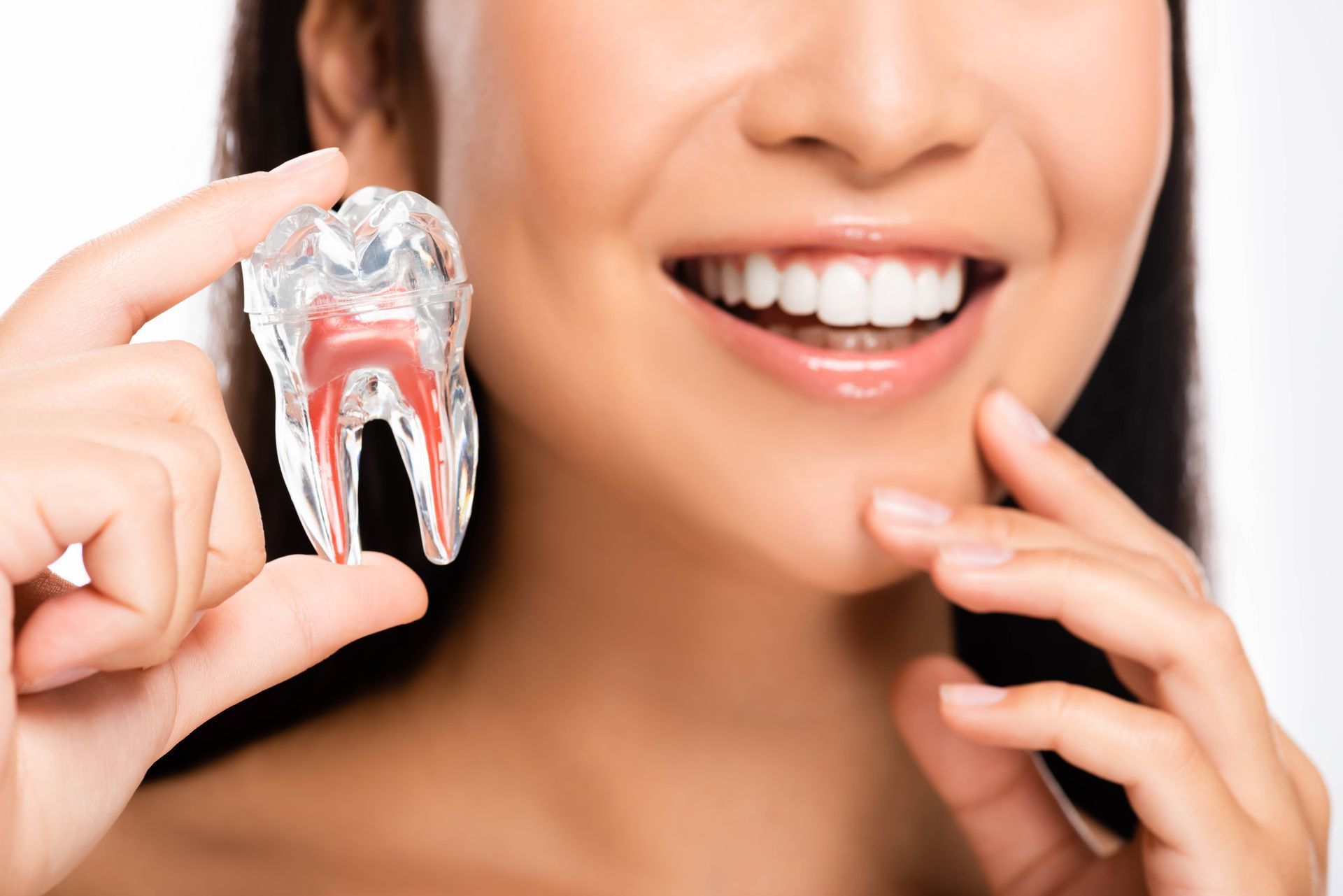
A molar implant replaces the root of the tooth with a small post placed in the jawbone. A crown is attached later to replace the chewing surface.
How Molar Implants Differ From Front Tooth Implants
Molars take stronger chewing forces than front teeth. Because of that, a back tooth implant often needs:
- Strong, stable bone support
- Careful bite planning
- A crown designed for heavy chewing
In some cases, the dentist may recommend special design choices to reduce stress on the implant over time.
Components of a Molar Implant
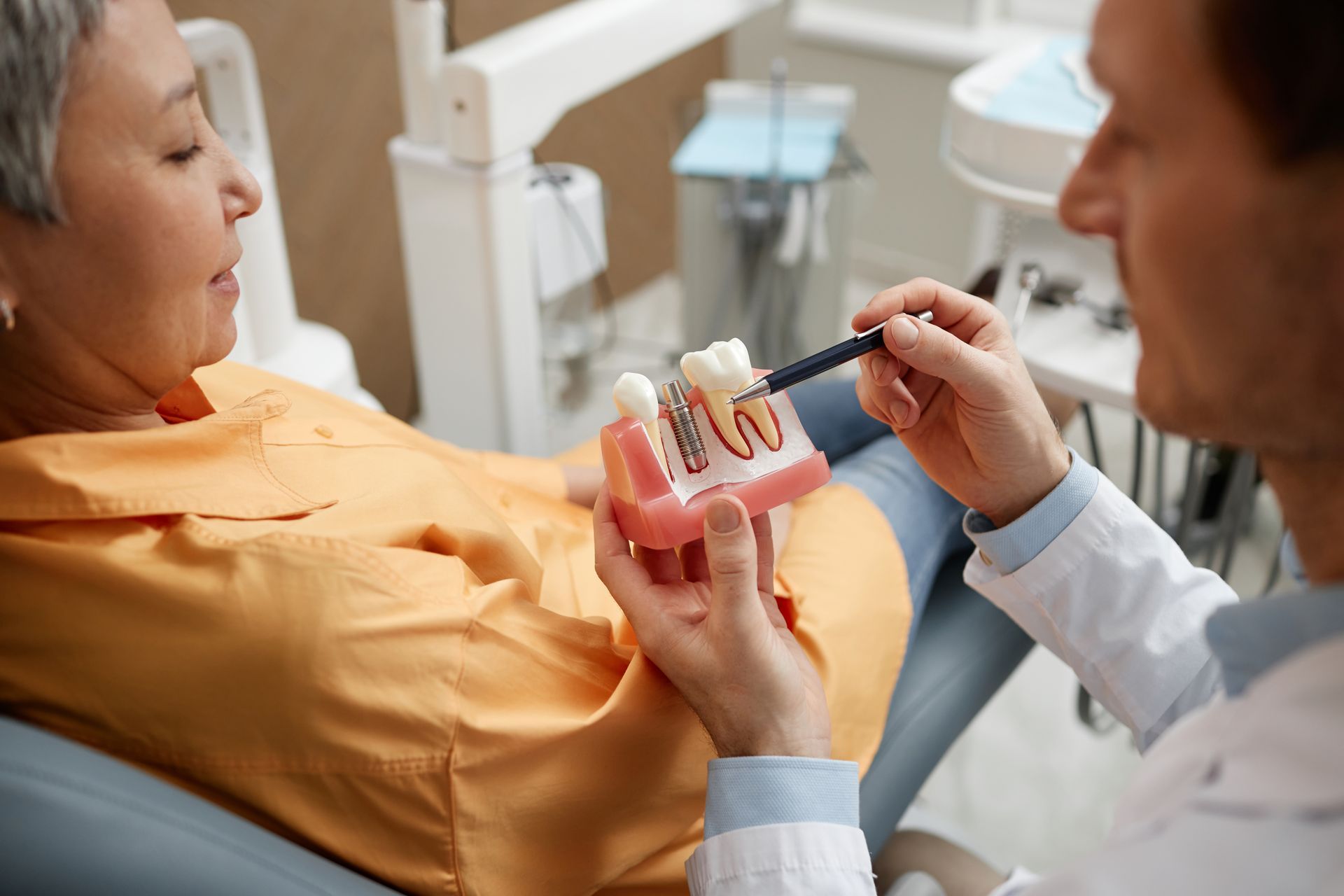
A typical molar tooth replacement in Tucson includes:
- The implant post (often titanium implant for molar replacement)
- An abutment (connector piece)
- An implant-supported molar crown (the visible tooth)
Together, these parts create a durable tooth replacement that looks natural and functions like a real molar. Learn more about the complete dental implant process.
Expected Timeline and Process
A simple way to think about the process is: plan → place → heal → restore.
Timelines vary, but many patients go through:
- Consultation and imaging
- Extraction (if needed) and site healing
- Implant placement
- Healing while the implant bonds to bone
- Crown placement
If bone grafting is needed, it may add time, but it can improve long-term success.
When a Back Tooth Must Be Removed
Common Reasons for Molar Extraction
A back tooth may need removal due to:
- Deep decay that can't be repaired
- A cracked tooth below the gumline
- Failed
root canalwith ongoing infection
- Advanced gum disease with loose teeth
When infection is present, your dentist may recommend removing the tooth first and letting the area heal before implant placement.
Understanding when a tooth extraction is necessary can help you prepare.
Tooth Removal and Implant Planning
Planning matters most for molars because of nerves (lower jaw) and sinuses (upper jaw).
Before a tooth extraction and implant in Tucson, your provider typically checks:
- Bone height and thickness
- Nearby nerve location
- Sinus position for upper molars
- Bite forces and grinding/clenching risk
This planning helps reduce complications and supports better healing.
Timing Between Extraction and Implant Placement
There are a few common timing options:
- Implant placed the same day as extraction (in select cases)
- Implant placed after the socket heals (often weeks to months)
- Implant placed after bone graft healing (if grafting is needed)
The best timing depends on infection, bone quality, and how stable an implant can be placed safely.
Implant Options for Molar Replacement
Single Molar Dental Implant
A single molar implant Tucson option is common when only one back tooth is missing. It's a stand-alone solution that does not rely on neighboring teeth for support.
Implant-Supported Bridges
If you're missing multiple back teeth in a row, an implant-supported bridge may be an option. Instead of placing an implant for every missing tooth, the bridge can be supported by fewer implants, depending on spacing and bite.
This can be helpful when:
- Several adjacent molars are missing
- You want a fixed solution
- Bone and bite conditions support it
Bone Grafting for Molars
Back teeth often need strong bone support. If the area has been missing a tooth for a while, or if infection damaged bone, your dentist may recommend a bone graft for molar implant support.
For upper molars, a sinus lift may be discussed if the sinus is close to the implant site.
Immediate vs Delayed Placement
Immediate placement can shorten treatment time, but it isn't always possible. Delayed placement may be safer when:
- There's active infection
- The socket walls are weak
- More bone build-up is needed
Your provider should explain the risks and benefits clearly for your specific case.
The Molar Implant Procedure in Tucson
Consultation and Imaging
A strong implant plan starts with imaging. Many offices use 3D scans to map bone, nerves, and sinuses. This is especially important for a back tooth implant Tucson case because molars sit near key structures.
Surgical Placement and Recovery
During dental implant surgery Tucson, the implant is placed into the jawbone. Most patients have:
- Local anesthesia (and sometimes
sedation options)
- Mild swelling or soreness afterward
- A short soft-food period during early healing
Recovery varies, but many people say it's similar to (or easier than) a tough extraction. If you experience dental anxiety, discuss comfort options with your dentist.
Final Crown and Restoration
After healing, the final crown is made to fit your bite. A well-designed molar crown should:
- Feel comfortable when chewing
- Be easy to clean around the gums
- Match your natural tooth shape and size
This final step is what restores normal chewing function.
Cost and Longevity of Molar Implants
Factors That Affect Pricing
Molar implant cost Tucson can vary based on:
- Need for extraction and infection treatment
- Bone grafting or sinus lift
- Type of crown material
- Complexity of the case and bite forces
A clear treatment plan should outline what's included and what may be optional.
Insurance and Financing Options
Coverage depends on your plan and how the procedure is coded (extraction, implant, crown, grafting). Many offices can help you check benefits and may offer financing options so cost is more manageable.
Implant Lifespan and Durability
Implants can last many years with good care. Long-term success often depends on:
- Daily brushing and cleaning around the implant
- Regular dental visits
- Managing grinding/clenching (night guards can help)
- Keeping gums healthy
Even though implants don't get cavities, the tissues around them still need protection. Following oral hygiene basics is crucial for maintaining your investment.
Choosing the Right Provider in Tucson
Experience With Molar and Complex Cases
Molars can be more complex than front teeth because of chewing forces and anatomy. Ask about your provider's experience with:
- Upper molar implants near the sinus
- Lower jaw implants near nerves
- Bone grafting and challenging bite cases
Some patients may be referred to an oral surgeon Tucson team for surgical placement, then return to their general dentist for the crown.
Technology and Safety Measures
Look for an office that uses:
- Modern imaging for safe planning
- Sterile surgical protocols
- Clear post-op instructions and follow-up care
These details help reduce risks and improve outcomes. Advanced tools like laser dentistry may be used for certain procedures to enhance precision.
Personalized Treatment Planning
The best choice isn't the same for everyone. A good plan should explain:
- Your implant options (single implant vs bridge)
- Whether grafting is needed
- Your expected timeline
- How to protect the result long-term
If you're exploring a molar dental implant Tucson solution, an exam and scan can quickly clarify what's possible and what steps will give you the best foundation for a strong, comfortable bite.
Ready to Restore Your Chewing Function?
If you're exploring a molar dental implant Tucson solution, an exam and scan can quickly clarify what's possible and what steps will give you the best foundation for a strong, comfortable bite.
Whether you need a single molar replacement or are considering full mouth reconstruction, the team at Casas Adobes Dentistry is here to provide expert care. Contact us today to schedule your consultation and explore all your back tooth replacement options.

Frequently Asked Questions About Molar Implants
Why are molar implants more expensive than front tooth implants?
Molar implants often cost more because they require stronger components to handle heavy chewing forces, more complex surgical planning (especially near sinuses and nerves), and typically need larger or wider implants for stability. Upper molars may require a sinus lift, and lower molars demand precise placement to avoid nerve damage. The crown must also be engineered to withstand grinding forces that front teeth don't experience. While the base procedure is similar, these added complexities increase both time and materials.
Can I chew normally with a molar implant?
Yes, once fully healed, most patients chew normally with molar implants. During the 3-6 month healing period, you'll need to avoid chewing on that side and stick to soft foods. After the final crown is placed and your bite is adjusted, the implant should feel stable and natural. Many patients report that molar implants feel more secure than dentures or bridges because they're anchored directly in bone. If you grind your teeth at night, your dentist may recommend a night guard to protect the implant long-term.
What happens if I don't replace a missing back molar?
Without replacement, several problems commonly develop: adjacent teeth drift into the gap, the opposing tooth over-erupts (grows down into the space), food traps more easily leading to decay and gum disease in neighboring teeth, and the jawbone in that area gradually shrinks. You may also experience uneven chewing that strains your jaw joint and causes other teeth to wear down faster. While some people function without a molar, most experience these changes within 1-3 years, making future treatment more complex and expensive.
How long does it take to get a molar implant from start to finish?
A straightforward molar implant typically takes 4-6 months from consultation to final crown. This includes initial planning and imaging (1-2 weeks), implant placement surgery, 3-4 months of healing for osseointegration, and crown fabrication (2-3 weeks). If you need a tooth extraction first, add 2-3 months for socket healing. If bone grafting or a sinus lift is required, the total timeline may extend to 9-12 months. Your specific timeline depends on bone quality, healing rate, and case complexity.
Is a molar implant better than a bridge for back teeth?
For most cases, yes, molar implants offer advantages over bridges. An implant stands alone without requiring crowns on adjacent teeth, stimulates the jawbone to prevent bone loss, and typically lasts longer (20+ years vs 10-15 years for bridges). Bridges can be excellent when neighboring teeth already need crowns or if bone grafting would be extensive. The best choice depends on your bone levels, the condition of adjacent teeth, your budget, and timeline. A consultation with imaging helps determine which option suits your specific anatomy and goals.
Share this Post
Casas Adobes Dentistry Blog