Can You Eat With Dentures? Foods, Adjustment Tips, and What to Expect

Yes, you can eat with dentures, though it takes some practice at first. The key is to start with soft foods, cut everything into small pieces, and chew slowly using both sides of your mouth at once. Most people adjust over a few weeks to a couple of months and are able to enjoy a wide range of foods again, with only a few sticky or very hard items staying tricky.
At Casas Adobes Dentistry in Tucson, we fit dentures and guide patients through the adjustment period every day. This guide walks you through what to expect, which foods to start with, which to approach carefully, and how to make eating comfortable again.
In This Guide
- Can You Eat Normally With Dentures?: The straight answer.
- The Adjustment Timeline: What the first weeks look like.
- Best Foods When You're New to Dentures: Where to start.
- Foods to Approach With Caution: The tricky ones.
- Why Eating Feels Different at First: The mechanics behind it.
- Eating Well While You Adjust: Nutrition during the soft-food phase.
- Tips for Eating More Comfortably: Practical techniques.
- When Eating Stays Difficult: When to see your dentist.
- Frequently Asked Questions: Quick answers for patients.

Can You Eat Normally With Dentures?
You can absolutely eat with dentures, and in time you can enjoy most of the foods you love. What changes is that eating takes some relearning at first, because dentures work differently from natural teeth. They rest on your gums rather than being anchored in the jaw, so biting and chewing use different technique and pressure.
The reassuring part is that this is a temporary learning curve, not a permanent limitation. Almost everyone who commits to the adjustment period ends up eating comfortably and confidently, enjoying meals with family and friends just as they did before. The trick is to progress gradually rather than expecting to eat everything on day one. It also helps to keep your expectations realistic: your first meals will feel unfamiliar, and that is completely normal rather than a sign that something is wrong. Patience in those early days pays off with comfortable eating for years afterward.
The Adjustment Timeline
Knowing roughly what to expect week by week makes the process far less frustrating. Everyone adjusts at their own pace, but the general path is similar.
In the first days, your mouth is getting used to the feel of the dentures, and you should stick to soft foods and liquids. Over the first couple of weeks, you gradually add slightly firmer foods as your comfort grows. By a month or so, most people are chewing a much wider variety of foods with confidence, and within a few months eating feels routine again. Some soreness and extra saliva early on is normal as your mouth adapts. Our guide on the
timeline for adjusting to new dentures covers this progression in more detail. Keep in mind that a brand-new denture and one you have worn for years feel different, and the first set you ever wear usually takes the longest to get used to, so give yourself extra grace early on.
Best Foods When You're New to Dentures
Starting with soft, easy-to-chew foods lets you build confidence without straining your gums. These foods are gentle while you adjust.
- Soups and broths, warm rather than hot, which are filling and require no chewing.
- Mashed potatoes and cooked, soft vegetables, which are easy to eat and nutritious.
- Eggs, yogurt, and soft cheeses, which provide protein without hard chewing.
- Oatmeal and other soft cooked cereals, a gentle, satisfying option.
- Soft fruits like bananas, or cooked and canned fruits, and smoothies.
- Fish and tender, well-cooked or ground meats, which flake or break apart easily.
As these become comfortable, you can begin reintroducing firmer foods a little at a time. Eating well while you adjust matters, and our guide on
eating healthy with dentures has more ideas for balanced meals.
Foods to Approach With Caution
Some foods stay challenging even after you have adjusted, either because they can dislodge the denture, damage it, or get stuck. You do not have to avoid them all forever, but approach them carefully.
| Food Type | Why It Can Be Tricky | Helpful Tip |
|---|---|---|
| Sticky foods (caramel, taffy, gum) | Can pull the denture loose | Avoid or eat sparingly and carefully |
| Hard foods (nuts, hard candy, ice) | Can crack teeth or the denture | Avoid biting directly; never chew ice |
| Tough or chewy meats (steak, jerky) | Hard to chew, can strain the fit | Cut into very small pieces, chew slowly |
Other foods worth care include crunchy raw vegetables and crusty breads, which can be managed by cutting them small, and foods with small seeds or kernels like popcorn, which can lodge under the denture. With time and technique, most of these become manageable rather than off-limits.
Why Eating Feels Different at First
Understanding why dentures change eating helps the adjustment make sense. Natural teeth are anchored in your jawbone, which lets you bite with considerable force and feel exactly what you are chewing. Dentures instead rest on your gums, so they rely on a different kind of stability and cannot deliver quite the same bite force.
There are a couple of other changes to expect. A full upper denture covers part of the roof of your mouth, which can affect how you sense the temperature and, at first, the taste of food, though most people stop noticing this over time. You may also produce extra saliva in the early days as your mouth treats the denture as something new, and your tongue and cheeks are learning how to help hold everything in place and move food around. All of this is normal and temporary, and it is exactly why starting slow and chewing evenly makes such a difference while your mouth learns the new mechanics. Give the process a little time, and eating with dentures becomes far more natural than it feels in the first week.
Eating Well While You Adjust
The soft-food phase early on is important, but it is worth making sure those soft foods still give you good nutrition. It is easy to lean on simple starches when chewing is hard, so aim for variety.
Soft does not have to mean low in nutrients. Eggs, yogurt, cottage cheese, beans, fish, and well-cooked or blended vegetables and fruits all deliver protein, vitamins, and fiber without hard chewing. Smoothies are a useful way to combine fruit, yogurt, and even greens into something easy to consume while you adjust. Staying hydrated helps too, especially as your mouth adapts. Eating a balanced diet during the adjustment period supports healing and keeps your energy up, and it sets a good pattern for once you are eating a fuller range of foods again.
Tips for Eating More Comfortably
A few simple techniques make eating with dentures noticeably easier, both while you adjust and long term. These habits protect your comfort and your denture's stability.
- Cut food into small pieces so you never have to take large, forceful bites.
- Chew slowly using both sides of your mouth at the same time, which keeps the denture balanced and stable.
- Bite with the sides of your mouth rather than tearing food with your front teeth, which can tip the denture.
- Start with softer options at each meal, then move to firmer foods as you warm up.
- Consider a denture adhesive for extra stability if your dentist recommends it, which can help while you learn.
- Take smaller sips and bites and give yourself time, especially in the early weeks.
Learning to chew evenly on both sides is the single most helpful habit, because it stops the denture from lifting or shifting, and it quickly becomes second nature once you get used to it. Our tips for
living well with dentures build on these techniques.
When Eating Stays Difficult
If eating remains genuinely difficult well past the normal adjustment period, that is not something to simply live with, and it usually points to a fixable cause. The most common reason is a denture that no longer fits properly.
Gums and jawbone naturally change shape over time, so a denture that once fit well can become loose, causing slipping, sore spots, and difficulty eating. A dentist can often correct this by relining or adjusting the denture. Persistent looseness that affects eating is also a common reason people consider implant-supported dentures, which anchor to the jaw for a much more secure hold and easier chewing. If your dentures make eating hard despite giving yourself time to adjust, see your dentist for an evaluation rather than restricting your diet. Ongoing sore spots, in particular, are worth addressing promptly, since continuing to eat around a painful area is not something you should have to do.
Eat Comfortably Again With Help From Casas Adobes Dentistry
Adjusting to eating with dentures takes patience, but you should be able to enjoy your meals comfortably. If your dentures slip, cause sore spots, or make eating a struggle, our Tucson team can check the fit and help you find a solution, from a simple adjustment to a more secure option.
Call Casas Adobes Dentistry at (520) 365-0559 or learn more about our
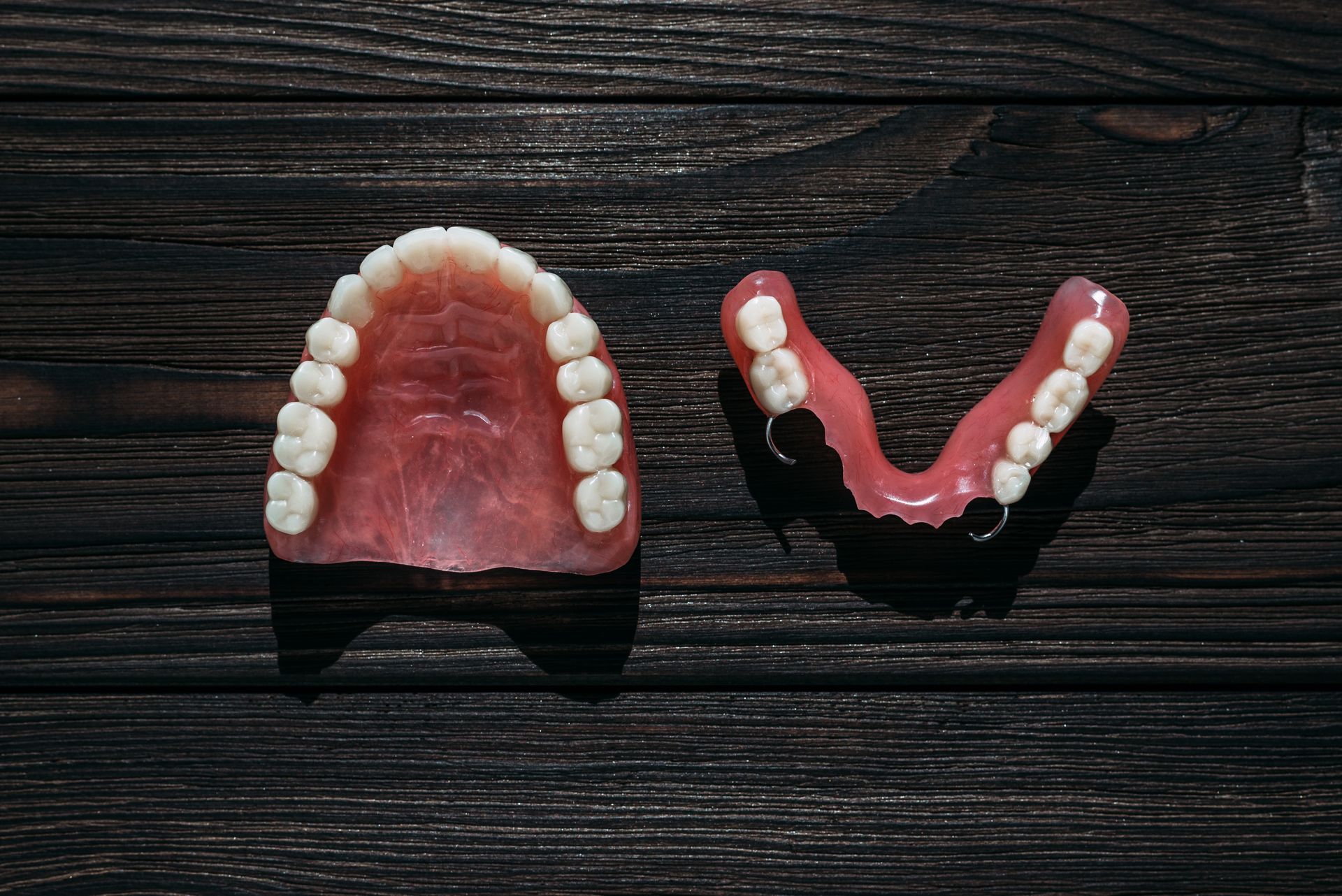
dentures and partial dentures services. Curious what your dentures are actually made of? See our guide on
what dentures are made of.

Frequently Asked Questions
How long does it take to eat normally with dentures?
Most people adjust to eating with dentures over a few weeks to a couple of months. You start with soft foods in the first days, add firmer foods gradually over the first weeks, and reach comfortable, varied eating within a month or two. Some soreness and extra saliva early on is normal, and progressing at your own pace is the key to a smooth transition.
What foods should you avoid with dentures?
The trickiest foods are very sticky ones like caramel and gum that can pull the denture loose, hard foods like nuts, hard candy, and ice that can crack teeth or the denture, and tough, chewy meats that are hard to manage. Small foods like popcorn and seeds can lodge under the denture. Most of these can be eaten carefully once you adjust, but ice should never be chewed.
Can you bite into an apple or corn on the cob with dentures?
Biting into hard foods with your front teeth can tip or dislodge a denture, so many people find it easier to cut apples into slices and cut corn off the cob rather than biting directly. With practice and a well-fitting denture you may manage some of these, but cutting food into smaller pieces and chewing with the sides of your mouth is generally more comfortable and stable.
Do denture adhesives help with eating?
They can. A denture adhesive can add stability and confidence, especially while you are still adjusting or if your denture is slightly loose. It is not a substitute for a proper fit, though. If you find you need a lot of adhesive to keep your dentures in place while eating, that usually signals the denture needs to be checked or relined by your dentist.
Why is it hard to eat with my dentures even after adjusting?
Ongoing difficulty usually means the denture no longer fits well, often because your gums and jaw have changed shape over time, leaving the denture loose. This is common and correctable with a reline or adjustment, and in some cases implant-supported dentures offer a more secure, comfortable solution. Persistent trouble eating is a good reason to see your dentist rather than limiting your diet.
Share this Post
Casas Adobes Dentistry Blog